
A dishwasher can save time and effort, but the noise it produces can become frustrating when the kitchen is close to a living room, bedroom, home office, dining area, or open-plan living space. Water spraying against dishes, pumps operating, the motor running, dishes moving inside the racks, and water entering or draining from the appliance all contribute to the overall sound.
Modern dishwashers are generally designed with noise reduction in mind, but even a relatively quiet appliance can become noticeably louder when it is incorrectly installed, poorly leveled, touching surrounding cabinets, missing insulation, or transmitting vibration through the countertop or floor. Manufacturers commonly use combinations of insulation, sound-absorbing materials, vibration control, quieter motors, sealed toe-kicks, and specially designed bases to reduce operating noise.
The good news is that you do not necessarily need to replace a dishwasher simply because it sounds loud. Soundproofing a dishwasher is usually more effective when you first identify where the noise is coming from and whether it is airborne noise, structure-borne vibration, water noise, mechanical noise, or rattling from dishes and surrounding cabinetry.
This guide explains how dishwasher sound works, how to diagnose different noises, how to improve factory insulation, how to reduce cabinet and floor vibration, what materials can be used safely, what modifications should be avoided, and when a noisy dishwasher may actually require repair.
What Does Soundproofing a Dishwasher Actually Mean?
Soundproofing a dishwasher does not mean making the appliance completely silent.
A dishwasher necessarily produces some sound because it contains pumps, motors, valves, spray arms and moving water. During a normal cycle, you may hear water rushing into the appliance, spraying against dishes, a motor or pump humming, draining sounds, clicking valves and occasional movement from dishes. These sounds can be normal.
The goal of soundproofing is to reduce the amount of sound that reaches the surrounding room.
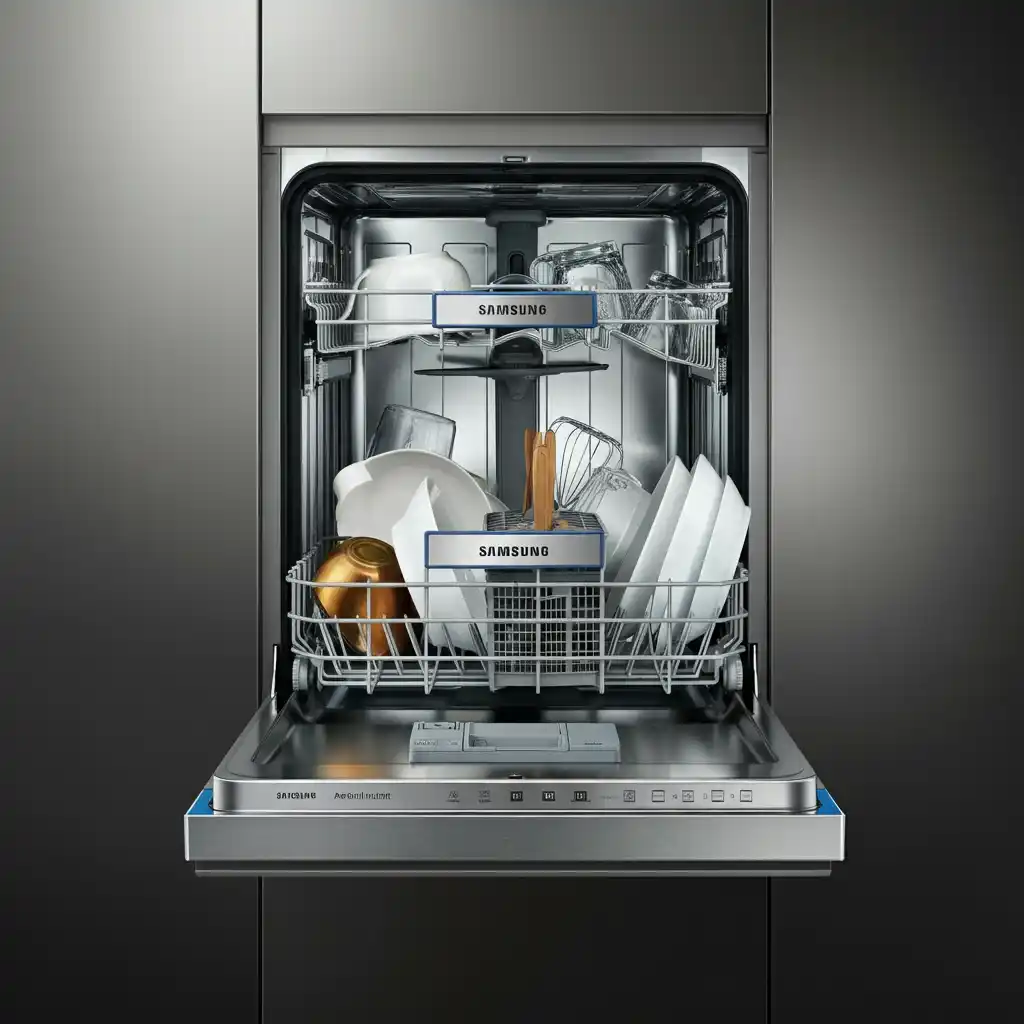
This can be accomplished in several ways:
- Absorbing sound inside or around the appliance
- Damping vibration from metal panels
- Preventing vibration from reaching cabinets
- Isolating hoses from rigid surfaces
- Preventing dishes from rattling
- Keeping the dishwasher properly level
- Maintaining factory insulation
- Sealing appropriate gaps around the installation
- Improving cabinet acoustic treatment
- Reducing mechanical noise through proper maintenance
The most effective approach is usually a combination rather than one single material.
Understanding the Main Types of Dishwasher Noise
Before trying to soundproof a dishwasher, determine what type of noise you are dealing with.
Different noises require different solutions.
1. Airborne Noise
Airborne noise travels through the air.
Examples include:
- Water spraying
- Pump humming
- Motor noise
- Water entering the dishwasher
- Water draining
- Fan noise
Sound-absorbing insulation can reduce some airborne noise.
2. Structure-Borne Noise
Structure-borne noise occurs when vibration travels through physical structures.
For example, a dishwasher may vibrate against:
- Cabinets
- Countertops
- Flooring
- Adjacent panels
- Plumbing
- Metal brackets
This vibration can make the kitchen itself act like a sound amplifier.
3. Impact Noise
Impact noise occurs when objects physically strike each other.
Examples include:
- Plates hitting plates
- Glasses touching
- Cutlery rattling
- Plastic containers moving
- Spray arms hitting improperly loaded dishes
No amount of cabinet insulation will completely eliminate noise caused by dishes repeatedly hitting each other.
4. Mechanical Noise
Mechanical noise comes from components such as:
- Circulation pumps
- Drain pumps
- Motors
- Valves
- Fans
- Bearings or other moving parts
Mechanical noise should be diagnosed before attempting to cover it with additional insulation.
Why Is My Dishwasher So Loud?
Several factors determine how loud a dishwasher seems.
A dishwasher installed at the end of a cabinet run may sound louder because there are fewer surrounding structures to absorb or block sound. A dishwasher installed between cabinets may seem quieter because the surrounding cabinetry changes the way sound travels. Load size and the type of dishes being washed can also affect perceived noise.

Common causes of excessive dishwasher noise include:
- Missing factory insulation
- Poor leveling
- Loose mounting
- Cabinet contact
- Countertop contact
- Loose toe-kick
- Dishes rattling
- Spray arm hitting dishes
- Loose racks
- Dirty filter
- Foreign objects
- Pump problems
- Drain hose vibration
- Water supply line vibration
- Poor installation
- Structural resonance
Therefore, the first step in soundproofing should always be diagnosis.
Check Whether the Noise Is Actually Abnormal
Not every dishwasher sound indicates a problem.
During normal operation, you may hear:
- Rushing water
- Swishing water
- A low motor hum
- Drain pump humming
- A short gurgling sound
- Water inlet sounds
- Detergent dispenser clicking
- Fan or drying sounds
These can be normal operating sounds.
However, investigate sounds such as:
- Grinding
- Severe rattling
- Repeated banging
- Scraping
- Loud squealing
- Sudden buzzing
- Severe vibration
- Electrical crackling
- Burning sounds
A sudden change in sound can be more important than the absolute volume of a dishwasher that has always sounded the same.
Step 1: Level the Dishwasher
One of the most important soundproofing steps costs nothing.
A dishwasher that is not level can transmit more vibration into surrounding cabinetry.
The appliance should be properly supported and level according to its installation instructions. Manufacturer guidance specifically emphasizes proper leveling, support and squareness within the cabinet opening.
How to check the dishwasher
Use an appropriate level and check:
- Side to side
- Front to back
- Overall stability
Also gently check whether the appliance rocks.
A dishwasher that moves when pressure is applied may not be properly supported.
Step 2: Secure the Dishwasher Properly
A built-in dishwasher should be secured using the manufacturer’s specified mounting method.
Depending on the model, mounting may involve:
- Top mounting
- Side mounting
- Approved floor mounting
The purpose is not only to keep the appliance in position. Proper mounting also helps control movement and vibration.
If the dishwasher shifts inside the cabinet opening during operation, normal pump and motor vibration can become much more noticeable.
Never improvise mounting methods that could damage the appliance or cabinets.
Step 3: Make Sure the Dishwasher Is Not Touching the Cabinets
This is one of the most overlooked sources of dishwasher noise.
The dishwasher itself may be relatively quiet, but if the metal body is touching a rigid cabinet surface, vibration can travel directly into the cabinet.
Check:
- Left side
- Right side
- Top
- Door
- Lower trim
- Cabinet frame
The appliance should be installed according to its specified clearances.
If the door rubs against the cabinetry, the appliance may also be incorrectly positioned or leveled.
Step 4: Check the Countertop
The countertop can become an acoustic amplifier.
A dishwasher that is transmitting vibration into the countertop may cause the countertop to buzz or resonate.
Listen for whether the sound becomes noticeably louder when the dishwasher is operating and the surrounding countertop or cabinetry vibrates.
If so, inspect the dishwasher’s:
- Leveling
- Mounting
- Position
- Clearance
- Brackets
Do not simply wedge random material between the dishwasher and countertop.
Correct the underlying installation issue first.

Step 5: Keep the Factory Insulation
Many dishwashers are manufactured with dedicated sound-reduction materials.
These may include:
- Insulation blankets
- Door insulation
- Bitumen-based damping materials
- Mastic
- Sound-absorbing bases
- Insulated tub structures
Different manufacturers use different combinations.
For example, dishwasher designs can incorporate multiple insulation layers, sound-absorbing bases and other components specifically intended to dampen noise and vibration.
Some models use full-wrap insulation blankets and additional damping materials around the tub and door.
Never remove insulation simply because it looks unnecessary.
Some insulation can resemble packaging material.
If you are unsure whether a material is part of the dishwasher, consult the installation documentation before removing it.
Step 6: Inspect the Door Insulation
The dishwasher door is a significant sound-transmission surface.
Some dishwashers use insulation inside the door to reduce sound escaping from the tub.
If the door insulation is damaged, missing or improperly positioned, noise can become more noticeable.
Do not add thick material inside the door without confirming that it is suitable.
The door contains mechanical and electrical components, and additional material can interfere with:
- Door balance
- Latches
- Dispenser mechanisms
- Ventilation
- Wiring
- Moisture management
Factory-designed insulation is preferable to improvised materials.
Step 7: Improve the Dishwasher’s Side Insulation
If the dishwasher is installed between cabinets, the cabinetry itself can influence how sound travels.
If additional acoustic treatment is appropriate, the objective should be to reduce sound transmission without interfering with appliance operation.
Potential approaches include:
- Maintaining factory insulation
- Treating cabinet side panels
- Adding appropriate acoustic material to adjacent cabinetry
- Preventing direct vibration contact
- Treating large resonant cabinet panels
The treatment should be installed to the cabinet rather than interfering with the dishwasher’s required clearances.
Step 8: Treat the Cabinet as an Acoustic Enclosure
Cabinetry can sometimes amplify dishwasher noise.
A large, thin cabinet panel can vibrate like a speaker diaphragm.
If the dishwasher is installed beneath a countertop surrounded by cabinetry, the cabinet surfaces may transmit sound into the room.
The objective is not to completely seal the cabinet.
Instead, consider:
- Damping large loose panels
- Securing rattling trim
- Preventing hard contact with the appliance
- Adding suitable acoustic absorption where appropriate
- Maintaining ventilation and service access
Never block appliance vents or create an installation that traps heat or moisture.
Step 9: Use Sound-Absorbing Materials Correctly
Sound absorption and sound blocking are different.
Sound absorption
Absorption reduces reflected sound energy.
Examples can include appropriate acoustic fiber or other purpose-designed materials.
Sound blocking
Blocking attempts to prevent sound from passing through a barrier.
This generally requires a sufficiently dense and properly installed barrier.
Vibration damping
Damping reduces the tendency of a panel to vibrate.
These are different acoustic strategies.
For dishwasher applications, a combination of absorption and vibration damping can be more useful than simply adding a thick layer of soft material.
Step 10: Consider Vibration-Damping Material
Metal surfaces can resonate.
A vibration-damping material can reduce panel vibration by converting some mechanical energy into heat rather than allowing the panel to vibrate freely.
Commercial appliances may use damping materials as part of their factory noise-control systems.
Some dishwasher designs incorporate materials such as bitumen and mastic as part of their quiet packages.
For DIY applications, only use materials specifically intended for the temperature, moisture and installation environment involved.
Do not install unknown materials directly against hot components, electrical connections or ventilation areas.

Step 11: Do Not Cover the Motor or Pump With Random Insulation
This is extremely important.
A motor or pump should not simply be wrapped in foam or other insulation because you want to reduce noise.
Components are designed to operate within specific temperature and ventilation conditions.
Adding inappropriate insulation can:
- Trap heat
- Interfere with moving parts
- Restrict service access
- Contact electrical components
- Create moisture problems
- Damage wiring
- Create a fire risk
Soundproof the appropriate surrounding structures rather than blindly covering mechanical components.
Step 12: Reduce Dishwasher Vibration
Reducing vibration can often produce a bigger improvement than simply adding more insulation.
Check:
- Leveling legs
- Mounting brackets
- Floor support
- Cabinet contact
- Countertop contact
- Hose contact
- Rack movement
A dishwasher that is not level or securely mounted can transmit vibration to surrounding cabinetry and make normal operating sounds appear much louder.
Step 13: Check the Toe-Kick
The lower toe-kick panel can become a source of buzzing.
If it is loose, vibration can cause:
- Rattling
- Buzzing
- Clicking
- Resonance
Check whether the panel is properly attached.
Do not permanently block ventilation or access openings.
Some dishwasher designs specifically use sealed toe-kick systems as part of their noise-reduction package.
Step 14: Check the Dishwasher Racks
A dishwasher rack can create significant noise if it is loose.
Inspect:
- Wheels
- Rails
- Rack stops
- Tines
- Plastic components
- Loose clips
If a rack rattles when moved by hand, it may also rattle during operation.
Repair or replace damaged rack components as appropriate for the model.
Step 15: Load Dishes to Reduce Noise
Proper loading is one of the easiest ways to make a dishwasher quieter.
Lightweight objects can move during washing, while plates and cookware can collide if they are incorrectly positioned.
Manufacturer guidance recommends proper arrangement of dishes, including securing lighter items and preventing unnecessary contact between dishes.
For quieter operation:
- Separate glasses.
- Keep plates securely positioned.
- Prevent lids from moving.
- Separate cutlery where appropriate.
- Place heavier cookware securely.
- Keep plastic containers from floating or moving.
- Avoid placing items where spray arms can strike them.
Step 16: Make Sure Spray Arms Do Not Hit Dishes
A spray arm repeatedly striking a plate or utensil can sound like a mechanical problem.
Before starting the dishwasher:
- Load the racks.
- Rotate the spray arm manually.
- Check clearance.
- Move any obstruction.
- Confirm that the arm can rotate freely.
This is particularly important with:
- Tall pans
- Large cutting boards
- Long utensils
- Oversized plates
- Container lids
Step 17: Clean the Dishwasher Filter
A dirty filter can contribute to abnormal operation and pump noise.
Food debris can accumulate in the filtration system and surrounding areas.
Clean the filter according to the manufacturer’s instructions.
A clean filtration system supports proper water flow and helps reduce the possibility of debris reaching pump areas.
Routine maintenance is also part of maintaining consistent dishwasher operation.
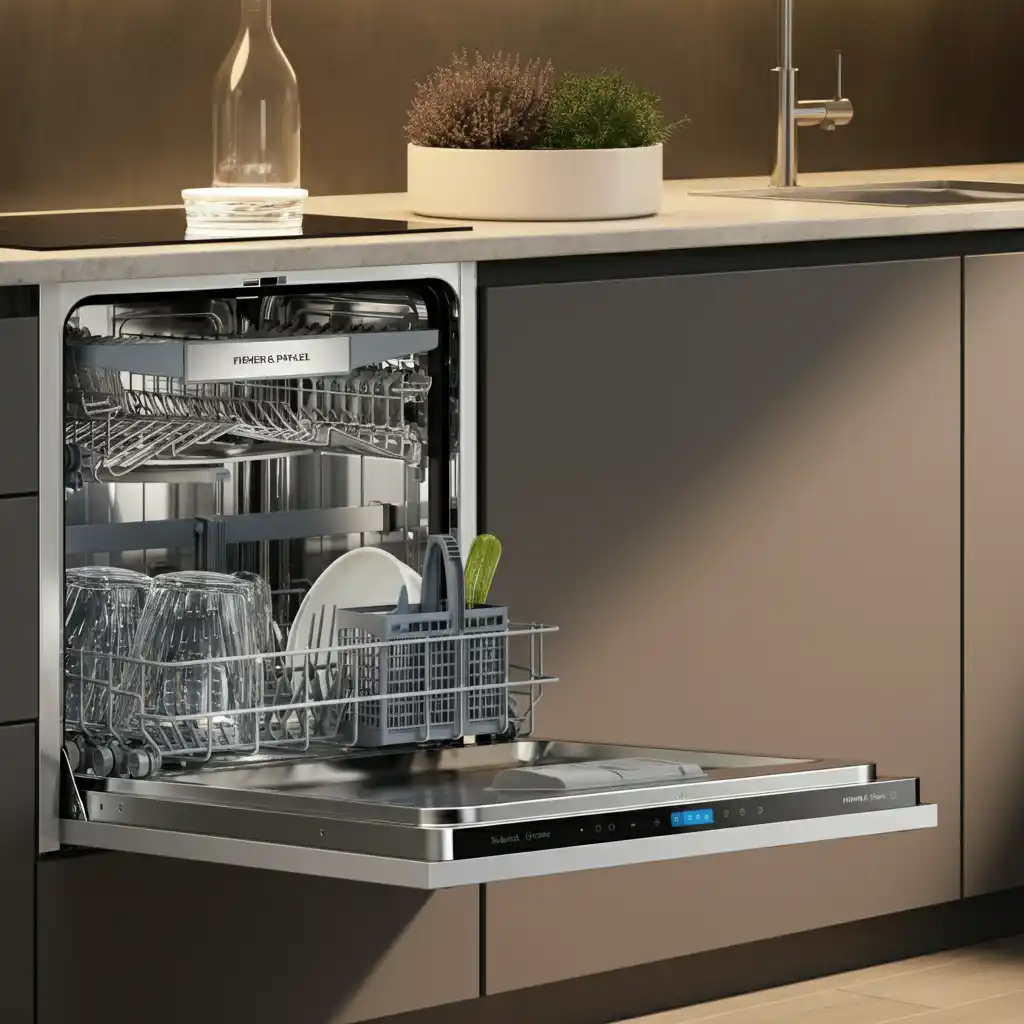
Step 18: Check for Foreign Objects
A small piece of broken glass or another hard object can produce a surprising amount of noise.
Possible foreign objects include:
- Glass fragments
- Bones
- Plastic pieces
- Food debris
- Small metal objects
- Labels
If you hear grinding or clicking from the pump area, inspect only those areas that the manufacturer identifies as user-serviceable.
Disconnect electrical power when required by the service procedure.
Do not put your hand into inaccessible pump areas while the dishwasher is energized.
Step 19: Check the Drain Hose
A drain hose that touches a cabinet or another rigid surface can transfer vibration.
During operation, the hose may move slightly.
If it repeatedly contacts a hard surface, it can create:
- Buzzing
- Tapping
- Rattling
- Vibrational noise
The hose should be routed correctly according to the installation instructions while maintaining the required drainage configuration.
Do not alter the drain arrangement simply to reduce sound.
Step 20: Check the Water Supply Line
The water supply line can also create noise.
If it touches:
- Cabinet walls
- Dishwasher frame
- Plumbing
- Metal brackets
normal movement may be transferred to those structures.
The solution is generally correct routing rather than adding insulation everywhere.
Step 21: Investigate Water Hammer
If your dishwasher makes a sharp knocking noise only when filling, the source may be related to the plumbing system.
This is different from normal pump vibration.
A water-supply system can produce pipe movement when water flow changes rapidly.
Clues include:
- Noise occurs during filling.
- The noise stops after filling.
- Nearby plumbing moves.
- The dishwasher cabinet itself does not appear to vibrate.
A plumbing professional may be needed if water-hammer-type noise persists.
Step 22: Reduce Drain Noise
Dishwasher drainage can produce:
- Pump humming
- Water rushing
- Gurgling
- Drain-line vibration
Some drain noise is unavoidable.
However, excessive vibration may indicate:
- Pump obstruction
- Drain hose contact
- Installation problems
- Plumbing issues
Do not use drain-opening chemicals in a dishwasher unless specifically permitted by the manufacturer.
Step 23: Check the Circulation Pump
The circulation pump is one of the main sources of dishwasher operating noise.
A normal pump produces a characteristic hum or water movement.
However, unusual sounds such as:
- Grinding
- Harsh rattling
- Repeated scraping
- Sudden loud vibration
may indicate an obstruction or component problem.
Do not attempt to hide a mechanical problem by adding insulation.
Diagnose the mechanical source first.
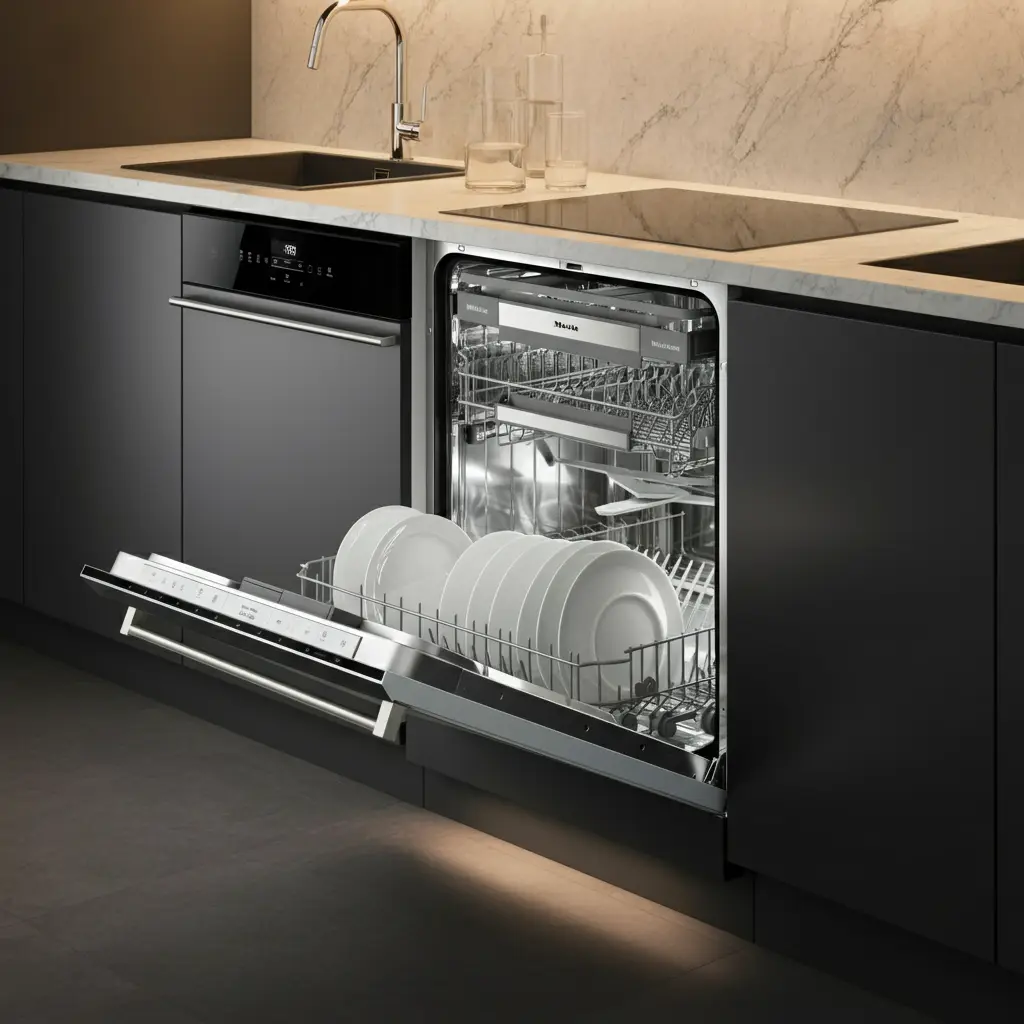
Step 24: Check the Drain Pump
The drain pump normally makes a humming or pumping sound.
If the noise becomes dramatically louder than normal, check:
- Filter
- Accessible pump area
- Drain path
- Hose routing
- Foreign objects
If the pump appears mechanically damaged, professional service may be necessary.
Step 25: Use the Dishwasher’s Quietest Cycle
Some dishwasher cycles may be louder than others.
Heavy-duty cycles can involve different wash patterns, higher water activity or longer periods of pump operation.
If your dishwasher has:
- Quiet mode
- Night cycle
- Eco cycle
- Low-noise setting
using the appropriate program may reduce perceived noise.
However, do not select a cycle solely for quietness if it is unsuitable for the load.
Step 26: Soundproofing a Dishwasher in an Open-Plan Kitchen
Open-plan kitchens present a special challenge.
There are fewer walls or doors to contain appliance noise.
In this situation, focus on:
- Appliance installation
- Vibration control
- Factory insulation
- Cabinet treatment
- Dish loading
- Quiet operating cycles
- Dishwasher location
If replacing the dishwasher in the future, acoustic performance should be considered alongside cleaning performance, energy use, capacity and installation requirements.
Modern quiet models may incorporate multiple sound-control technologies rather than relying on one insulation layer.
Step 27: Soundproofing a Dishwasher in an Apartment
Apartment kitchens can make dishwasher noise more noticeable because the kitchen may be adjacent to living or sleeping areas.
Start with low-risk improvements:
- Level the dishwasher.
- Secure the appliance.
- Check cabinet contact.
- Check the toe-kick.
- Secure hoses.
- Load dishes correctly.
- Maintain filters.
- Preserve insulation.
If the appliance is rented or supplied by the property owner, avoid permanent modifications without permission.
Step 28: Soundproofing a Dishwasher Under a Kitchen Counter
Built-in dishwashers are often installed directly beneath countertops.
The countertop can become a transmission path for vibration.
Before adding acoustic materials, make sure:
- The dishwasher is level.
- The appliance is correctly mounted.
- The door does not rub.
- The cabinet opening is appropriate.
- The appliance is not pressing against the countertop.
- The factory insulation remains installed.
Correct installation should come before acoustic modification.
Step 29: Can You Add a Soundproof Blanket?
A dishwasher-specific sound blanket may help if it is designed for the particular appliance and installation.
However, not every generic appliance blanket is appropriate.
A suitable blanket must not:
- Block vents
- Interfere with plumbing
- Touch inappropriate hot surfaces
- Interfere with electrical components
- Prevent service access
- Alter the dishwasher’s position
- Create moisture problems
Some dishwashers already include a full-wrap insulation blanket as part of the original design.
If factory insulation is already present, improving installation may produce more benefit than adding another blanket.
Step 30: Can You Add Acoustic Panels Inside the Cabinet?
Potentially, but placement matters.
Acoustic material can be installed on suitable cabinet surfaces where it does not interfere with the dishwasher.
For example, an adjacent cabinet wall may be a better location than placing material directly on the appliance.
The material should be:
- Suitable for the environment
- Moisture resistant where required
- Appropriately temperature rated
- Securely installed
- Clear of electrical components
- Clear of ventilation openings
Step 31: Can You Add Mass-Loaded Vinyl?
Mass-loaded vinyl is a dense acoustic barrier used in some sound-control applications.
It can be useful for reducing airborne sound transmission when correctly installed.
However, a dishwasher installation is not automatically an appropriate place to attach generic mass-loaded vinyl.
Potential issues include:
- Weight
- Moisture
- Heat
- Installation clearance
- Electrical components
- Service access
- Door movement
- Plumbing interference
If used, it should be applied to an appropriate surrounding structure rather than interfering with the appliance itself.
Step 32: Can Foam Make a Dishwasher Quieter?
Foam can absorb some sound, but ordinary household foam is not automatically appropriate for dishwasher soundproofing.
The wrong foam may:
- Melt
- Degrade
- Absorb moisture
- Restrict airflow
- Become contaminated
- Interfere with components
Purpose-designed acoustic materials are preferable.
More importantly, foam cannot solve a loose mounting bracket, damaged pump or vibrating cabinet.
Step 33: Why Heavy Materials Are Not Always Better
It may seem logical that the heavier the material, the quieter the dishwasher will become.
But sound control is more complicated.
Different problems require different solutions:
- Airborne noise may need absorption or blocking.
- Panel resonance may need damping.
- Vibration may require isolation.
- Cabinet noise may require structural treatment.
- Dish rattling requires proper loading.
Adding weight without addressing the transmission path may provide little improvement.
Step 34: Soundproofing vs Vibration Isolation
These concepts should not be confused.
Soundproofing
Attempts to reduce the amount of sound reaching another space.
Sound absorption
Reduces reflected sound energy.
Vibration damping
Reduces structural vibration.
Vibration isolation
Attempts to prevent vibration from transferring from one structure to another.
A dishwasher can therefore become quieter by improving vibration isolation even if no additional acoustic insulation is installed.
Step 35: The Importance of Installation Quality
Installation can have a major impact on perceived dishwasher noise.
Manufacturer guidance identifies leveling, secure mounting, insulation and cabinet contact as important considerations for dishwasher noise.
A poorly installed quiet dishwasher can sound louder than expected.
A correctly installed dishwasher with the same basic mechanical components can sound substantially better because less vibration is transferred to surrounding structures.
Step 36: Do Not Remove Factory Foam or Insulation
Some dishwasher insulation can look like unnecessary packaging.
It may not be.
Manufacturers can incorporate insulation into:
- Door assemblies
- Tub areas
- Exterior wraps
- Bases
- Side structures
Removing it may increase noise.
Before removing any foam or insulation, verify its purpose using the model’s documentation.
Step 37: Be Careful With Electrical Safety
Dishwashers combine:
- Water
- Electricity
- Heat
- Pumps
- Motors
- Wiring
This means acoustic modifications should never compromise electrical safety.
Do not cover electrical connections with unapproved materials.
Do not modify wiring to make a dishwasher quieter.
Do not block electrical access points.
In the UK, safety guidance specifically warns against extension leads for dishwashers and advises attention to arcing, buzzing, crackling, overheating, damaged plugs and repeated circuit-breaker problems.
Similar safety principles apply in the USA and Canada: appliance installation should follow the manufacturer’s instructions and applicable local requirements.
Step 38: Do Not Block Dishwasher Ventilation
Ventilation is part of the dishwasher’s operating design.
Never cover a vent simply because it produces sound.
Blocking ventilation can interfere with:
- Drying
- Heat management
- Moisture control
- Appliance operation
If a vent appears noisy, investigate whether the noise is normal or whether the component requires maintenance.
Step 39: Do Not Seal the Dishwasher Completely
A dishwasher should not be wrapped like a soundproof box.
It needs appropriate:
- Airflow
- Drainage
- Water connections
- Electrical access
- Service clearance
- Door movement
- Ventilation
The goal is controlled noise reduction, not airtight enclosure.
Step 40: Soundproofing a Freestanding Dishwasher
Freestanding dishwashers can be more difficult to acoustically isolate because they are not surrounded by cabinetry.
Potential strategies include:
- Preserving factory insulation
- Correctly leveling the unit
- Preventing cabinet or wall contact
- Using appropriate surrounding acoustic treatment
- Reducing vibration
- Correct loading
Do not wrap the entire appliance in an improvised blanket.
Step 41: Soundproofing a Portable or Countertop Dishwasher
Portable and countertop dishwashers require additional caution.
Their external surfaces may be more exposed, but they also have different ventilation, plumbing and support requirements.
Do not cover:
- Vents
- Air openings
- Control panels
- Water connections
- Drain connections
- Electrical components
Instead, reduce noise through proper placement and vibration isolation.
A stable, level countertop or floor surface can make a substantial difference.
Step 42: How to Diagnose Where the Sound Is Coming From
A useful diagnostic method is to listen during each phase.
During filling
Listen for:
- Water rushing
- Valve clicking
- Pipe vibration
- Water hammer

During washing
Listen for:
- Motor hum
- Spray-arm noise
- Dish rattling
- Cabinet vibration
During draining
Listen for:
- Drain pump hum
- Gurgling
- Hose vibration
During drying
Listen for:
- Fan
- Heater-related sounds
- Ventilation noise
This allows you to target the actual source instead of applying insulation everywhere.
Step-by-Step Dishwasher Soundproofing Procedure
If you want a practical sequence, use the following order.
Step 1: Identify the noise
Determine exactly when it happens.
Step 2: Check the load
Remove objects that may rattle.
Step 3: Check spray-arm clearance
Ensure nothing is being struck.
Step 4: Inspect racks
Look for loose wheels and components.
Step 5: Clean the filter
Remove food debris and inspect accessible areas.
Step 6: Check leveling
Verify side-to-side and front-to-back level.
Step 7: Check stability
Make sure the appliance does not rock.
Step 8: Check mounting
Verify that the dishwasher is secured correctly.
Step 9: Check cabinet contact
Make sure the appliance is not pressing against surrounding structures.
Step 10: Inspect hoses
Prevent unnecessary contact with rigid surfaces while preserving correct plumbing.
Step 11: Inspect insulation
Make sure factory insulation has not been removed or displaced.
Step 12: Treat surrounding cabinetry if necessary
Use suitable acoustic materials without interfering with the appliance.
Step 13: Test again
Run a normal cycle and compare the sound.
Step 14: Investigate mechanical problems
If severe noise remains, investigate the pump, motor or other components according to the manufacturer’s instructions.
Best Materials for Dishwasher Soundproofing
There is no single perfect material.
| Material/Method | Main Purpose | Typical Use |
|---|---|---|
| Factory insulation | Absorption/blocking | Dishwasher exterior |
| Acoustic fiber | Absorption | Cabinet surfaces |
| Vibration damping material | Damping | Suitable rigid panels |
| Dense acoustic barrier | Sound blocking | Cabinet construction |
| Approved appliance blanket | Absorption | Compatible dishwasher models |
| Rubber isolation material | Vibration isolation | Appropriate structural locations |
| Cabinet panel damping | Resonance reduction | Large cabinet surfaces |
The material should always be selected based on the location, temperature, moisture and installation requirements.
What Makes a Dishwasher Quiet From the Factory?
Quiet dishwashers often use multiple technologies simultaneously.
These may include:
- Sound-absorbing insulation
- Damping layers
- Quiet motors
- Improved pump designs
- Sound-absorbing bases
- Insulated doors
- Sealed toe-kicks
- Quiet water valves
- Improved spray-arm designs
For example, modern designs may combine a quieter motor with multiple layers of sound-absorbing insulation and a vibration-reducing base.
Other models combine insulation, mastic, bitumen, full-wrap blankets, sealed toe-kicks and quieter valves.
This illustrates an important point: dishwasher noise control is normally a system rather than one component.
Dishwasher Decibel Ratings and Quietness
Manufacturers often publish dishwasher sound levels in decibels.
A lower published dBA figure generally indicates lower measured sound output under specified test conditions.
However, the number does not tell the entire story.
Perceived noise can also depend on:
- Kitchen layout
- Cabinet construction
- Installation
- Floor construction
- Cycle selected
- Dish loading
- Distance from the appliance
- Background noise
Two dishwashers with similar published sound ratings can therefore feel different in actual kitchens.
Should You Replace a Loud Dishwasher?
Not necessarily.
First determine why it is loud.
Repair or installation correction may make sense if:
- The dishwasher is poorly leveled.
- Mounting is loose.
- Cabinets are vibrating.
- A hose is rattling.
- The filter is dirty.
- A foreign object is present.
- Racks are loose.
Replacement may eventually make sense if:
- The motor is severely worn.
- A major pump requires expensive replacement.
- The dishwasher is near the end of its useful life.
- The appliance is inherently loud compared with modern alternatives.
- The cost of repair approaches the value of the machine.
How to Make a Dishwasher Quieter Without Opening It
If you want the lowest-risk approach, concentrate on external improvements.
Start with:
- Correct leveling
- Proper mounting
- Cabinet clearance
- Rack inspection
- Correct loading
- Spray-arm clearance
- Filter cleaning
- Hose routing
- Factory insulation
- Cabinet acoustic treatment
This approach avoids unnecessary access to electrical and mechanical components.
Common Dishwasher Soundproofing Mistakes
Mistake 1: Adding insulation before diagnosing vibration
If the appliance is shaking, insulation may not solve the problem.
Mistake 2: Covering vents
This can interfere with appliance operation.
Mistake 3: Removing factory insulation
This can make the dishwasher louder.
Mistake 4: Using household foam
The material may not be suitable for heat or moisture.
Mistake 5: Wrapping the motor
This can interfere with heat management and serviceability.
Mistake 6: Ignoring cabinet contact
A hard contact point can transmit substantial vibration.
Mistake 7: Ignoring dishes
A large percentage of intermittent rattling can originate from the load.
Mistake 8: Ignoring mechanical sounds
Grinding should not simply be covered with acoustic material.
Mistake 9: Blocking access
Future servicing should remain possible.
Mistake 10: Making unauthorized permanent modifications
This is particularly important in rented homes and apartments.
When Dishwasher Noise Indicates a Repair Problem
Soundproofing should not be used to conceal a mechanical fault.
Contact a qualified technician when you notice:
- Severe grinding
- Repeated scraping
- Burning smell
- Electrical crackling
- Smoke
- Water leakage
- Persistent abnormal pump noise
- Strong new vibration
- Appliance movement
- Repeated electrical trips
Electrical safety guidance specifically recommends stopping use and obtaining professional assistance when appliances show warning signs such as arcing, buzzing or crackling, overheating, repeated breaker trips or other electrical abnormalities.
Dishwasher Soundproofing for USA Homes
For homes in the United States, soundproofing should be compatible with the appliance’s installation instructions and applicable local requirements.
Particular attention should be paid to:
- Electrical installation
- Water connections
- Drainage
- Cabinet mounting
- Floor support
- Ventilation
If electrical modifications are required, use appropriate qualified assistance where necessary.
The acoustic principles remain straightforward: reduce vibration, maintain insulation, prevent cabinet contact and address the actual source of the noise.
Dishwasher Soundproofing for Canadian Homes
Canadian homeowners should similarly follow the manufacturer’s installation requirements and applicable provincial or local regulations.
In colder climates, kitchen construction and flooring can also influence the way vibration is transmitted through the structure.
A dishwasher should remain:
- Level
- Stable
- Properly mounted
- Correctly connected
- Properly ventilated
Any acoustic modification should preserve these requirements.
Dishwasher Soundproofing for UK Homes
UK homeowners should follow the manufacturer’s instructions and applicable electrical and installation requirements.
Dishwashers should be installed appropriately with access to suitable water, drainage and electrical connections. Safety guidance also recommends avoiding extension leads for large appliances and paying attention to signs such as buzzing, crackling, overheating, damaged plugs and repeated circuit-breaker trips.
Soundproofing should never compromise electrical safety.
How Much Can You Reduce Dishwasher Noise?
The result depends heavily on the source of the noise.
If the main problem is a loose cabinet panel, correcting it can make a dramatic difference.
If the problem is a dishwasher that is not level, correcting the installation may substantially reduce vibration.
If the dishwasher is mechanically loud by design, additional cabinet treatment may provide a smaller improvement.
If dishes are rattling, simply changing the load may solve the problem.
Therefore, there is no universal percentage reduction that applies to every dishwasher.
The Most Effective Soundproofing Strategy
For most households, the most logical sequence is:
1. Diagnose
Find out what is making the noise.
2. Correct installation
Level and secure the dishwasher.
3. Remove vibration paths
Prevent unnecessary contact with cabinets, countertops and plumbing.
4. Maintain the appliance
Clean filters, inspect spray arms and check racks.
5. Preserve factory insulation
Do not remove sound-control materials.
6. Treat the surrounding structure
Use suitable acoustic materials where appropriate.
7. Consider replacement only if necessary
If the appliance remains inherently loud or has major mechanical problems, replacement may be the long-term solution.
60 Frequently Asked Questions About Dishwasher Soundproofing
1. Can you soundproof a dishwasher?
Yes. Dishwasher noise can often be reduced through proper leveling, mounting, insulation, vibration control, cabinet treatment and correct loading.
2. What is the best way to make a dishwasher quieter?
Start by correcting installation and vibration problems before adding acoustic materials.
3. Why is my dishwasher so loud?
Possible causes include normal pump and water sounds, cabinet vibration, poor installation, dishes rattling, hoses, loose racks or mechanical problems.
4. Can dishwasher insulation make it quieter?
Yes. Insulation is one of the methods manufacturers use to reduce sound transmission.
5. Should I add insulation to my dishwasher?
Only use suitable materials in appropriate locations. Do not block ventilation or cover electrical and mechanical components.
6. Can I wrap my dishwasher in a blanket?
Do not use a generic blanket unless it is specifically designed and approved for the appliance and installation.
7. Can I put foam around my dishwasher?
Do not use random foam. It may not tolerate the appliance’s heat and moisture conditions.
8. Can I put foam inside my dishwasher door?
Do not add material inside the door unless the manufacturer specifically permits it.
9. Why does my dishwasher vibrate?
Possible causes include poor leveling, loose mounting, cabinet contact, pump vibration or dish movement.
10. Can leveling reduce dishwasher noise?
Yes. Proper leveling helps stabilize the appliance and can reduce vibration transmission.
11. Can loose mounting make a dishwasher louder?
Yes. A poorly secured dishwasher can transfer vibration into surrounding structures.
12. Can cabinets amplify dishwasher noise?
Yes. Cabinet panels can transmit or resonate with appliance vibration.
13. Can the countertop amplify dishwasher noise?
Yes. Vibration can transfer into a rigid countertop and become more noticeable.
14. Should my dishwasher touch the cabinets?
The dishwasher should be installed according to its specified clearances and mounting requirements. Unintended hard contact can transmit vibration.
15. Why does my dishwasher rattle the cabinet?
The dishwasher may be touching the cabinet or transferring vibration through its mounting system.
16. Why does my dishwasher rattle?
Possible causes include dishes, racks, spray arms, loose panels, hoses or foreign objects.
17. Can dishes make a dishwasher noisy?
Yes. Lightweight dishes and improperly positioned cookware can move during the wash cycle.
18. Can a spray arm make noise?
Yes. A spray arm can hit dishes if the dishwasher is incorrectly loaded.
19. Can the dishwasher rack cause noise?
Yes. Damaged wheels, rails or loose rack components can rattle.
20. Can a dirty filter make a dishwasher noisy?
A dirty filter can contribute to poor operating conditions and unusual pump sounds.
21. Can broken glass make a dishwasher noisy?
Yes. Glass or another foreign object near the pump can produce rattling or grinding.
22. Why does my dishwasher grind?
A foreign object, pump obstruction or mechanical component problem may be responsible.
23. Should I ignore a grinding dishwasher?
No. Persistent grinding should be investigated rather than hidden with soundproofing.
24. Can the drain pump make noise?
Yes. Some humming and pumping sounds are normal, but severe or unusual noise should be investigated.
25. Can the circulation pump be noisy?
Yes. The circulation pump produces normal operating noise, but a sudden grinding or severe vibration may indicate a problem.
26. Can the drain hose cause vibration?
Yes. A drain hose contacting a rigid surface can transmit vibration.
27. Can the water supply line make noise?
Yes. Water movement and contact with surrounding structures can create noise.
28. What is water hammer?
Water hammer is a pressure-related plumbing phenomenon that can cause knocking or pipe movement when water flow changes rapidly.
29. Can soundproofing fix water hammer?
Not usually. The plumbing cause should be investigated.
30. Can I use mass-loaded vinyl on a dishwasher?
It can be useful in some acoustic applications, but dishwasher-specific temperature, moisture, clearance and installation requirements must be considered.
31. Can acoustic panels be installed around a dishwasher?
Potentially, if they are installed on suitable surrounding surfaces without interfering with the appliance.
32. Can I soundproof the cabinet around my dishwasher?
Yes. Appropriate cabinet treatment can help reduce sound transmission while maintaining ventilation and service access.
33. Can I put acoustic material under my dishwasher?
Do not automatically do this. It can affect leveling, drainage, door alignment and stability.
34. Should I put rubber under my dishwasher?
Only where an appropriate product and installation method permits it. Generic rubber mats can interfere with proper installation.
35. Can a dishwasher be completely silent?
No. A dishwasher contains pumps, valves, motors and moving water, so some sound is unavoidable.
36. What dishwasher sounds are normal?
Water rushing, swishing, humming, pumping and some clicking can be normal.
37. What dishwasher sounds are abnormal?
Severe grinding, scraping, repeated banging, electrical crackling and sudden extreme vibration deserve investigation.
38. Does a quieter dishwasher use less water?
Not necessarily. Noise level and water consumption are separate performance characteristics.
39. Are stainless-steel dishwashers quieter?
Not automatically. Overall acoustic performance depends on insulation, motor, pumps, construction, installation and other design features.
40. Does cabinet placement affect dishwasher noise?
Yes. Surrounding cabinets can influence how sound is transmitted and reflected.
41. Is a dishwasher louder when installed at the end of a cabinet run?
It can seem louder because there may be less surrounding cabinetry to contain or absorb sound.
42. Can I reduce dishwasher noise by closing the kitchen door?
It may reduce the amount of sound reaching another room, but it does not solve the source of the noise.
43. Can a rug reduce dishwasher noise?
A rug may have limited effect on airborne dishwasher noise. It should not be used to compensate for an improperly installed appliance.
44. Can a dishwasher vibrate through the floor?
Yes. Mechanical vibration can be transmitted through the appliance’s support points.
45. Can an uneven floor make a dishwasher louder?
Yes. An uneven floor can make proper leveling and stable support more difficult.
46. Can a loose toe-kick make a dishwasher noisy?
Yes. A loose panel can rattle during operation.
47. Should I remove the toe-kick?
No. It is part of the installation and should remain installed unless the manufacturer’s instructions require its removal for service.
48. Should I remove dishwasher insulation?
No, unless the manufacturer specifically instructs you to remove a particular component.
49. Can dishwasher soundproofing affect drying?
It can if ventilation openings are blocked or the appliance is modified improperly. Never obstruct designed vents.
50. Can dishwasher soundproofing cause overheating?
Improper insulation around motors, electrical components or ventilation areas could potentially interfere with heat management. Avoid covering components with unapproved materials.
51. Can I soundproof a dishwasher myself?
Basic steps such as leveling, checking loading, cleaning filters and inspecting cabinet contact may be suitable for many homeowners.
52. Should I open the dishwasher to soundproof it?
Not necessarily. Many effective improvements can be performed without opening electrical or mechanical assemblies.
53. Can soundproofing void my warranty?
Unauthorized modifications can potentially create warranty issues depending on the manufacturer and the nature of the modification. Follow the manufacturer’s instructions.
54. Can I make an old dishwasher quieter?
Sometimes. Correcting installation, vibration and maintenance problems can reduce noise. An inherently noisy or mechanically worn appliance may remain loud.
55. Should I replace my dishwasher because it is loud?
Not automatically. Diagnose installation and mechanical issues first.
56. How do I know whether noise is mechanical or structural?
Listen for whether the appliance itself produces the sound or whether cabinets, countertop, floor or plumbing are vibrating.
57. Why is my dishwasher quiet when empty but noisy when full?
The dishes may be moving, touching one another or interfering with the spray arms.
58. Why is my dishwasher noisy only during draining?
The drain pump, drain hose or plumbing may be responsible.
59. Why is my dishwasher noisy only while filling?
The water inlet system or household plumbing may be responsible.
60. When should I call a technician?
Call a qualified technician when severe vibration, grinding, electrical symptoms, burning smells, leaks or persistent abnormal mechanical noise cannot be resolved through basic troubleshooting.
Final Thoughts
The most effective way to soundproof a dishwasher is not to simply cover the appliance with insulation.
Dishwasher noise is produced and transmitted through several different pathways. Water creates airborne sound, pumps and motors generate mechanical noise, dishes can rattle, metal panels can resonate, and vibration can travel through the dishwasher into cabinets, countertops, flooring and plumbing.
For this reason, successful dishwasher soundproofing begins with diagnosis.
Start by determining when the noise occurs. Check the load, spray arms and racks. Then inspect the dishwasher’s level, mounting, cabinet clearance and plumbing connections. Clean the filter and investigate any unusual pump sounds.
Once the mechanical and installation issues have been addressed, acoustic treatment can be considered.
Preserve factory insulation rather than removing it. If additional acoustic treatment is appropriate, use materials designed for the environment and install them on suitable surrounding structures without blocking ventilation or interfering with electrical, plumbing or mechanical components.
For an open-plan kitchen, apartment or home office located near the dishwasher, even relatively small improvements can make the appliance less intrusive. Correcting a vibrating cabinet panel, securing a loose toe-kick, preventing a drain hose from rattling against the cabinet, or properly leveling the dishwasher may provide more practical benefit than covering the entire appliance with insulation.
The same principles apply across the USA, UK and Canada: diagnose first, correct installation problems, control vibration, preserve factory insulation, maintain the dishwasher properly, and never compromise electrical, plumbing or ventilation safety for the sake of reducing noise.
A dishwasher does not need to be completely silent to be comfortable. The objective is to keep normal operating sounds controlled and prevent unnecessary vibration, rattling and mechanical noise from spreading throughout the home.