
When a dishwasher leaks, homeowners often face two separate problems. The first is the appliance itself, which may have developed a faulty pump, damaged hose, leaking door seal, defective water inlet valve, or another mechanical problem. The second is the water damage that occurs when the escaping water reaches the kitchen floor, cabinets, walls, subfloor, or other parts of the property.
This creates an important insurance question: Will homeowners insurance pay to replace the dishwasher, or will it only pay for the damage caused by the leaking appliance?
In many situations, the answer is that homeowners insurance covers the resulting water damage but not the dishwasher or the component that caused the leak. For example, if a dishwasher hose suddenly bursts and floods the kitchen, the insurer may pay for eligible repairs to the flooring and cabinets while excluding the cost of replacing the failed hose or repairing the dishwasher.
However, this is not an absolute rule. There are circumstances in which the dishwasher itself may qualify for coverage. The appliance might be damaged by a separate insured event, form part of an insured building or contents claim, or be protected under an additional appliance breakdown or accidental-damage policy. In some cases, the insurer may also need to repair or replace an appliance that has been damaged as part of a covered incident.
The distinction becomes particularly important when comparing insurance policies in the United States, United Kingdom, and Canada. These countries use different insurance terminology and policy structures, but the central principle is broadly similar: insurers distinguish between the cause of a loss, the damaged appliance, and the resulting damage to insured property.
This guide explains what homeowners insurance generally pays for after a dishwasher leak, whether it covers the dishwasher itself, how built-in and freestanding appliances are treated, what happens when the dishwasher is damaged by water, and how to make a claim.
1. Does Insurance Pay for the Dishwasher or Just the Floor?
In a typical dishwasher leak claim, insurance is more likely to pay for covered damage to the floor and surrounding property than for repairing the dishwasher that caused the leak.
The reason is that homeowners insurance is primarily designed to protect the insured home and its contents against specified unexpected events. It is not normally intended to pay for ordinary appliance repairs, component replacement, mechanical breakdown, or maintenance.
Consider this example:
A homeowner starts a dishwasher before going to bed. During the wash cycle, the water supply hose suddenly splits. Water escapes from the connection and spreads across the kitchen floor. By morning, the laminate flooring is swollen, the cabinet base is damaged, and water has reached the adjoining room.
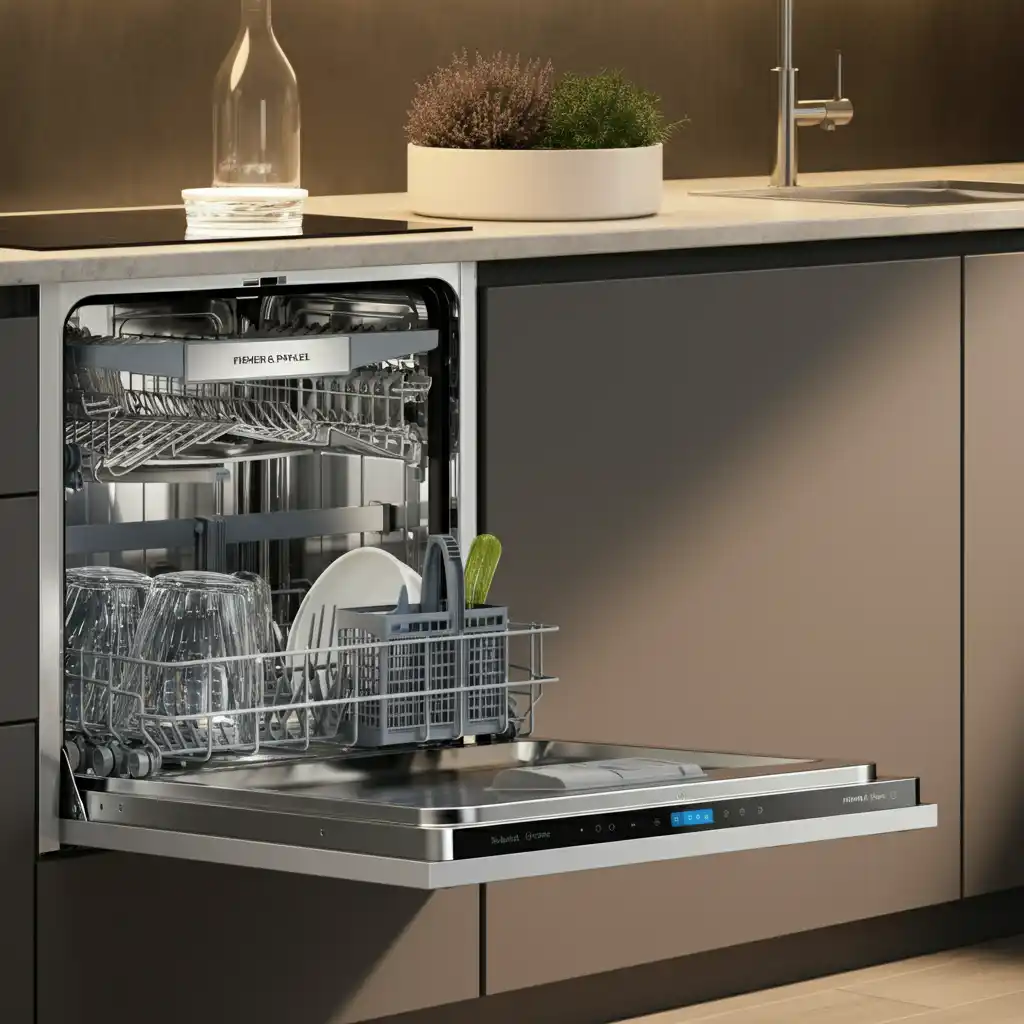
There are several separate costs:
| Item | Typical insurance treatment |
|---|---|
| Damaged kitchen flooring | May be covered if the leak is an insured event |
| Damaged kitchen cabinets | May be covered |
| Damaged subfloor | May be covered |
| Damaged wall or ceiling | May be covered |
| Water-damaged personal belongings | May be covered under contents or personal-property cover |
| Failed water supply hose | Usually not covered as an appliance repair |
| Faulty dishwasher pump | Usually not covered as mechanical breakdown |
| Replacement dishwasher | Usually not covered simply because it caused the leak |
| Water extraction and drying | May be covered as part of an accepted claim |
This is the basic distinction homeowners need to understand.
The insurer may accept the claim for the damaged kitchen while refusing to pay for the failed dishwasher component. The homeowner may therefore receive assistance with repairing the floor but still need to pay a technician to fix the appliance.
Canadian insurance guidance specifically explains that sudden or accidental water damage caused by malfunctioning household appliances, including dishwashers, is typically covered, while the cost of repairing the appliance that caused the problem is not usually covered.
In the UK, policy wording can explicitly cover water escaping from a dishwasher while excluding damage to the appliance or system from which the water escaped.
In the United States, the same distinction commonly appears through sudden and accidental water-damage provisions and exclusions for wear, tear, maintenance, and mechanical breakdown.
The final decision always depends on the policy wording and the facts of the incident.
2. Why Does Insurance Cover the Floor but Not the Dishwasher?
The difference comes down to the purpose of home insurance.
Homeowners insurance protects against specified financial losses. It is not a general maintenance agreement for everything inside the property.
A dishwasher is a mechanical appliance with components that gradually wear out. Pumps, seals, valves, hoses, motors, sensors, and electrical parts can fail through age, normal use, deterioration, or defective workmanship.
Replacing these components is generally considered part of owning and maintaining the appliance.
Water damage to the home is a different matter. If a sudden and accidental event causes water to escape from the dishwasher, the resulting damage may qualify as an insured loss.
For example:
- A pump becomes worn and begins leaking slowly.
- The leak damages the kitchen floor.
- The homeowner discovers the problem several weeks later.
The insurer may decide that both the mechanical failure and resulting damage are related to gradual deterioration.
Now consider a different situation:
- A relatively new dishwasher is operating normally.
- A supply hose suddenly splits.
- Water floods the kitchen.
- The floor and cabinets are damaged.
The failed hose may not be covered, but the resulting water damage may qualify.
The insurer is not necessarily paying for the appliance because it failed. It is considering whether the water damage to the insured property resulted from an event covered by the policy.
This distinction is reflected in the way insurance policies define escape of water, accidental water damage, appliance exclusions, and mechanical breakdown.
3. What Is the Difference Between the Dishwasher and the Resulting Water Damage?
To understand a claim properly, it helps to separate the incident into three categories.
Category 1: The source of the leak
The source is the part that allowed water to escape.
It could be:
- A damaged water supply hose.
- A faulty drain hose.
- A leaking door gasket.
- A defective water inlet valve.
- A failed circulation pump.
- A damaged sump assembly.
- A loose plumbing connection.
- A cracked internal water pipe.
- A defective water-control component.
The cost of repairing or replacing the failed component is generally not included in a standard water-damage claim.
Category 2: The resulting damage to the property
This includes the damage caused when water escapes from the dishwasher.
Examples include:
- Swollen laminate flooring.
- Damaged hardwood flooring.
- Wet kitchen cabinets.
- Damaged skirting boards.
- Water-stained walls.
- Damaged ceilings.
- Wet insulation.
- Damaged subflooring.
- Mould resulting from covered water damage, subject to policy terms.
These costs may be covered if the water escape qualifies as an insured event.
Category 3: Additional costs caused by the incident
Some costs arise because the property needs emergency treatment or restoration.
These may include:
- Water extraction.
- Industrial drying equipment.
- Moisture inspections.
- Removal of damaged flooring.
- Temporary removal of kitchen cabinets.
- Professional cleaning.
- Mould assessment.
- Temporary accommodation, where applicable.
Whether these expenses are covered depends on the policy and whether they are reasonable and necessary to address an insured loss.
The three categories should be considered separately. An insurer should not automatically treat every expense as either covered or excluded simply because the dishwasher was involved.
4. Will Homeowners Insurance Pay to Replace a Broken Dishwasher?
In most ordinary circumstances, homeowners insurance will not replace a dishwasher simply because it stops working or develops a mechanical fault.
A dishwasher may stop functioning for many reasons:
- The circulation pump fails.
- The drain pump becomes defective.
- The heating element stops working.
- The electronic control board fails.
- The motor burns out.
- The door latch breaks.
- The water inlet valve stops operating.
- Internal wiring becomes damaged.
- The dishwasher develops a drainage problem.
These are generally appliance repair issues rather than insured property losses.
A standard home insurance policy is not normally designed to pay for the cost of replacing an appliance that has reached the end of its useful life.
However, there are exceptions.
When a dishwasher replacement may qualify
The dishwasher itself may be covered when it is damaged by an insured event.
For example:
Fire damage: If a covered fire damages the dishwasher, the appliance may qualify as part of the property or contents claim.
Lightning or electrical event: If a covered electrical event damages the dishwasher, the policy may consider the appliance as part of the claim, depending on the wording and exclusions.
Sudden accidental physical damage: If the policy includes suitable accidental-damage protection and the incident meets its definition, the dishwasher may qualify.
Damage during an insured water incident: If a separate covered event damages both the appliance and the surrounding property, the insurer may consider the dishwasher under the appropriate section of the policy.
The important point is that the appliance must itself have suffered damage from a covered cause. A dishwasher that simply stops working because of ordinary mechanical failure is a different situation.
5. What Happens If the Dishwasher Is the Cause of the Water Damage?
This is the situation most homeowners are concerned about.
When a dishwasher causes water damage, the insurer usually investigates the source of the water and the resulting damage.
For example, imagine a dishwasher develops an internal leak while operating. Water escapes from a damaged connection and enters the floor beneath the appliance.
The homeowner discovers the water and reports the incident.
The insurer may arrange an inspection to establish:
- What component failed.
- Whether the failure was sudden or gradual.
- Whether the water damage was accidental.
- How long the leak may have continued.
- Which parts of the property were damaged.
- Whether the homeowner could reasonably have discovered the leak earlier.
- Whether any policy exclusions apply.
If the evidence supports a sudden and accidental leak, the insurer may accept the resulting property damage.
However, the dishwasher repair may remain the homeowner’s responsibility.
Example: Sudden hose failure
A dishwasher is four years old and has been maintained properly. During a normal wash cycle, the supply hose suddenly ruptures.
Water damages the kitchen floor and cabinet bases.
Potential outcome:
- Floor repairs: may be covered.
- Cabinet repairs: may be covered.
- Drying costs: may be covered.
- Replacement hose: usually not covered.
- Dishwasher repair: depends on the actual damage and policy.
- New dishwasher: not automatically covered.
Example: Gradual internal leak
A dishwasher has been leaking slowly for several months. The water damages the cabinet base and subfloor.
The insurer’s inspection finds old staining, deteriorated materials, and evidence of prolonged moisture.
Potential outcome:
- Dishwasher repair: usually not covered.
- Cabinet damage: may be excluded if caused by gradual leakage.
- Flooring damage: may be excluded or restricted.
- Mould remediation: depends on the policy and underlying cause.
The difference between these examples demonstrates why the cause and duration of a leak are so important.
6. Does Insurance Pay for a Built-In Dishwasher?
A built-in dishwasher is installed inside kitchen cabinetry and connected to the home’s plumbing and electrical systems.
Whether it is treated as part of the building or as household contents depends on the policy’s definitions.
This distinction is especially relevant in the UK and Canada, where buildings and contents insurance are often purchased as separate forms of protection.
Built-in dishwashers and buildings insurance
A fitted dishwasher may be considered part of the fitted kitchen or treated as an appliance or item of contents, depending on the insurer’s definitions.
The fact that it is physically attached to the kitchen does not automatically mean that it is covered as part of the building.
Some policies distinguish between fixed fixtures, fitted appliances, and removable household equipment.
For example, a policy might cover permanently installed kitchen units under buildings insurance while treating a dishwasher as an appliance under contents insurance.
Other policy definitions may produce a different result.
Built-in dishwasher and water damage
Even when the appliance itself is not insured under buildings cover, the damage it causes to the surrounding kitchen may still qualify.
For example:
- The dishwasher is fitted between two cabinets.
- A water connection fails.
- Water damages the cabinet sides and floor.
- The appliance is removed to access the damaged area.
The insurer may consider the cost of repairing the insured kitchen structure while excluding the appliance repair.
Questions to ask your insurer
If you have an integrated or built-in dishwasher, ask:
- Is the dishwasher classified as a building fixture or household contents?
- Does the policy cover fitted kitchen appliances?
- Is mechanical breakdown excluded?
- Does accidental damage protection include the appliance?
- Are damage and replacement costs treated separately?
- Are removal and refitting costs covered when necessary to repair insured damage?
Do not assume that an integrated dishwasher is automatically covered under buildings insurance.
7. Does Insurance Pay for a Freestanding Dishwasher?
A freestanding dishwasher is not permanently integrated into kitchen cabinetry. It can generally be disconnected and moved without dismantling the fitted kitchen.
Because it is movable household equipment, it is commonly treated as personal property or contents.
In the United States, it may fall under the personal-property section of a homeowners policy, depending on the policy definition.
In the UK and Canada, it may be included under contents insurance, subject to the relevant contract.
However, contents insurance does not automatically cover every type of appliance failure.
A freestanding dishwasher may be insured against specified accidental events but not ordinary mechanical breakdown.
Example: Freestanding dishwasher damaged by fire
If a covered fire destroys a freestanding dishwasher, the insurer may consider the appliance under the relevant contents or personal-property coverage.
Example: Freestanding dishwasher develops a pump fault
If the dishwasher stops working because its pump fails through normal use, a standard home insurance policy will generally not pay for a replacement.
Example: Freestanding dishwasher leaks onto the floor
The insurer may consider the resulting water damage separately from the dishwasher itself.
This is why homeowners should review both the buildings and contents sections of their insurance policy.
8. Does Insurance Cover the Dishwasher If Water Damages It?
There is an important difference between a dishwasher causing water damage and a dishwasher being damaged by water.
These situations should not be confused.
Situation A: The dishwasher leaks and damages the floor
The dishwasher is the source of the water.
The insurer may cover eligible damage to the surrounding property but exclude the appliance that caused the leak.
Situation B: Another water leak damages the dishwasher
Suppose a burst pipe elsewhere in the kitchen releases water that damages an otherwise functioning dishwasher.
The dishwasher is now a damaged item rather than the source of the water.
If the pipe failure qualifies as an insured event and the dishwasher is included within the policy’s insured property, the appliance may qualify for coverage.
Situation C: A dishwasher is damaged during a covered fire
If a fire causes physical damage to the dishwasher, the insurer may consider its repair or replacement under the relevant buildings or contents section.
Situation D: A dishwasher is damaged by a gradual plumbing leak
If water has slowly entered the appliance over an extended period, gradual-damage exclusions may apply.
The insurer will assess the cause and whether the damage falls within the policy.
The key question is not simply whether the dishwasher is involved. It is whether the dishwasher is the cause of the loss or an item damaged by an insured event.
9. Does Homeowners Insurance Cover Dishwasher Damage in the USA?
In the United States, standard homeowners insurance commonly covers certain types of sudden and accidental water damage from household appliances.
However, the appliance itself is not automatically covered when it develops a mechanical fault.
Dwelling coverage
Dwelling coverage generally protects the physical structure of the insured home.
Depending on the policy and the incident, this may include:
- Kitchen flooring.
- Permanently installed cabinets.
- Walls.
- Ceilings.
- Subflooring.
- Other structural components.
If a sudden dishwasher leak damages these items, the insurer may consider the resulting damage under the dwelling coverage section.
Personal-property coverage
Personal-property coverage may protect eligible movable belongings inside the home.
A freestanding dishwasher may be treated as personal property, depending on the policy.
However, the fact that an appliance is included within personal-property coverage does not mean that mechanical breakdown is covered.
The appliance must have been damaged by an insured cause.
Additional coverage and endorsements
Some homeowners policies offer optional endorsements that extend protection to certain equipment breakdowns or accidental damage.
Depending on the policy, equipment breakdown protection may cover specified electrical or mechanical failures that would otherwise be excluded.
However, the homeowner must check whether:
- Household dishwashers are eligible.
- Internal mechanical components are included.
- Water leakage is included or excluded.
- There are separate deductibles.
- There are maximum payment limits.
- Wear and tear remains excluded.
An equipment breakdown endorsement should not be confused with a general water-damage claim.
US deductible example
Suppose a dishwasher suddenly leaks and causes $6,000 in eligible damage to the kitchen.
The homeowner has a $1,000 deductible.
If the insurer accepts the full $6,000 as covered and no other adjustments apply, the potential payment would be $5,000.
The dishwasher repair may still be excluded.
The example illustrates why a homeowner can receive a payment for the kitchen floor and cabinets without receiving money for a new dishwasher.
10. Does Home Insurance Pay for the Dishwasher or Just the Floor in the UK?
In the United Kingdom, the distinction is commonly found within the escape-of-water section of a home insurance policy.
Some policies specifically cover water escaping from domestic appliances, including washing machines and dishwashers.
At the same time, they may exclude damage to the appliance or system from which the water escaped.
For example, a policy may cover damage caused by water escaping from a dishwasher but state that damage to the dishwasher itself is not covered.
This wording demonstrates that the policy can insure the consequences of a leak without insuring the faulty appliance.
Buildings insurance in the UK
Buildings insurance may cover eligible damage to the physical structure of the home.
This can include:
- Fixed kitchen cabinets.
- Flooring.
- Walls.
- Ceilings.
- Plasterwork.
- Permanently installed fixtures.
The insurer will assess whether the water escape is covered and which items fall within the policy’s definition of buildings.
Contents insurance in the UK
Contents insurance may cover eligible movable possessions damaged by an insured event.
A freestanding dishwasher may be treated as contents, while an integrated appliance may be classified differently depending on the policy.
The wording should be checked rather than relying on the appliance’s installation style alone.
Trace and access
Some UK policies include trace-and-access protection.
This may cover reasonable costs associated with locating and exposing the source of an insured leak.
For example, a contractor may need to remove a cabinet panel or flooring section to locate a concealed leak.
However, trace and access does not automatically mean the insurer will pay to repair the failed dishwasher component.
What if the insurer repairs the dishwasher?
There are circumstances in which the insurer may arrange for an appliance to be inspected, repaired, or replaced as part of a claim.
The Financial Ombudsman Service has considered disputes involving a dishwasher damaged during a wider water-damage claim and whether the insurer’s appointed repairer carried out the work properly.
This illustrates that an appliance can sometimes form part of a claim settlement, but the outcome depends on the actual insured damage and policy terms.
Homeowners should not assume that every dishwasher involved in a water-damage claim must be replaced.
11. Does Home Insurance Cover Dishwasher Damage in Canada?
In Canada, home insurance commonly covers sudden and accidental water damage caused by malfunctioning household appliances, including dishwashers.
However, the cost of repairing the appliance that caused the water problem is generally not covered under standard water-damage protection.
Building coverage
Building coverage may pay for eligible damage to the insured structure, such as:
- Kitchen flooring.
- Cabinets.
- Walls.
- Ceilings.
- Subflooring.
- Other permanently installed building components.
Contents coverage
Contents coverage may protect eligible movable household possessions.
A freestanding dishwasher may fall within contents coverage, depending on the insurer’s definitions.
A built-in dishwasher may be classified differently.
Appliance repair and replacement
If a dishwasher develops an ordinary mechanical failure, homeowners should not expect standard home insurance to pay for its repair.
Some insurers offer optional equipment breakdown coverage or other endorsements that may provide additional protection.
The exact benefits depend on the policy.
Water damage versus flooding
Canadian homeowners should also distinguish between water escaping from an indoor appliance and external flooding.
Sudden accidental water damage from a dishwasher is different from:
- Overland flooding.
- Sewer backup.
- Groundwater seepage.
- Water entering through external openings.
- Other flood-related events.
These risks may have different policy requirements and optional coverage.
A policy that covers dishwasher leakage does not automatically cover every form of water damage.
12. USA, UK and Canada: Does Insurance Pay for the Dishwasher or the Floor?
| Situation | USA | UK | Canada |
|---|---|---|---|
| Sudden dishwasher leak damages the floor | Floor may be covered | Floor may be covered | Floor may be covered |
| Dishwasher pump fails through normal wear | Usually not covered | Usually not covered | Usually not covered |
| Dishwasher hose suddenly bursts | Resulting damage may be covered | May qualify under escape-of-water cover | Resulting damage may be covered |
| Dishwasher itself is damaged by a covered fire | May be covered under applicable property cover | May be covered under buildings or contents cover | May be covered under applicable property cover |
| Another covered pipe leak damages the dishwasher | May be covered if the appliance is insured property | May be covered depending on buildings or contents definitions | May be covered if the appliance is insured property |
| Slow leak damages cabinets over months | Commonly excluded or restricted | Commonly excluded or restricted | Commonly excluded or restricted |
| Built-in dishwasher replacement | Depends on classification and coverage | Depends on policy definition | Depends on policy definition |
| Freestanding dishwasher replacement | Depends on contents and insured cause | Depends on contents and insured cause | Depends on contents and insured cause |
| Equipment breakdown protection | Optional or policy-specific | Optional or separate cover | Optional or policy-specific |
The table describes common approaches, not guaranteed outcomes. The policy wording and circumstances of the incident determine the actual coverage.
13. What If the Dishwasher Is Covered by a Manufacturer Warranty?
A manufacturer warranty and homeowners insurance protect against different types of problems.
A manufacturer’s warranty generally covers specified defects in the appliance during the warranty period.
For example, a dishwasher warranty may cover:
- Defective manufacturing.
- Certain faulty components.
- Workmanship defects.
- Specified parts and labour.
- Certain rust-related defects.
The warranty may exclude:
- Normal wear and tear.
- Misuse.
- Incorrect installation.
- Accidental damage.
- External water damage.
- Problems caused by unsuitable plumbing.
- Damage caused by unauthorised repairs.
The exact coverage depends on the manufacturer’s warranty.
Does the manufacturer pay for floor damage?
Not necessarily.
A manufacturer’s appliance warranty usually concerns the product itself. It should not be assumed to cover damage to the kitchen floor, cabinets, or other property.
Some manufacturers may offer additional protection or have separate product-liability responsibilities, but those are different from ordinary warranty coverage.
Can homeowners insurance and a warranty both apply?
Yes, depending on the circumstances.
For example:
- The manufacturer’s warranty may cover a defective dishwasher component.
- Homeowners insurance may cover eligible water damage to the kitchen.
- An additional appliance plan may provide separate repair protection.
The homeowner should inform the relevant providers and avoid claiming the same expense twice.
14. Does an Extended Dishwasher Protection Plan Pay for Water Damage?
An extended dishwasher protection plan may cover specified appliance repairs after the manufacturer’s standard warranty expires.
However, the plan’s coverage depends on its wording.
Some plans cover:
- Mechanical breakdown.
- Electrical failure.
- Certain internal components.
- Parts and labour.
- Replacement if the appliance cannot be repaired under specified conditions.
Other plans may exclude:
- External plumbing failures.
- Water damage to the kitchen.
- Damage caused by improper installation.
- Gradual leaks.
- Cosmetic damage.
- Neglect.
- Certain pre-existing problems.
A protection plan that covers a dishwasher pump does not necessarily cover the flooring damaged when the pump leaks.
Likewise, homeowners insurance that covers the damaged floor does not necessarily cover the pump.
Before purchasing an extended protection plan, homeowners should compare the actual coverage with the manufacturer’s warranty and home insurance policy.
15. What If the Dishwasher Was Installed Incorrectly?
Incorrect installation can complicate an insurance claim.
For example, a drain hose may not have been secured properly, a water connection may have been overtightened, or the appliance may have been installed in a way that places unnecessary stress on a connection.
If the installation defect causes a leak, the insurer may investigate whether faulty workmanship or installation exclusions apply.
The cost of correcting defective installation may not be covered.
The treatment of resulting water damage can be more complicated. Some policies distinguish between the excluded faulty work and separate damage caused by it.
Homeowners should retain:
- Installation invoices.
- Plumber details.
- Appliance delivery records.
- Installation photographs.
- Product manuals.
- Repair reports.
If a professional installer caused the damage, the homeowner may also need to investigate whether the installer has relevant insurance or legal responsibility.
The homeowner should not assume that a rejected insurance claim means there is no other possible route to recover the loss.
16. What If the Dishwasher Is Old?
The age of a dishwasher does not automatically determine whether the surrounding water damage is covered.
However, age can become relevant when the insurer investigates the cause of the leak.
An older appliance may have:
- Deteriorated hoses.
- Worn door seals.
- Corroded fittings.
- Damaged internal pipes.
- A failing pump.
- Age-related component failure.
If the water damage resulted from gradual deterioration, the insurer may rely on a wear-and-tear or gradual-damage exclusion.
However, an old dishwasher can still experience a sudden accidental event.
For example, a hose may unexpectedly rupture even though the appliance has been operating normally.
The insurer should assess the evidence rather than treating the appliance’s age as the only deciding factor.
Should you replace an old dishwasher after a leak?
If the dishwasher is old and has experienced a significant leak, replacement may be more practical than repair.
However, that decision is usually a maintenance and financial decision rather than an automatic insurance entitlement.
A technician should inspect the appliance and identify whether the leak came from a replaceable component or a more serious internal failure.
17. Does Insurance Pay for Water-Damaged Cabinets and Flooring?
This is often where the largest expenses arise.
A dishwasher may release water for several minutes or hours before anyone notices.
Water can spread beneath flooring, enter cabinet bases, and travel into adjoining rooms.
Laminate flooring
Laminate flooring can swell when water enters its core or reaches the joints.
The affected area may become raised, distorted, or permanently damaged.
If the leak qualifies as an insured event, the insurer may consider the cost of repairing or replacing the damaged flooring.
Hardwood flooring
Water can cause hardwood boards to swell, cup, warp, or separate.
Even after surface water has been removed, moisture may remain within the wood or subfloor.
Professional drying and moisture assessment may be required.
Vinyl flooring
Water may travel through joints or edges and become trapped beneath some vinyl flooring installations.
The visible surface may appear undamaged while the adhesive, subfloor, or surrounding materials remain wet.
Kitchen cabinets
Cabinet bases are particularly vulnerable because they are often made from engineered wood products that can absorb water.
Damage may include swelling, peeling, warping, and deterioration of joints.
The insurer may consider repairing or replacing damaged cabinet sections where the damage results from an insured event.
Subflooring
The subfloor may require inspection if water has entered beneath the finished flooring.
If moisture remains trapped, the damage can continue even after the visible water has disappeared.
A professional restoration company may need to remove selected flooring sections and use drying equipment.
18. Does Insurance Pay for Removing and Reinstalling the Dishwasher?
This is an important question because the appliance may need to be removed to repair the kitchen.
For example, a contractor may need to disconnect the dishwasher to replace damaged flooring or cabinet panels.
The cost of removing and reinstalling the appliance may be considered part of the reasonable repair process when it is necessary to complete covered restoration work.
However, this is not guaranteed.
The insurer may distinguish between:
- Removing the dishwasher to access covered building damage.
- Repairing the dishwasher’s own mechanical fault.
- Reinstalling the appliance after the insured property repairs are completed.
- Replacing the appliance with a new model.
These are separate costs.
A policy may allow reasonable removal and refitting expenses while excluding the cost of repairing or replacing the dishwasher.
Before agreeing to significant work, homeowners should ask the insurer whether removal and reinstallation costs are included in the approved repair estimate.
19. What Happens If the Insurance Company Wants to Repair Instead of Replace?
Insurance companies may have the option to repair, replace, reinstate, or settle a claim through a cash payment.
The exact approach depends on the policy.
Suppose a dishwasher has suffered damage during a covered event.
The insurer may arrange for an approved technician to inspect the appliance and determine whether repair is reasonable.
If the appliance can be repaired safely and economically, the insurer may prefer repair over replacement.
If the repair is not practical or the appliance cannot be restored to its previous condition, replacement may be considered where the policy provides for it.
The same principle can apply to damaged flooring and cabinets.
The insurer may choose to repair a section rather than replace an entire kitchen.
However, the repair should be effective and lasting. A repair that leaves the property in an unacceptable condition may lead to a dispute.
Homeowners should request a clear written explanation if they disagree with the proposed repair method.
20. What Does New-for-Old Insurance Mean for a Dishwasher?
Some home contents policies provide new-for-old replacement cover for eligible possessions.
This generally means that an insured item may be replaced with a new equivalent rather than paying only its depreciated value.
However, new-for-old protection does not mean every broken appliance is automatically replaced.
The loss must first qualify as an insured event.
For example, if a dishwasher is destroyed by a covered fire, new-for-old contents protection may apply if the appliance qualifies under the policy.
If the dishwasher simply stops working because its pump has worn out, new-for-old protection will not normally turn that mechanical failure into an insured claim.
Homeowners should also check:
- Whether appliances are included.
- Whether there are single-item limits.
- Whether the replacement must be equivalent.
- Whether the insurer can supply a replacement directly.
- Whether a cash settlement may be reduced.
- Whether special exclusions apply.
21. What If the Dishwasher Is Rented or Belongs to the Landlord?
Ownership matters when determining which insurance policy may respond.
A dishwasher supplied with a rental property may belong to the landlord rather than the tenant.
Landlord’s insurance
The landlord may have buildings insurance, landlord contents cover, or a separate appliance policy.
If the dishwasher belongs to the landlord, the landlord should check whether the appliance is insured under the relevant policy.
The landlord’s buildings insurance may also cover eligible water damage to the property.
Tenant’s contents insurance
A tenant’s contents insurance generally protects the tenant’s own belongings rather than the landlord’s property.
If water from the landlord’s dishwasher damages the tenant’s personal belongings, the tenant may have a claim under their own contents policy, depending on the circumstances.
Tenant-owned dishwasher
If the tenant purchased and installed the dishwasher, the appliance may fall under the tenant’s contents insurance.
However, damage to the landlord’s floor or cabinets may be treated separately.
Who is responsible for the damage?
Responsibility depends on the cause of the incident, the tenancy agreement, local law, and any relevant negligence.
For example:
- A sudden failure of a landlord-supplied appliance may involve the landlord.
- Incorrect installation by a tenant may create a different liability question.
- A long-standing leak that was reported but not repaired may raise questions about the landlord’s response.
Tenants should report leaks promptly and retain written records of communication.
22. What If the Dishwasher Leak Damages a Neighbour’s Property?
Water damage can sometimes spread beyond the homeowner’s own property.
For example, water may pass through the kitchen floor and damage the ceiling of an apartment below.
In a detached home, the leak may affect an adjoining property if water travels through shared walls or structural areas.
This creates a potential liability question.
Homeowners insurance often includes personal liability protection, but whether it responds depends on the circumstances and the policy.
The insurer may investigate whether the homeowner was legally responsible for the damage.
A sudden accidental leak does not automatically establish negligence.
However, if the homeowner knew about a serious leak and failed to take reasonable action, the circumstances may be different.
In apartment buildings and condominiums, the building’s master insurance policy, individual unit insurance, and ownership responsibilities may also become relevant.
Homeowners should notify their insurer and the building manager or property management company when a leak affects another unit.
23. How to Make an Insurance Claim for Dishwasher Damage
A successful claim depends on accurate documentation and prompt action.
The homeowner should establish the cause of the leak, identify the damaged property, and provide evidence supporting the claim.
Step 1: Stop the leak
Stop the dishwasher and turn off its water supply if it is safe to do so.
Do not continue running the appliance to see whether the leak happens again.
Step 2: Protect electrical safety
Avoid touching electrical connections or appliances while standing in water.
If water has reached sockets, wiring, or electrical equipment, seek qualified assistance.
Step 3: Photograph the dishwasher
Take photographs of:
- The dishwasher exterior.
- The area beneath the appliance.
- The supply hose.
- The drain connection.
- Any visible component failure.
- The location where water escaped.
If the appliance has been moved, photograph its original position if possible.
Step 4: Photograph the property damage
Document:
- Wet flooring.
- Swollen cabinets.
- Damaged skirting boards.
- Water stains.
- Damaged ceilings.
- Affected personal belongings.
- Any visible mould.
Take photographs from different angles.
Step 5: Obtain a technician’s report
Ask a qualified appliance technician or plumber to identify the source of the leak.
The report should explain:
- Which component failed.
- Whether the failure appears sudden or gradual.
- Whether the dishwasher can be repaired.
- Whether the appliance is safe to use.
- Whether there is evidence of previous leakage.
This information can help the insurer distinguish the appliance repair from the resulting water damage.
Step 6: Contact the insurer
Report the incident as soon as reasonably possible.
Explain what happened and ask whether the insurer wants to inspect the dishwasher or damaged property before permanent repairs begin.
Step 7: Obtain restoration estimates
Depending on the extent of the damage, you may need estimates for:
- Water extraction.
- Drying.
- Flooring replacement.
- Cabinet repair.
- Subfloor restoration.
- Wall and ceiling repairs.
- Mould assessment.
- Removal and reinstallation of the dishwasher.
Keep all invoices and written estimates.
Step 8: Separate appliance costs from property costs
This is particularly important.
Ask the technician or contractor to separate:
- Dishwasher repair or replacement.
- Plumbing repair.
- Property restoration.
- Drying and water extraction.
- Removal and refitting.
- Other emergency work.
A clear breakdown helps the insurer assess each expense under the correct section of the policy.
24. Why Might an Insurer Pay for the Floor but Reject the Dishwasher?
There are several reasons an insurer may accept the building damage but reject the appliance repair.
Mechanical breakdown exclusion
The policy may exclude the cost of repairing mechanical or electrical failure.
A failed pump, valve, motor, or control board may therefore remain the homeowner’s responsibility.
Wear and tear
The dishwasher may have deteriorated through ordinary use.
The insurer may consider the failure a maintenance issue rather than an insured event.
Gradual leakage
If the dishwasher leaked slowly over an extended period, the insurer may apply a gradual-damage exclusion.
The surrounding damage may also be restricted if it resulted from prolonged leakage.
The appliance is not included under the relevant coverage
A fitted dishwasher may be classified differently from a removable appliance.
The insurer may determine that it falls under contents rather than buildings cover, or that it is excluded under a particular section.
The policy covers damage caused by the appliance, not damage to it
Some policies explicitly cover water escaping from a dishwasher while excluding the appliance itself.
This is a common source of confusion.
The homeowner may see the words “dishwasher leak covered” and assume that the appliance will also be repaired.
The policy may actually mean that the resulting property damage is covered.
25. What Should You Do If the Insurance Company Refuses to Pay for the Dishwasher?
If the insurer agrees to pay for the floor but refuses to repair or replace the dishwasher, first establish the reason.
Ask the insurer to identify the relevant policy wording.
The refusal may be correct if the dishwasher failed through ordinary mechanical breakdown.
However, the decision may deserve further review if the appliance itself was damaged by a separate insured event.
Request a written explanation
Ask the insurer to explain:
- Which part of the policy applies.
- Whether the appliance is classified as buildings or contents.
- Which exclusion is being relied upon.
- Whether the insurer accepts the water-damage claim.
- Whether any additional cover applies.
Review the policy wording
Look for sections covering:
- Escape of water.
- Accidental damage.
- Buildings.
- Contents.
- Mechanical or electrical breakdown.
- Domestic appliances.
- Wear and tear.
- Trace and access.
Obtain an independent technician’s report
If the insurer says the dishwasher failed through wear and tear, an independent report may help clarify the cause.
The technician should explain the failure based on inspection rather than simply stating that the dishwasher is broken.
Use the complaints process
If you believe the insurer has incorrectly applied the policy, submit a formal complaint.
The available external complaint process differs by country.
- USA: The relevant state insurance department may provide consumer assistance.
- UK: Eligible complaints may be referred to the Financial Ombudsman Service after the insurer’s internal complaints process.
- Canada: Begin with the insurer’s internal complaints process and then consider the appropriate external complaint body or provincial or territorial consumer protection route.
A complaint does not guarantee payment, but it can help establish whether the insurer has interpreted the policy fairly.
26. How to Avoid Paying for Both a New Dishwasher and an Expensive Floor Repair
The best way to avoid a costly situation is to prevent a leak from becoming a major property-damage incident.
A dishwasher is connected to pressurised water and a drainage system. Regular inspection can identify problems before water spreads beneath cabinets and flooring.
Inspect the supply hose
Look for:
- Cracks.
- Bulges.
- Kinks.
- Corrosion around connections.
- Signs of moisture.
- Loose fittings.
Replace damaged hoses promptly.
Inspect the drain hose
Check that the drain hose is properly connected and has no visible cracks or deterioration.
A disconnected drain hose can release wastewater during a cycle.
Check the door seal
Clean the gasket and remove food debris.
If the rubber seal is cracked, damaged, or no longer sealing properly, arrange replacement.
Watch for small puddles
A small amount of water near the dishwasher should not be ignored.
Check whether it appears during filling, washing, or draining.
The timing can help a technician identify the source.
Clean filters and spray arms
Blocked filters and spray-arm openings can affect normal dishwasher operation.
Follow the manufacturer’s maintenance schedule.
Consider a water leak detector
A leak detector placed near the dishwasher can provide an early warning.
Some devices send smartphone notifications, while more advanced systems can automatically shut off the water supply.
Turn off the water supply during extended absences
If you will be away for an extended period, consider closing the dishwasher isolation valve where appropriate.
Check the appliance manufacturer’s instructions and the requirements of your home insurance policy.
27. What Insurance Coverage Should You Have for Your Dishwasher?
Homeowners should not rely on one type of insurance to protect every aspect of a dishwasher.
Different forms of cover serve different purposes.
| Type of protection | What it may cover |
|---|---|
| Buildings insurance | Eligible damage to flooring, cabinets, walls, and other insured building components |
| Contents insurance | Eligible damage to movable household possessions |
| Manufacturer warranty | Specified product defects during the warranty period |
| Extended appliance warranty | Specified appliance repairs beyond the manufacturer’s warranty |
| Equipment breakdown cover | Certain mechanical or electrical failures, subject to terms |
| Accidental damage cover | Specified accidental physical damage |
| Home emergency cover | Certain urgent call-outs and emergency repairs |
| Liability cover | Eligible legal liability for damage to another person’s property |
These protections are not interchangeable.
For example, home emergency insurance may pay for a plumber to stop an emergency leak but not for the resulting damaged kitchen units or flooring.
Similarly, an extended appliance plan may repair the dishwasher pump without paying for the floor damaged by the leak.
Homeowners should read each policy carefully and avoid assuming that a product advertised as appliance protection covers every related expense.
28. Final Verdict: Does Insurance Pay for the Dishwasher or Just the Floor?
In most ordinary dishwasher leak claims, homeowners insurance is more likely to pay for eligible damage to the floor, cabinets, walls, subfloor, and other insured property than for repairing the dishwasher that caused the leak.
This is because home insurance generally protects against specified property losses rather than routine appliance maintenance or mechanical breakdown.
However, the dishwasher itself may qualify for coverage if it is damaged by a separate insured event, if the policy includes suitable accidental-damage or equipment-breakdown protection, or if the appliance forms part of an accepted claim under the relevant buildings or contents provisions.
The distinction is broadly similar in the USA, UK, and Canada, although the classification of fitted appliances, policy terminology, and available additional cover can differ.
Before making a claim, homeowners should establish three things:
- What caused the leak? Was it a sudden accidental event, mechanical failure, or gradual deterioration?
- What was damaged? Was it the dishwasher, the kitchen floor, the cabinets, personal belongings, or several of these?
- Which policy section applies? Does the claim fall under buildings insurance, contents insurance, accidental damage, or equipment breakdown protection?
The most important practical advice is to ask the insurer to assess the dishwasher and the resulting property damage separately.
A policy may not pay for a new dishwasher, but it may still provide valuable protection against expensive kitchen repairs. Understanding that difference before an incident occurs can help homeowners avoid unexpected costs and make better insurance decisions.
Frequently Asked Questions
1. Does insurance pay for the dishwasher or just the floor?
In many cases, insurance pays for eligible damage to the floor and surrounding property but not for repairing the dishwasher that caused the leak. The appliance may qualify separately if it was damaged by an insured event or has additional protection.
2. Will homeowners insurance replace a dishwasher that leaks?
Usually not simply because it leaks. Standard homeowners insurance commonly covers resulting sudden and accidental water damage rather than ordinary mechanical breakdown or maintenance of the dishwasher.
3. Does insurance cover the floor if the dishwasher leaks?
It may. If the water escaped suddenly and accidentally and the policy covers the incident, the insurer may pay for eligible flooring repairs or replacement.
4. Does insurance cover kitchen cabinets damaged by a dishwasher?
Yes, potentially. Cabinets may be covered when they are damaged by an insured water-damage event. Gradual leakage and maintenance-related exclusions can affect the claim.
5. Why does insurance cover the floor but not the dishwasher?
The floor is part of the insured property, while the dishwasher may have suffered a mechanical failure. Home insurance generally covers specified accidental property damage rather than routine appliance repair.
6. Does homeowners insurance cover a dishwasher pump failure?
A standard policy usually does not cover a pump that fails through ordinary wear or mechanical breakdown. An optional equipment breakdown plan may provide additional protection.
7. Will insurance pay for a new dishwasher if the old one floods my kitchen?
Not automatically. The insurer may cover eligible damage to the kitchen while excluding the dishwasher itself. Replacement may be possible if the appliance was separately damaged by an insured event or covered by an additional benefit.
8. Does insurance cover a dishwasher hose that bursts?
The failed hose itself is usually not covered as an ordinary repair. However, sudden accidental water damage caused by the burst hose may qualify for coverage.
9. Does insurance pay for a dishwasher damaged by another water leak?
It may, if the other leak is an insured event and the dishwasher qualifies as insured property under the relevant policy section.
10. Does insurance cover a built-in dishwasher?
It depends on the policy’s definitions of buildings, fixtures, fittings, and contents. A built-in dishwasher is not automatically covered under buildings insurance simply because it is integrated into the kitchen.
11. Is a freestanding dishwasher covered by contents insurance?
A freestanding dishwasher may qualify as contents or personal property. However, coverage for accidental damage does not automatically include mechanical breakdown.
12. Does home insurance cover a dishwasher leak in the UK?
A sudden leak may qualify under the escape-of-water section of a UK home insurance policy. The resulting damage may be covered even when the dishwasher itself is excluded.
13. Does homeowners insurance cover dishwasher leaks in the USA?
Many US homeowners policies cover sudden and accidental appliance-related water damage. The dishwasher repair itself is usually treated separately.
14. Does Canadian home insurance pay for dishwasher water damage?
Canadian home insurance typically covers certain sudden and accidental water damage from malfunctioning appliances. The cost of repairing the appliance that caused the problem is not usually covered.
15. Does insurance cover both the dishwasher and the kitchen floor?
It can, but only if both the appliance and the resulting property damage qualify under the policy. They may be assessed under different coverage sections.
16. Does accidental damage cover a broken dishwasher?
It may cover specified accidental physical damage, depending on the policy. It does not necessarily cover mechanical breakdown or gradual deterioration.
17. Does equipment breakdown insurance cover a dishwasher?
Some equipment breakdown endorsements include eligible household appliances and specified mechanical or electrical failures. Check whether the dishwasher, pump, motor, and control components are included.
18. Does an extended dishwasher warranty cover floor damage?
Usually not. Extended warranties generally focus on specified appliance repairs. Water damage to floors, cabinets, and other property is normally a separate insurance question.
19. Does a manufacturer warranty cover water damage caused by a dishwasher?
A manufacturer warranty generally covers specified product defects rather than property damage to the home. Separate legal or product-liability issues may arise in some circumstances.
20. Does insurance pay to remove a dishwasher to repair the floor?
Reasonable removal and reinstallation costs may be considered if they are necessary to complete covered property repairs. The insurer should confirm whether these costs are included.
21. Does insurance cover a dishwasher that stops working after a flood?
It may, if the flood or water incident is covered and the appliance is insured property. Flood coverage and appliance classification vary by country and policy.
22. Will insurance replace a dishwasher damaged by fire?
A dishwasher damaged by a covered fire may qualify under the relevant buildings or contents coverage. The insurer will assess the appliance’s classification, condition, and policy limits.
23. Does insurance cover an old dishwasher that suddenly leaks?
The age of the dishwasher does not automatically determine coverage. The insurer will investigate whether the leak was sudden and accidental or resulted from deterioration and gradual damage.
24. Does insurance cover a dishwasher that has been leaking for months?
Gradual leakage is commonly excluded or restricted. The insurer may examine the evidence and whether the homeowner could reasonably have discovered the leak earlier.
25. Does insurance cover water damage beneath the dishwasher?
It may. Damage beneath the appliance can qualify if it resulted from an insured water event. Professional inspection may be needed to identify concealed moisture damage.
26. Does insurance pay for replacing the entire kitchen floor?
Not automatically. The insurer may pay for the reasonable repair or replacement of the damaged area. Replacing an entire continuous floor may depend on whether partial repairs are practical and the policy’s settlement provisions.
27. Does insurance pay for damaged kitchen cabinets and the dishwasher together?
The cabinets may be covered as part of a water-damage claim. The dishwasher may be assessed separately under buildings, contents, accidental damage, or equipment breakdown provisions.
28. Does home insurance cover a dishwasher damaged by an electrical surge?
Some policies cover specified electrical damage, while others require an additional endorsement or have specific exclusions. The cause of the surge and the policy wording determine whether the dishwasher qualifies.
29. Does insurance cover a dishwasher leaking because of poor installation?
The cost of correcting faulty installation may be excluded. Resulting water damage may also be affected by workmanship exclusions, depending on the policy and circumstances.
30. Will insurance pay for a dishwasher damaged by a burst pipe?
If the burst pipe is an insured event and the dishwasher is damaged as a result, the appliance may qualify under the relevant property coverage. The insurer will assess whether it is buildings or contents.
31. Can I claim for a dishwasher and flooring under two different policies?
Potentially. For example, an appliance warranty or equipment breakdown policy may cover the dishwasher repair while home insurance covers eligible damage to the flooring. The same expense cannot normally be recovered twice.
32. Does insurance cover water damage to the ceiling below the dishwasher?
It may, if the leak qualifies as an insured event. Water that passes through the floor and damages a ceiling below can form part of the resulting property-damage claim.
33. Does home insurance pay for mould caused by a dishwasher leak?
Mould remediation may be covered when it results from a covered water incident, but special exclusions and limits may apply. Long-term moisture problems can complicate the claim.
34. Will insurance pay for a dishwasher that was damaged while being removed?
It depends on the circumstances, the policy, and who carried out the work. If an insurer-appointed contractor damages the appliance during an approved repair, the insurer may need to address the consequences of its contractor’s work.
35. Does insurance cover the cost of reinstalling a dishwasher after floor repairs?
It may, if removal and refitting are reasonably necessary to complete covered repairs. Ask the insurer to confirm this before approving the work.
36. What if the dishwasher belongs to my landlord?
The landlord’s insurance may cover the appliance and eligible building damage, depending on the policy. The tenant’s contents insurance may cover the tenant’s own belongings.
37. What if my dishwasher damages my neighbour’s ceiling?
Your liability coverage may respond if you are legally responsible for the damage. The insurer will investigate the cause, responsibility, and policy conditions.
38. Can an insurance company refuse to replace a dishwasher but still pay for the floor?
Yes. This is a common outcome when the policy covers resulting water damage but excludes the mechanical failure or appliance that caused it.
39. Should I repair the dishwasher before the insurance company inspects it?
Stop the leak and take reasonable steps to prevent further damage. Photograph the appliance and failed component if safe, and ask the insurer whether it wants to inspect before permanent repairs. Do not delay urgent safety work.
40. How can I prove that the dishwasher leaked suddenly?
Photographs, a technician’s report, repair records, and a clear account of when the leak was discovered can help. The insurer may also inspect the failed component and surrounding damage.
41. Does insurance pay for a dishwasher if it is beyond repair?
Only if the appliance itself is covered under the relevant policy section and the cause of damage is insured. Being beyond repair does not automatically make a mechanical breakdown claim payable.
42. What is the difference between appliance breakdown cover and water-damage insurance?
Appliance breakdown cover may pay for specified mechanical or electrical failures. Water-damage insurance may cover resulting damage to the home or contents when water escapes through a covered event.
43. Is a dishwasher included in buildings or contents insurance?
It depends on the policy. Freestanding appliances are often treated as contents, while built-in appliances may be classified differently. Always check the insurer’s definitions.
44. Does insurance pay for the dishwasher if it is only five years old?
The appliance’s age does not guarantee coverage. The cause of the failure and the policy terms determine whether a repair or replacement is insured.
45. What should I ask my insurer after a dishwasher leak?
Ask whether the leak is covered, whether the dishwasher itself is insured, how fitted appliances are classified, whether the floor and cabinets are covered, whether removal and refitting costs are included, and what deductible or excess applies.
46. Can I make a claim if the dishwasher leak was hidden?
Yes, you can report it. The insurer will investigate how long the leak existed, whether it could reasonably have been discovered, and whether the policy covers the resulting damage.
47. Does a home emergency policy pay for the floor and dishwasher?
Not necessarily. Home emergency cover may pay for an urgent call-out to stop a leak but may exclude consequential damage to the floor and cabinets. Separate home insurance may cover eligible resulting damage.
48. Should I buy separate dishwasher insurance?
It depends on the cost of the appliance, its age, repair costs, manufacturer’s warranty, and the terms of the protection plan. Compare the plan’s exclusions and service fees before purchasing.
49. Will an insurer replace a dishwasher with a newer model?
If the appliance qualifies for replacement under an insured claim, the insurer may provide an equivalent replacement or settle according to the policy. It does not necessarily have to provide a more expensive or upgraded model.
50. What is the most important thing to remember about dishwasher insurance claims?
Always separate the dishwasher repair from the damage it caused. Home insurance may pay for the floor, cabinets, walls, and other eligible property damage without paying for a new dishwasher. The policy wording and cause of the loss determine the final result.
Important note: This article provides general educational information for homeowners in the United States, United Kingdom, and Canada. Insurance coverage depends on the individual policy, endorsements, exclusions, ownership of the appliance, and circumstances of the incident. Homeowners should confirm coverage with their insurer or a qualified insurance professional before making financial decisions.