
Dacor is a premium kitchen appliance brand associated with luxury kitchen design, sophisticated finishes, and appliances intended for high-end homes. Its dishwashers are designed to complement modern kitchens where appearance, quiet operation, convenient loading, and efficient cleaning are all important considerations. However, a premium price does not automatically guarantee better reliability, easier repairs, or superior cleaning compared with less expensive alternatives.
If you are considering a Dacor dishwasher, it is important to look beyond the brand name. The right buying decision depends on the exact model, its cleaning and drying systems, available programmes, rack design, energy consumption, warranty, local service network, and the cost of replacement parts.
Dacor dishwasher reviews can also be confusing because different generations of machines have different features. Older models, including the Renaissance RDW24S, should not be evaluated as though they were identical to newer 24-inch models. Features such as adjustable racks, connectivity, specialised wash settings, and energy-saving functions may differ considerably between models.
This review examines Dacor dishwashers as a product category, with particular attention to modern 24-inch built-in models and the considerations that matter when purchasing an older or second-hand unit. It is intended to help buyers in the United States, Canada, and the United Kingdom understand the brand’s strengths, limitations, and suitability for different households.
One important point: not every Dacor dishwasher is currently available in every country. Some models are designed specifically for North American electrical systems and kitchen dimensions. Buyers in the UK should therefore confirm local availability and technical compatibility rather than assume that a US-market model can be installed safely in a British kitchen.
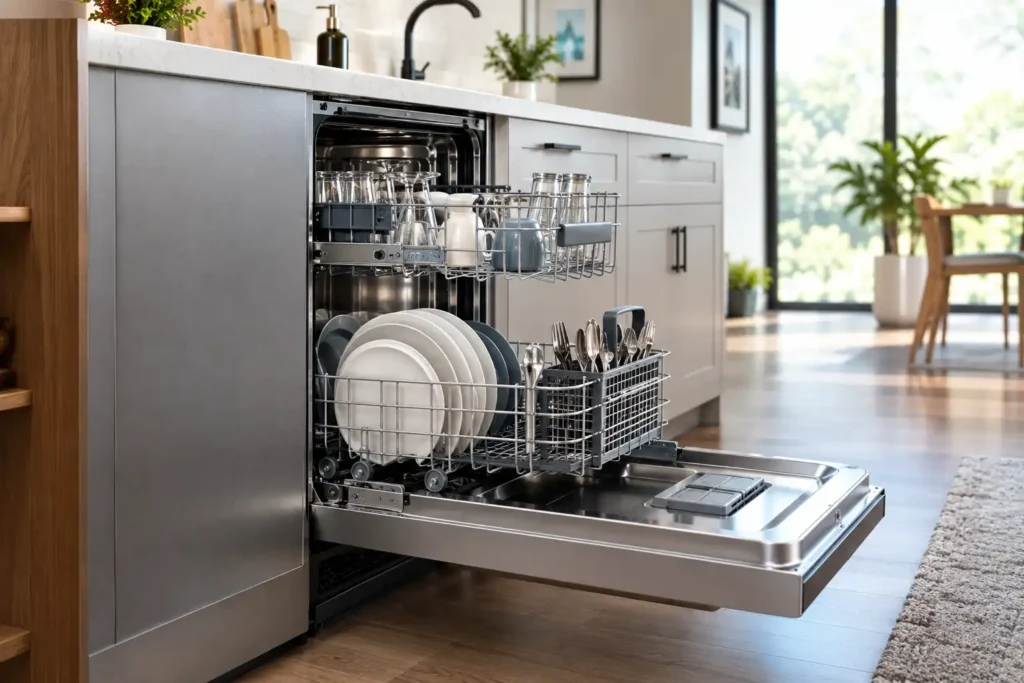
1. Dacor Dishwasher Models and Product Range
Dacor’s dishwasher range has included several generations of built-in machines, with model numbers that help distinguish different designs and specifications. The exact model number matters because features and installation requirements can vary even when two machines carry the same brand name.
Dacor Renaissance RDW24S
The Renaissance RDW24S is an older Dacor dishwasher model that may be encountered in existing kitchens, used-appliance listings, or discussions of previous Dacor products. It should be treated as a model from an earlier product generation rather than as a direct representation of every dishwasher the brand sells today.
When considering an RDW24S, buyers should establish the machine’s age, condition, repair history, remaining parts availability, and precise specifications. A used machine can appear attractive because its original retail price was high, but the value of a second-hand dishwasher depends heavily on its current condition and the cost of bringing it back to dependable operation.
Older machines may also lack newer conveniences such as app connectivity, advanced energy-management options, or more flexible rack arrangements. That does not automatically make them poor cleaners, but it does mean that their value should be judged according to their actual capabilities and condition.
Dacor 24-inch dishwasher models
Dacor’s 24-inch built-in dishwashers are intended for kitchens with a standard North American dishwasher opening. Certain models have been offered in stainless-steel finishes, while panel-ready configurations allow the appliance to blend with surrounding cabinetry.
A panel-ready dishwasher can be particularly appealing in a premium kitchen because it allows the exterior to match cabinet doors. The finished appearance depends on the correct panel, handle, installation kit, and cabinet design. Buyers should check whether the necessary components are included or sold separately.
Modern Dacor models have also included features designed to improve loading flexibility, reduce operating noise, and support efficient washing. Depending on the model, these may include an adjustable middle rack, dedicated holders for delicate glassware, a stainless-steel interior, smart connectivity, and energy-saving modes.
These features should not be assumed to be available across the entire range. Always check the specifications for the exact model number before making a purchase.
Dacor DDW24G9000 series
The DDW24G9000 family is an example of Dacor’s more recent 24-inch dishwasher offerings. Configurations have included panel-ready and stainless-steel versions, with the precise finish and associated accessories varying by configuration.
Published specifications for certain versions list a capacity of approximately 14 place settings and a North American electrical requirement of 120 volts, 60 Hz, and 15 amps. These figures are useful when planning an installation, but the installation manual for the exact unit must take priority.
Features associated with this generation include quiet-operation design, an insulated stainless-steel tub, adjustable loading arrangements on applicable versions, and connectivity functions. Certain versions have also been promoted for energy efficiency.
The model name alone does not confirm every feature. Check the full product code and regional specification sheet, especially when buying a floor model, imported appliance, or unit sold through a third-party retailer.
Dacor DDW24M999 series
The DDW24M999 family represents another Dacor dishwasher configuration that buyers may encounter in product listings and regional catalogues. Available finishes and dimensions can differ from those of other Dacor 24-inch models.
If you are comparing a DDW24M999 with a DDW24G9000, do not assume that the newer-looking name necessarily indicates better performance. Compare the actual wash programmes, drying method, rack layout, noise rating, energy information, dimensions, warranty, and availability of service parts.
Model-range verdict: Dacor has produced both older and more modern dishwashers, so the brand should not be judged using one specification sheet. The exact model number is the starting point for any meaningful review.
2. Design and Build Quality
Design is one of the main reasons buyers consider a premium dishwasher. In a high-end kitchen, the appliance needs to fit the cabinetry, coordinate with other finishes, and operate without becoming an obvious visual distraction.
Stainless-steel finishes
Stainless-steel finishes are popular in contemporary kitchens because they coordinate with a wide range of ovens, refrigerators, sinks, and cabinet styles. Dacor’s stainless-steel dishwasher configurations are intended to support this premium appearance.
However, the visual quality of a finish is not the same as long-term durability. Fingerprints, water marks, scratches, and cleaning-product residue can affect the appearance of stainless steel. The amount of maintenance required depends on the finish and how the appliance is used.
Before buying, inspect the actual finish under the lighting in your kitchen if possible. This is particularly important when matching a dishwasher with other appliances, because stainless-steel shades can vary between manufacturers and product generations.
Panel-ready design
Panel-ready models are a useful option for homeowners who prefer a seamless kitchen. Instead of a prominent stainless-steel door, the dishwasher can be finished with a compatible cabinet panel.
This arrangement can look excellent in contemporary kitchens, but it introduces additional installation considerations. The panel’s dimensions and weight must be compatible with the dishwasher, and the door must open and close properly after the panel and handle are fitted.
A poorly selected panel can interfere with the door’s movement, alter its balance, or cause clearance problems with nearby cabinetry. Confirm the approved panel dimensions and mounting instructions before ordering a panel-ready model.
Interior construction
A stainless-steel interior is a desirable feature because it is generally durable and can tolerate the hot, wet environment inside a dishwasher. It can also contribute to the machine’s overall premium feel.
Nevertheless, the interior material alone does not determine cleaning performance. Spray-arm coverage, water distribution, filtration, heating, programme design, detergent use, and loading technique are equally important.
When inspecting a used Dacor dishwasher, look for damaged rack coatings, rust on exposed metal, cracked plastic components, mineral deposits, and signs of water leakage. Check the door seal and the lower edge of the door carefully, as problems in these areas may not be obvious when the machine is switched off.
Controls and everyday usability
Control layout can affect how convenient a dishwasher is to use. Some buyers prefer clearly labelled physical controls, while others like a clean exterior with hidden or less prominent controls.
Before buying, make sure that the available controls provide the functions you use most frequently. It is also worth checking whether the machine displays the remaining cycle time, how it indicates that a programme is complete, and whether the controls are easy to understand without repeatedly consulting the manual.
Design verdict: Dacor can be a strong aesthetic choice for a premium kitchen, especially when a matching finish or integrated cabinet appearance matters. The quality of the installation is just as important as the appearance of the appliance itself.
3. Cleaning Performance: How Well Do Dacor Dishwashers Wash?
Cleaning performance is the most important factor in any dishwasher review. An appliance can look impressive and operate quietly, but it must still remove everyday food residue consistently.
A dishwasher’s cleaning results depend on several interacting systems: spray arms, water pressure, temperature, detergent distribution, filtration, cycle duration, and the arrangement of dishes inside the racks. No single feature guarantees that every load will come out perfectly clean.
Everyday plates, bowls, and cutlery
For normal household loads, a properly functioning Dacor dishwasher should be assessed on its ability to remove food residue from plates, bowls, cups, and cutlery without leaving persistent deposits.
Good results depend partly on how the dishes are loaded. Plates should face the spray action, bowls should not trap pools of water, and cutlery should be arranged so that pieces do not nest together. Large pans and serving dishes should not block the movement of the spray arms or prevent water from reaching the upper rack.
If a Dacor dishwasher leaves food on otherwise straightforward loads, check the filter, spray-arm openings, detergent dosage, incoming water temperature, and selected programme before concluding that the machine itself is defective.
Dried-on and baked-on food
Dried food is more difficult to remove than fresh residue. Starchy foods, egg, cheese, sauces, and baked-on material may require a longer or more intensive wash programme.
A heavy-duty programme is generally more appropriate for cookware and heavily soiled plates than a short express cycle. Short cycles are designed primarily for lighter loads or situations where speed matters; they should not be expected to perform identically to intensive programmes.
For particularly dirty dishes, remove large food scraps and select the programme appropriate for the soil level. Follow the manufacturer’s instructions on detergent type and dosage. Excess detergent does not necessarily produce better results and may contribute to residue under some water conditions.
Spray-arm coverage
Spray arms distribute water around the dishwasher interior. Their movement and unobstructed openings are essential for proper cleaning.
Tall pans, oversized plates, chopping boards, and utensils can block spray arms if they are loaded carelessly. After loading the machine, rotate the spray arms by hand to confirm that they can move freely.
If cleaning results deteriorate gradually, inspect the spray-arm holes for food particles or mineral deposits. Clean them according to the operating instructions rather than forcing sharp objects into the openings, which could damage the components.
Filtration and water circulation
The filter helps capture food particles and prevents them from continually circulating through the wash system. A dirty filter can contribute to odours, poor drainage, and food residue on dishes.
The filter should be checked and cleaned at the frequency recommended in the model’s manual. Some owners wait until cleaning performance deteriorates, but regular inspection is preferable.
Persistent cleaning problems can also result from poor water circulation, a malfunctioning pump, a blocked spray arm, or a heating problem. These issues require more careful diagnosis than routine filter cleaning.
Hard-water performance
Hard water contains minerals that can leave white deposits on glassware, stainless steel, and the dishwasher interior. These marks are sometimes mistaken for detergent residue or poor cleaning.
The correct response depends on the water hardness and the model’s available settings. Use a detergent suitable for your water conditions, follow the instructions for rinse aid, and consult the manual for any water-hardness adjustments.
In areas with very hard water, mineral deposits may build up more quickly. If a machine is installed in a region where local water conditions differ from those for which it was configured, the owner should check whether the appliance offers suitable adjustment options.
Cleaning verdict: Dacor’s premium positioning does not remove the need for correct loading and maintenance. Evaluate the actual model’s wash performance, and distinguish ordinary loading or water-quality problems from genuine mechanical faults.
4. Wash Programmes and Special Functions
The range of wash programmes determines how well a dishwasher adapts to different household needs. A useful programme selection should cover everyday dishes, heavily soiled cookware, delicate items, and lightly soiled loads without requiring unnecessary water or energy.
The exact programme names and available options differ between Dacor models. Buyers should check the manual for the model they intend to purchase rather than assume that all machines share the same cycle list.
Normal or everyday wash
A normal programme is generally intended for routine loads containing the kinds of plates, cups, bowls, and cutlery used throughout the day.
For many households, this will be the most frequently used setting. It should provide a balance between cleaning performance and resource consumption, although the actual duration and consumption depend on the model.
Heavy-duty washing
A heavy or intensive programme is intended for tougher loads, such as cookware and dishes with substantial food residue. These programmes may use more time, higher temperatures, or more intensive washing action than a standard cycle.
They are useful when needed, but using the heaviest programme for every load may be unnecessary. Select a cycle based on how dirty the dishes actually are.
Express or quick wash
A quick cycle can be convenient when lightly soiled dishes need to be cleaned in less time. It is not necessarily the best choice for baked-on food or a fully loaded machine containing heavily soiled cookware.
Check the programme description in the manual, because the intended use of express programmes varies by model.
Eco or energy-saving operation
Energy-saving modes aim to reduce the resources used during a wash. Depending on the design, an eco programme may take longer than a conventional cycle because it relies on a more gradual approach to cleaning.
A longer cycle does not automatically mean greater energy consumption. The relevant comparison is the total electricity and water used to complete the programme, not just the number of minutes displayed.
Delayed start and convenience options
Certain Dacor models include delayed-start functionality, allowing a cycle to begin later. This can be useful for household scheduling, although buyers should consider whether running a dishwasher overnight is appropriate for their home and installation.
Newer models may also provide connectivity or energy-management functions. These can offer additional convenience, but they should be treated as secondary benefits rather than substitutes for reliable washing, drying, and repair support.
Programme verdict: Dacor offers features that can support different cleaning needs, but the value of those features depends on the model. A smaller number of well-designed, useful programmes can be more valuable than a long list of settings that rarely get used.
5. Drying Performance: Do Dacor Dishwashers Leave Dishes Dry?
Drying performance is often a source of disappointment for dishwasher owners. A machine can remove food effectively yet leave water on plastic containers, the bottoms of cups, or items placed in areas where water collects.
Drying depends on the machine’s design, the selected programme, rinse aid, loading arrangement, and the material being washed. Different materials retain heat and shed water differently, so no dishwasher should be expected to dry every item identically.
Stainless steel, ceramic, and glass
Ceramic plates and glassware often dry more readily than lightweight plastics because they retain heat differently. The final result also depends on whether water can drain freely from the item.
Cups and bowls should be placed at an angle where possible so that water does not remain trapped on their bases or inside recessed shapes. Avoid nesting items closely together.
Plastic containers
Plastic containers and lids are often among the most difficult items to dry completely. They can retain less heat than ceramic or glass and may collect droplets even when the rest of the load is dry.
If plasticware remains wet, remove it carefully after the cycle and allow any remaining droplets to drain. Check whether the chosen programme includes a drying stage suited to the load, and consult the manual for any available drying options.
Rinse aid
Rinse aid helps water spread and drain from dish surfaces, reducing droplets and spotting. Its usefulness is particularly noticeable with glassware and in areas with mineral-rich water.
The correct setting depends on the water supply and the model. If dishes show spotting or remain unusually wet, check the rinse-aid reservoir and dosage guidance before assuming that the drying system has failed.
Unloading technique
The order in which dishes are unloaded can reduce water dripping from the upper rack onto items below. In many dishwashers, it is sensible to unload the lower rack after checking the upper rack, although the manufacturer’s guidance should be followed.
Allow the cycle to finish fully before opening the door or unloading the machine. Interrupting the cycle may affect drying results.
Drying verdict: Do not judge a Dacor dishwasher solely by whether every plastic item is completely dry. Assess the results across different materials, use rinse aid correctly, and compare the exact model’s drying system with your expectations.
6. Noise Levels and Quiet Operation
Quiet operation is an important advantage in open-plan homes, apartments, and kitchens that share space with living or dining areas.
Dacor has promoted quiet-operation features on certain models, including motor design and insulation intended to reduce noise and vibration. However, noise ratings vary by model and generation, so it is essential to check the published figure for the exact unit.
What a noise rating means
Dishwasher noise is commonly measured in decibels, abbreviated as dBA. Small numerical differences can matter, but perceived noise also depends on the type of sound produced.
A machine may produce a low background hum, intermittent water sounds, or occasional pump and valve noises. A published noise figure does not mean that the dishwasher will be completely silent.
Installation and vibration
Even a relatively quiet dishwasher can sound loud if it is not installed securely. Loose mounting brackets, uneven feet, contact with cabinets, or poorly secured hoses can create vibration and rattling.
The machine should be level and secured according to its installation instructions. It must not be wedged tightly against surrounding components in a way that causes vibration or interferes with the door.
Is Dacor suitable for open-plan kitchens?
A quiet Dacor model can be an attractive option for an open-plan kitchen, particularly if the dishwasher is likely to run while people are watching television, working, or talking nearby.
Nevertheless, compare noise ratings directly with other machines in the same price category. Do not pay a large premium based on a general claim of quiet operation without confirming the model’s specification and considering independent performance information.
Noise verdict: Dacor’s quiet-operation features are worth considering, but installation quality and the exact model’s noise rating are more useful than a broad brand-level claim.