
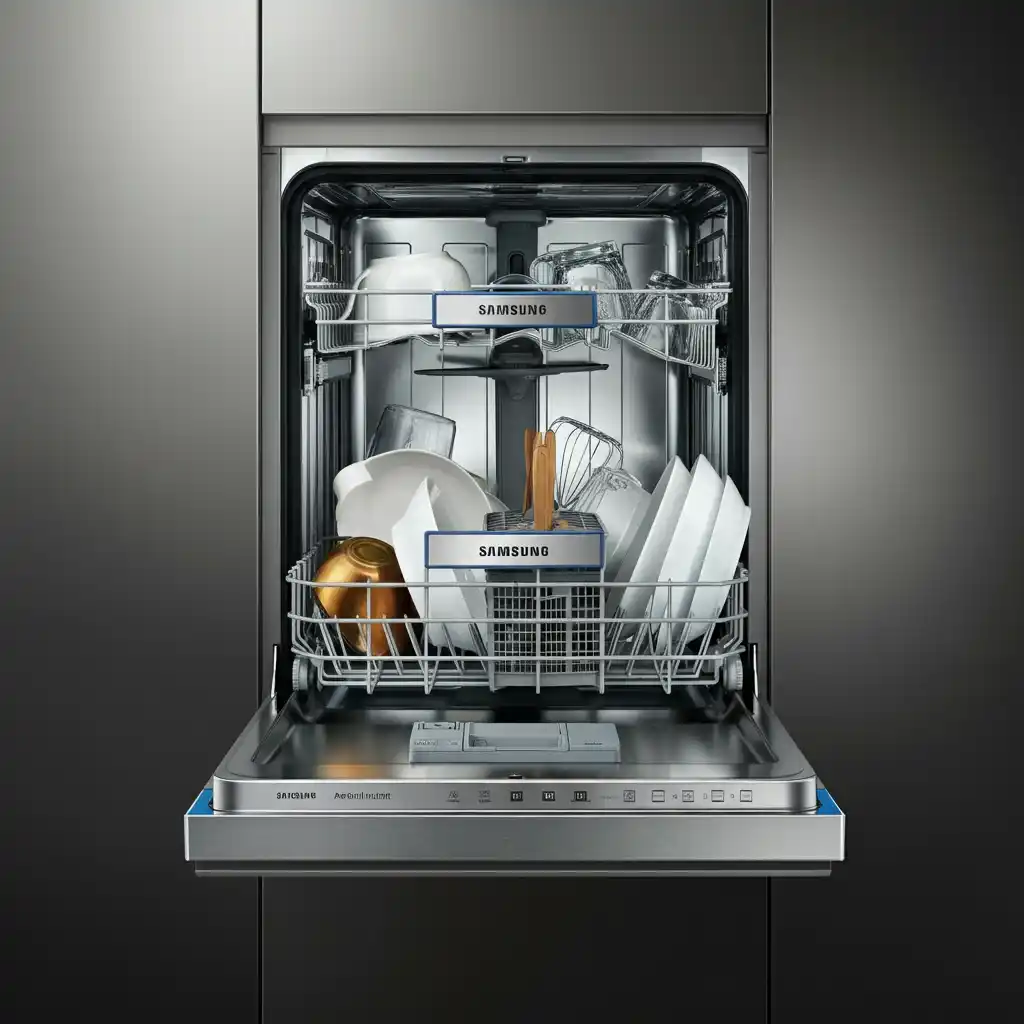
The Samsung dishwasher 4C error code (also shown as 4E on some models) indicates a water supply or inlet problem: the dishwasher is not getting enough water to fill properly within the expected time frame.
This is a fill error, distinct from drain issues (5C) or leaks (LC); the machine times out after 10–15 minutes without detecting adequate water flow.
What the 4C code means
The 4C code triggers when the dishwasher’s water level sensor or flow monitor detects insufficient water entering the tub during the fill phase.
Samsung requires 20–120 PSI minimum pressure; if flow is too slow, the control board halts the cycle to prevent dry operation.
On non‑digital models, 4C appears as specific blinking lights (e.g., Rinse + Heavy), but the cause remains the same: no or low water supply.
How 4C relates to other Samsung codes
| Code | Meaning | Key Difference from 4C |
|---|---|---|
| 4C/4E | Water inlet/supply issue | Too little water entering tub |
| 5C/5E | Drain issue | Too much water remains in tub |
| OC/0C | Over‑level water | Slow drain causes high tub level |
| LC/LE | Leak in base pan | Moisture under unit, not tub |
4C is purely a “no fill” fault, stopping before wash begins.
Common causes of 4C
Ranked by frequency:
- Closed or restricted water supply (40%):
- Shut‑off valve under sink partially closed.
- Frozen valve in cold climates (winter startup).
- Clogged inlet screen/filter (30%):
- Mineral/sediment buildup in brass mesh at inlet valve.
- Kinked/blocked inlet hose (15%):
- Hose pinched behind unit or clogged internally.
- Faulty inlet valve (10%):
- Solenoid coil failed (900–1200Ω normal); won’t open.
- Low household pressure (5%):
- <20 PSI from shared lines or regulator issue.
Valve filter clogs and closed taps cause most DIY fixes.
Step‑by‑step 4C fix protocol
Safety: Unplug unit, shut off water valve.
1. Quick checks and reset
- Confirm shut‑off valve fully open (counterclockwise).
- Inspect inlet hose for kinks/bends (trace full length).
- Power reset: Unplug 5–10 min; run tap 2 min to purge cold water.
2. Clean inlet screen (top fix)
- Disconnect hose at dishwasher end (bucket ready).
- Remove brass screen/filter from valve port (needle/needle‑nose pliers).
- Soak vinegar 30 min; brush/flush debris.
- Reinstall; reconnect securely.
Test: Hose in bucket steady 1 qt/min flow.

3. Test water pressure
- Faucet PSI gauge: 20–120 PSI.
- Run other fixtures off; check for regulator.
- Winter: Warm towel on valve (50–60°C, no burns).
4. Inlet valve inspection
- Access: Remove lower panel (screws).
- Multimeter: Solenoid coil 900–1200Ω (open=replace).
- Live test: 120V during fill signal.
Part: $25–40; 2–wire plug‑in.
5. Hose replacement
- If clogged: New hose $15–25.
- Ensure no sharp bends; 5–6 ft standard.
Test cycle: Empty Rinse; monitor fill <90s.
Symptom‑based troubleshooting
| Symptom | Cause | Priority Fix |
|---|---|---|
| 4C at start | Valve closed/screen clog | Open valve, clean filter |
| Slow trickle | Low PSI/hose kink | Gauge test, straighten hose |
| No water sound | Valve coil failed | Ohms test solenoid |
| Intermittent | Partial screen block | Vinegar soak filter |
Advanced diagnostics
Valve flow test: Power off; tap solenoid gush if good.
Sensor check: Tub dry=closed circuit (pressure switch).
Board: Rare; reset first.
Parts & costs
| Part | Cost | DIY Ease |
|---|---|---|
| Inlet screen | $5–10 | Easy |
| Inlet valve | $25–45 | Medium |
| Hose | $15–30 | Easy |
| Control board | $150+ | Pro |
When to replace unit
- Valve + low PSI: Repair.
- Board + valve: New Samsung ~$500 vs $300 repair.
Prevention
- Monthly: Screen vinegar clean.
- Annual: Hose inspect.
- Hot supply (120°F).
FAQs: Samsung 4C error
4C at cycle start?
Valve closed or screen clogged check tap/filter first.
Low pressure fix?
Gauge test; plumber if <20 PSI.
Valve ohms?
900–1200Ω; infinite=dead.
4C vs 5C?
4C=no fill; 5C=no drain.
Safe to ignore?
No dry run damages heater/pump.