
Miele dishwashers command top-tier ratings across expert labs, consumer reviews, and long-term user feedback, often hitting 4.7/5 or higher for their engineering excellence, whisper-quiet performance, and claims of 20-year lifespan. Models from the G5000 and G7000 series dominate discussions, praised for unmatched durability and cleaning power despite premium pricing that positions them as luxury investments.
Brand Heritage
Miele, a German manufacturer since 1899, engineers dishwashers for 20 years of daily use tested to 10,000 cycles. Unlike mass-market brands, Miele prioritizes precision components like stainless steel tubs and commercial-grade spray arms. The lineup splits into G5000 (accessible luxury) and G7000 (cutting-edge tech), with integrated or fully customizable panels for seamless kitchen aesthetics. Capacity ranges from 14-16 place settings, ideal for families or entertaining.
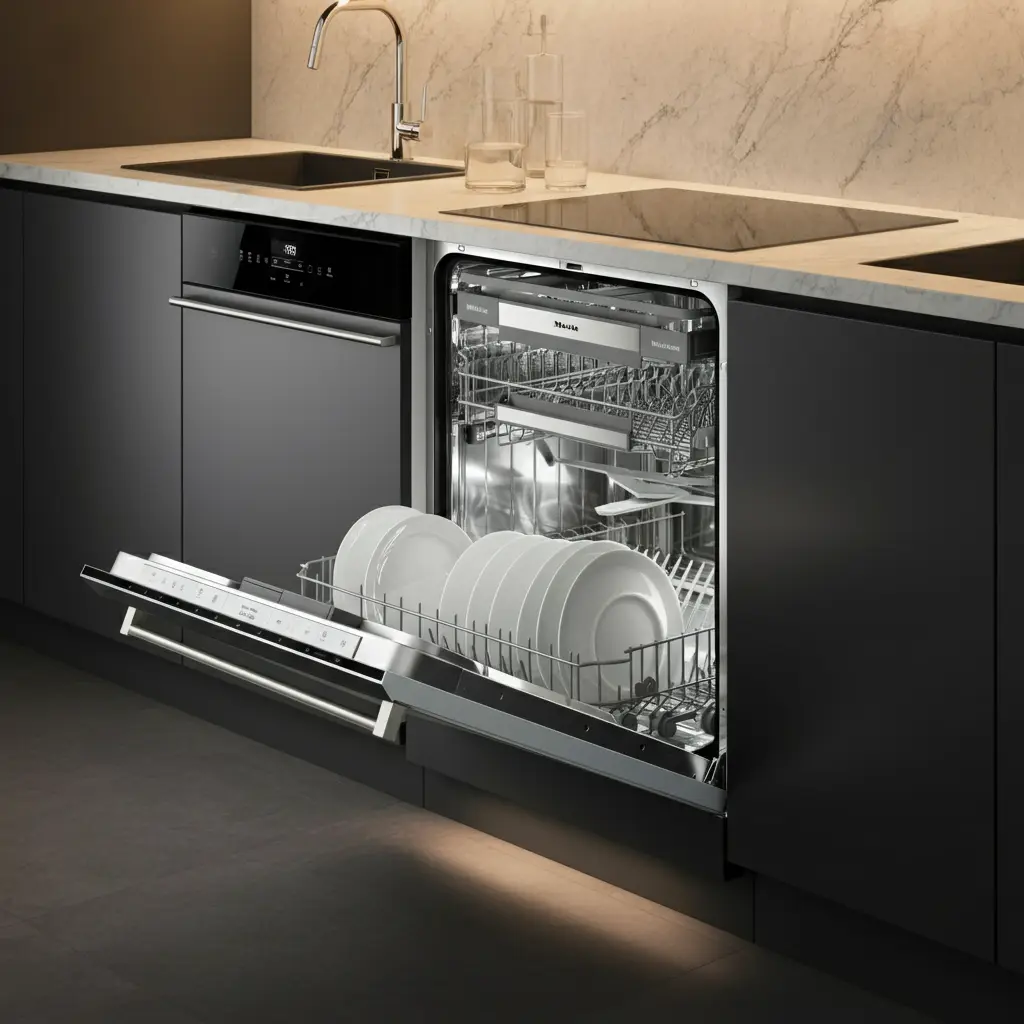
Model Lineup
G5000 Series (e.g., G5056SCVi, G5058SCVi): Entry into Miele quality at 44 dBA, featuring QuickIntenseWash for fast cycles and 3D MultiFlex Tray. Prices start around $1,200-$1,500.
G7000 Series (e.g., G7196 SCVi, G7166 SCVi): Flagship at 42 dBA or quieter, with AutoDos PowerDisk system, WiFiConnect, and M Touch controls. Top models reach $2,000-$3,700, adding voice assistant integration.
Both series offer fully integrated designs, knock-to-open doors, and HygienePlus for 99.9% bacteria kill.
Core Technologies
AutoOpen drying cracks the door post-cycle for condensation escape, achieving spot-free results on glass and ceramics. QuickPowerWash blasts tough soils in under 60 minutes. SensorDry adjusts based on load humidity. G7000-exclusive AutoDos scans and dispenses detergent via PowerDisk for 20 loads, minimizing waste.
| Feature | G5000 Series | G7000 Series |
|---|---|---|
| Noise Level | 44 dBA | 39-42 dBA |
| Drying Method | AutoOpen | AutoOpen + SensorDry |
| Detergent System | Manual | AutoDos PowerDisk |
| Controls | Hidden Touch | M Touch Display |
| Special Cycles | QuickIntenseWash | Hygiene+, China/Speed |
| Water Usage | 8-10 liters/cycle | 7-9 liters/cycle |
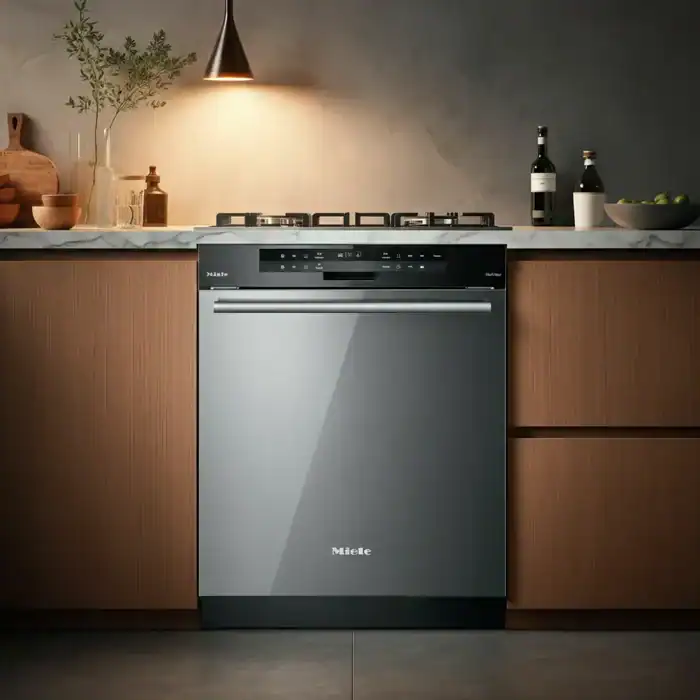
Cleaning and Drying Performance
Independent tests rate Miele cleaning at 99.5%+ efficacy on baked-on messes like cheese or lipstick, outperforming Bosch on protein soils. Drying excels via AutoOpen better than condensation models but plastics benefit from rinse aid. Cycle times: Normal (2-3 hours), Quick (58 minutes). Energy Star certification keeps annual costs under $35, with low water use.
Ratings Breakdown
Consumer Reports gives G5000 models 80-85/100 for washing/drying, noting solid reliability. Yale Appliance labs crown G7000 “best premium” for 2026. Best Buy/Home Depot average 4.7/5 from thousands of reviews. Wirecutter and Good Housekeeping highlight quietness and rack flexibility. Drawbacks in some CR scores stem from longer cycles vs. speed-focused rivals.
Pros and Cons
Pros:
- Engineered longevity (20-year design life; many last 15+).
- Ultra-quiet operation, even on heavy cycles.
- Flexible racks: 3D MultiFlex tray, adjustable tines, glass holders.
- Eco-efficiency with minimal water/soap use.
- Anti-bacterial cycles and child locks.
Cons:
- High upfront cost (2-3x Bosch equivalents).
- Service can be expensive outside warranty.
- Occasional rack rust or drying inconsistencies reported.
- Learning curve for optimal loading/AutoDos.
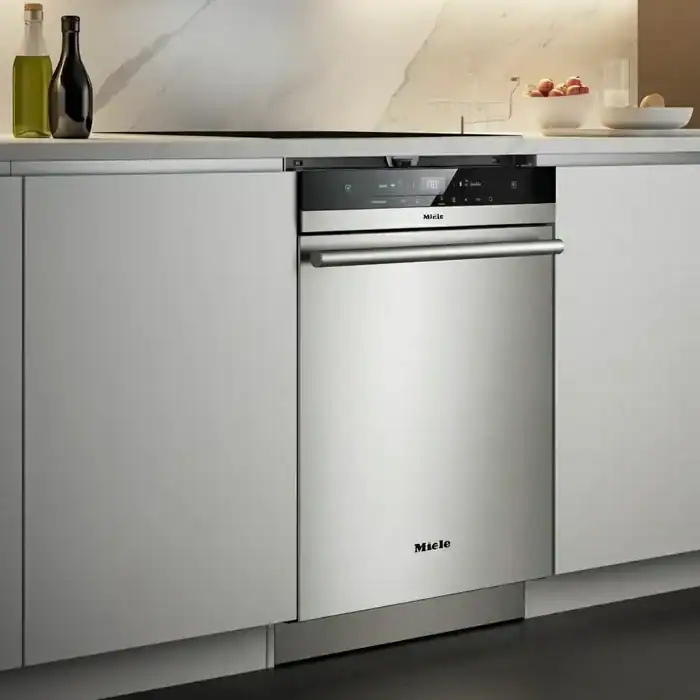
Real User Insights
Owners frequently call Miele “buy it for life,” with Reddit threads sharing 12-16 year units still flawless. Praise centers on sparkling glassware, silent runs, and space for pots/utensils. Complaints involve finicky sensors or delays in PowerDisk shipping. Families love the third rack for kids’ sippy cups; pros note superior fine china handling.
Comparisons to Competitors
Miele outlasts Bosch (10-year average) but costs more. Vs. Bosch 800: Similar noise (42 dBA), but Miele’s AutoDos edges CrystalDry for convenience; Bosch wins on price. Vs. budget brands: Vastly quieter, cleaner, longer-lasting.
| Brand/Series | Noise (dBA) | Drying Tech | Lifespan Expectancy | Price Range |
|---|---|---|---|---|
| Miele G5000 | 44 | AutoOpen | 20 years | $1,200-$1,500 |
| Miele G7000 | 42 | AutoOpen + Sensors | 20 years | $2,000-$3,700 |
| Bosch 800 | 42 | CrystalDry | 10-12 years | $1,300-$1,600 |
| Bosch 500 | 44 | AutoAir | 10 years | $1,000-$1,300 |
Maintenance and Longevity
Miele includes water inlet filters and self-cleaning filters. PowerDisk simplifies dosing; replace every 20 cycles (~$15). Warranty: 2 years full, 10 years on rust/circulator. Extended plans available. Pro tip: Use Miele detergent for peak performance.
Buying Guide
Budget under $1,500? G5000 suffices. Want automation? G7000. Measure cutouts (24″ standard) and verify panel-ready options. Check for promotions on PowerDisk bundles.
FAQs
Do Miele dishwashers justify the price?
Yes for longevity-focused buyers; 20-year engineering saves replacements.
Quietest in class?
G7000 at 39 dBA inaudible during use.
Best cycle for daily loads?
QuickIntenseWash: Full clean/dry in 58 minutes.
AutoDos reliable?
Highly; dispenses precisely, alerts for refills via app.
Warranty covers rust?
20 years on tub; 2 years parts/labor standard.
Handles large pots?
Yes, height-adjustable upper rack and foldable tines fit 12″ items.
Eco-friendly?
Top-rated: Low energy/water, recyclable materials, phosphate-free options.
We’re really disappointed. I’d take my Bosch back in a second. The ‘no rinse’ claim is BS. Rice, yoghurt, you name it gets stuck on utensils – even when spaced well apart and run on the ‘pots’ cycle. Same for plates, so while it looks as though it holds a lot more, you have to space them out more. It’s also less deep than my Bosch, so fewer items on top of the spacing issue.
Don’t get me started on the need to clean the spray arms, and the drain pump as well as the filter. The manual comes with a warning about ‘incorrect cleaning’ that can damage the ‘delicate’ components. I’m guessing that will make the warranty void…