
Yes, a dishwasher can kill or substantially reduce many bacteria on dishes, plates, glasses, cutlery, cookware, and other dishwasher-safe items. However, the amount of bacterial reduction depends on several factors, including water temperature, exposure time, detergent, mechanical action, the condition of the dishwasher, the selected cycle, and whether the machine has a validated sanitizing cycle.
A dishwasher does much more than simply rinse dishes with hot water. During a typical cycle, detergent helps remove food and organic material, water pressure physically washes surfaces, repeated rinsing removes loosened contaminants, and heat can further reduce microorganisms. A dedicated sanitizing cycle may use higher temperatures and/or longer controlled exposure to provide an additional level of microbial reduction.
It is important, however, not to assume that every dishwasher kills every bacterium. Dishwashers are designed primarily for cleaning and, on suitable cycles and certified models, sanitizing. They are not household sterilizers. Sterilization is a much more stringent process intended to destroy all forms of microbial life, including highly resistant bacterial spores.
For ordinary household dishes, a properly functioning dishwasher can provide very effective cleaning and significant microbial reduction. For situations where a higher level of sanitation is important, such as cleaning infant feeding items or reducing contamination after illness, selecting an appropriate dishwasher cycle and following the item’s care instructions becomes particularly important.
This guide explains exactly how dishwashers affect bacteria, what temperatures matter, whether normal cycles are sufficient, what a sanitize cycle does, whether detergent kills bacteria, how drying affects microorganisms, and what households in the USA, UK, and Canada should know.
Does a Dishwasher Really Kill Bacteria?
Yes.
A dishwasher can reduce bacteria through a combination of heat, detergent, water movement, rinsing, and drying.
The important point is that bacterial reduction does not depend on temperature alone. Cleaning removes food, grease, and other organic material that can protect microorganisms. Mechanical water action physically removes contaminants. Detergent helps loosen and remove soils. Heat can then inactivate many microorganisms that remain on surfaces.
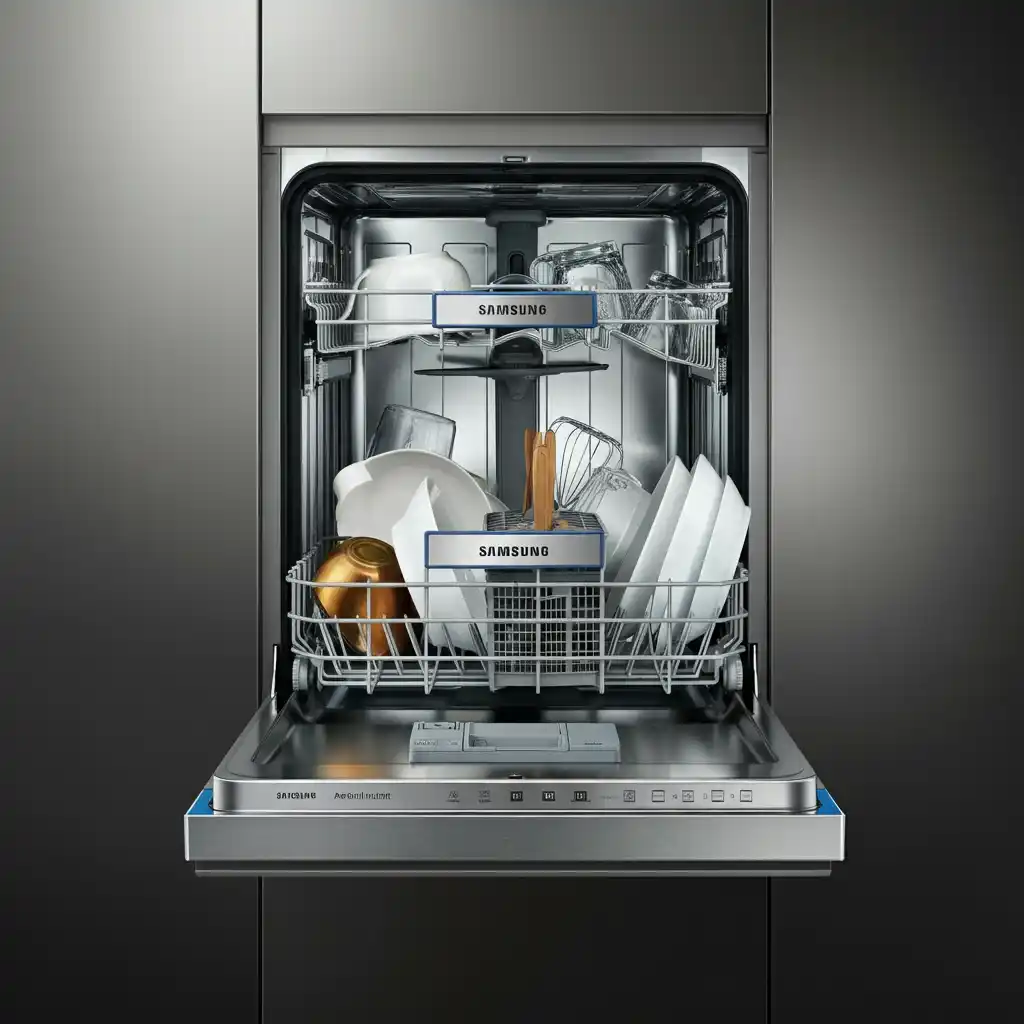
This combination is much more effective than simply putting dishes under warm tap water.
Public-health guidance recognizes that dishwashers can be used as part of household sanitation. Guidance for certain items specifically recommends using a dishwasher’s hot-water and heated-drying or sanitizing functions when available because these settings can help kill more germs.
However, the effectiveness of a dishwasher depends on whether the machine is operating correctly and whether the dishes are positioned so that water and detergent can reach their surfaces.
What Happens to Bacteria During a Dishwasher Cycle?
A dishwasher cycle can be thought of as several stages.
1. Food and Soil Are Loosened
Water begins softening and removing food particles.
Food residue is important because organic material can protect microorganisms from heat and chemical action.
Removing the soil is therefore an important first step in reducing microbial contamination. Public-health cleaning guidance emphasizes that cleaning removes dirt and impurities and should occur before sanitizing or disinfecting when those additional steps are needed.
2. Detergent Helps Remove Contamination
Automatic dishwasher detergent is formulated for machine dishwashing.
The detergent helps break down fats, proteins, starches, and other food residues.
This matters for bacterial control because microorganisms attached to food residue can be physically removed when that material is dissolved or dislodged.
3. Mechanical Water Action Removes Debris
Spray arms force water across the dishes.
This physical action helps detach food particles and microorganisms from surfaces.
The effectiveness depends on water reaching the surface. A plate hidden behind another plate or a cup positioned so that water cannot enter it may not receive the same cleaning action as an exposed item.
4. Rinsing Removes Loosened Material
Rinsing carries away detergent, food particles, and microorganisms that have been removed from surfaces.
This is one reason dishwasher loading matters so much.
5. Heat Can Inactivate Remaining Bacteria
Hot water and heated surfaces can reduce the number of microorganisms remaining after cleaning.
Higher temperatures generally increase the rate at which many bacteria are inactivated, although the actual result depends on the organism, temperature, exposure time, soil conditions, and surface characteristics.
6. Drying Reduces Remaining Moisture
A heated drying cycle can provide additional heat exposure and leaves dishes drier.
Dry conditions generally make it more difficult for many microorganisms to remain active and multiply, although drying should not be treated as equivalent to sterilization.
Cleaning Is Not the Same as Sanitizing
This distinction is extremely important.
Cleaning means removing dirt, food, grease, and many microorganisms from a surface.
Sanitizing means reducing microorganisms to a level considered acceptable under applicable public-health criteria.
Disinfecting is a stronger process intended to kill microorganisms on surfaces.
Sterilizing is an even more stringent process designed to eliminate all forms of microbial life, including resistant spores.
Household dishwasher use generally falls into the cleaning and, when the appropriate cycle and equipment are used, sanitizing categories.
A normal dishwasher should therefore not be described as a sterilizer.
Public-health guidance specifically distinguishes cleaning, sanitizing, and disinfecting because each has a different purpose and level of microbial control.
How Much Bacteria Can a Dishwasher Kill?
The answer depends on the dishwasher and cycle.
For residential dishwashers certified to the applicable sanitation standard, the sanitizing cycle is designed to achieve at least a 99.999% or 5-log reduction of bacteria under the standard’s test conditions.
A 5-log reduction means that a population of 100,000 bacteria would theoretically be reduced to approximately 1 under the specified test conditions.
It is important not to interpret that figure as a guarantee that every household load will contain exactly one surviving bacterium. The result applies to standardized testing and the machine’s validated sanitizing performance. Real-world results depend on loading, item design, soil, cycle selection, maintenance, and other factors.
This distinction is one reason certification matters when sanitation performance is a priority.
What Temperature Kills Bacteria in a Dishwasher?
There is no single temperature that instantly kills every bacterium.
Microbial inactivation depends on:
- Temperature
- Exposure time
- Type of microorganism
- Number of microorganisms
- Organic material
- Surface type
- Water chemistry
- Mechanical cleaning
- Detergent action
Higher temperatures generally increase the speed of inactivation, but temperature must be combined with adequate exposure time.
For commercial warewashing, current food-safety requirements specify particular wash and final-rinse temperatures depending on machine type. These requirements are designed to ensure that the surfaces of utensils reach appropriate temperatures during the sanitizing process.
This is different from simply saying that “hot water kills bacteria.”
Is 120°F Hot Enough to Kill Bacteria in a Dishwasher?
A temperature around 120°F is not something you should automatically consider a sanitizing temperature for dishes.
Dishwasher sanitation depends on the complete cycle, including exposure time and the actual temperature reached at the relevant surfaces.
For comparison, current commercial warewashing requirements specify substantially higher temperatures for hot-water sanitizing operations. A stationary-rack, single-temperature machine has a specified minimum wash-solution temperature of 165°F, while the hot-water sanitizing rinse requirements can reach 165°F or 180°F depending on machine type.
Residential dishwashers are not governed by exactly the same requirements as commercial warewashers.
Therefore, homeowners should not try to manually increase household water-heater settings simply to make a dishwasher “more sanitary.”
Does 140°F Kill Bacteria?
140°F can inactivate many bacteria under appropriate exposure conditions, but temperature alone does not tell you whether a dishwasher has sanitized a load.
The actual temperature experienced by the surface of the dish, the duration of exposure, the amount of organic material, and the dishwasher’s cycle design all matter.
A dishwasher may have water at one temperature in one part of the system and a different temperature at another point.
For validated sanitation, the entire process must meet the applicable performance requirements rather than relying on a single temperature measurement.
Does 150°F Kill Bacteria?
150°F is sufficiently hot to provide significant microbial inactivation when exposure conditions are appropriate.
Residential dishwasher sanitation standards recognize a final rinse temperature of 150°F for certified residential sanitizing cycles.
The important point is that the temperature is part of a validated cycle rather than a stand-alone promise that every microorganism will be destroyed.
Does 160°F Kill Bacteria?
A 160°F exposure can provide strong bacterial reduction when the surface receives adequate heat for an appropriate period.
Commercial food-safety requirements use surface-temperature targets because what matters is not simply the temperature displayed by the machine but the heat delivered to the utensils.
Current food-safety guidance explains that hot-water sanitizing is designed so utensil surfaces reach a temperature sufficient to achieve sanitization.
Does 165°F Kill Bacteria?
165°F is a significant temperature in commercial warewashing.
Current food-safety requirements specify 165°F as the minimum hot-water sanitizing rinse temperature for certain commercial machine configurations and 180°F for other configurations.
These requirements should not be transferred directly to residential dishwasher operation because residential machines are designed and certified differently.
Does 180°F Kill Bacteria?
180°F provides a very high level of heat exposure and is used in certain commercial hot-water sanitizing systems.
However, the objective of commercial warewashing is not simply to expose dishes to extremely hot water. The machine must deliver the required temperature, pressure, and contact conditions to the appropriate surfaces.
The current commercial requirements distinguish between machine types and specify different minimum temperatures.
Does a Normal Dishwasher Cycle Kill Bacteria?
A normal dishwasher cycle can substantially reduce bacteria.
However, you should distinguish between ordinary cleaning and validated sanitization.
A normal cycle may use temperatures high enough to kill or reduce many bacteria, while also physically removing microorganisms with detergent and water.
But unless the particular dishwasher and cycle are designed and validated for a sanitation claim, it is better to describe the result as cleaning and microbial reduction rather than guaranteed sanitization.
For households that simply want clean everyday dishes, normal dishwasher operation is generally sufficient when the appliance is functioning properly and dishes are loaded correctly.
What Does the Sanitize Cycle Do?
A dishwasher’s sanitize cycle is designed to provide additional microbial reduction compared with ordinary washing.
Depending on the model, it may use:
- Higher water temperatures
- Longer exposure
- A dedicated final rinse
- Modified drying
- Controlled cycle parameters
The exact method differs between manufacturers.
For residential machines certified to the relevant sanitation standard, the sanitation cycle is tested to achieve a minimum 5-log bacterial reduction and a specified final-rinse temperature.
The sanitize option is therefore not simply a marketing name for “extra hot water.” It represents a specific operating mode whose effectiveness depends on the machine’s design.
Does Every Dishwasher Have a Sanitize Cycle?
No.
Some dishwashers have a dedicated Sanitize, Sanitizing, or similar high-temperature option.
Others may have high-temperature wash or rinse options without a formally validated sanitation claim.
Some models may have sanitation certification but require a specific cycle for that performance.
Therefore, homeowners should check the exact model’s documentation rather than assuming that a high-temperature cycle is equivalent to a certified sanitizing cycle.
How Do You Know if a Dishwasher Is Certified to Sanitize?
Look for the applicable sanitation certification information in the product documentation.
Residential dishwashers certified to the relevant standard are tested for bacterial reduction on the sanitizing cycle.
The certification requires a minimum 99.999% bacterial reduction and a specified final rinse temperature under the standard’s conditions.
This provides a more meaningful indication of sanitation capability than simply seeing the words “high temperature” in a product description.
Does Dishwasher Detergent Kill Bacteria?
Dishwasher detergent contributes to bacterial reduction, but its primary role is cleaning.
Automatic dishwasher detergents are formulated to remove food, grease, proteins, starches, and other soils.
Removing contaminated material can substantially reduce the number of microorganisms remaining on the dish.
However, detergent should not automatically be considered a disinfectant.
Some bacteria may remain after detergent cleaning, which is why additional heat exposure can provide another level of microbial reduction.
Does Hot Water or Detergent Kill More Bacteria?
It is not useful to treat these as competing mechanisms.
Dishwashers work because several mechanisms operate together.
Detergent helps remove soil.
Mechanical action removes particles.
Rinsing carries contaminants away.
Heat can inactivate microorganisms that remain.
The combined process is more important than any single factor.
This is also why a dishwasher that heats water but has poor spray coverage, incorrect loading, or insufficient detergent may not perform as effectively as expected.
Can a Dishwasher Kill Salmonella?
A properly operating dishwasher can substantially reduce Salmonella on dishwasher-safe items.
Salmonella is a bacterium that can be transferred through contaminated food-contact surfaces and utensils.
A dishwasher combines detergent, mechanical cleaning, rinsing, and heat, all of which contribute to reducing contamination.
For higher sanitation assurance, use an appropriate sanitizing cycle on a machine designed for that purpose.
Can a Dishwasher Kill E. coli?
A properly operating dishwasher can reduce E. coli substantially.
The amount of reduction depends on the cycle and conditions.
A validated residential sanitizing cycle is designed to achieve a 5-log reduction of bacteria under standardized testing conditions.
This does not mean that every possible E. coli contamination scenario is automatically eliminated. Severe contamination, poor loading, malfunctioning equipment, or inadequate cleaning can compromise results.
Can a Dishwasher Kill Listeria?
A dishwasher can reduce Listeria on suitable dishes and utensils through cleaning and heat.
The organism is important in food safety because it can survive in food-processing environments and contaminate ready-to-eat foods.
For household dishes, proper dishwasher cleaning is an effective method of reducing contamination.
High-temperature or sanitizing cycles can provide additional microbial reduction when appropriate for the dishwasher and the items being washed.
Can a Dishwasher Kill Campylobacter?
Yes, dishwasher cleaning and heat can substantially reduce Campylobacter on contaminated dishes and utensils.
This is particularly relevant after preparing raw poultry.
Kitchen surfaces and utensils that contact raw meat and poultry should be cleaned properly before being used for ready-to-eat food.
Using the dishwasher for dishwasher-safe items can be an effective part of that process.
Can a Dishwasher Kill Staphylococcus Bacteria?
Many vegetative bacteria, including Staphylococcus species, are susceptible to appropriate heat and cleaning processes.
A properly functioning dishwasher can significantly reduce contamination.
However, the exact resistance of microorganisms varies, and some bacterial forms are substantially more resistant than ordinary vegetative bacteria.
This is one reason why dishwasher sanitation should not be confused with sterilization.
Can a Dishwasher Kill Bacterial Spores?
You should not rely on a household dishwasher to sterilize items or guarantee destruction of bacterial spores.
Bacterial spores are considerably more resistant to heat and environmental conditions than many ordinary vegetative bacterial cells.
Household dishwasher sanitation standards are designed around bacterial reduction, not complete sterilization of all microbial life.
Therefore, items requiring true sterilization should be processed using an appropriate validated sterilization method rather than an ordinary dishwasher.
Does a Dishwasher Kill Viruses Too?
Dishwasher cycles can reduce many microorganisms, including some viruses, through heat, detergent, mechanical action, and rinsing.
However, virus survival varies greatly by virus type and environmental conditions.
The correct approach is not to assume that one dishwasher temperature eliminates every virus.
For ordinary household cleaning, a properly operating dishwasher provides substantial microbial reduction. When a specific illness or contamination concern exists, follow appropriate public-health guidance for cleaning and disinfection.
Does a Dishwasher Kill Mold?
A dishwasher can remove and reduce many mold organisms from dishwasher-safe items through detergent, water, and heat.
However, mold problems involve more than simply killing microorganisms.
Mold spores can be environmentally persistent, and visible mold contamination may require additional cleaning.
If an item is heavily contaminated or cannot be thoroughly cleaned, it may not be appropriate to rely solely on a dishwasher.
Can a Dishwasher Kill Yeast?
Many yeasts are susceptible to dishwasher cleaning and heat.
A normal dishwasher cycle can remove substantial contamination from dishes and utensils.
Higher-temperature cycles can provide additional microbial reduction.
Again, the precise outcome depends on temperature, exposure time, cleaning effectiveness, and the particular microorganism.
Does Dishwasher Drying Kill Bacteria?
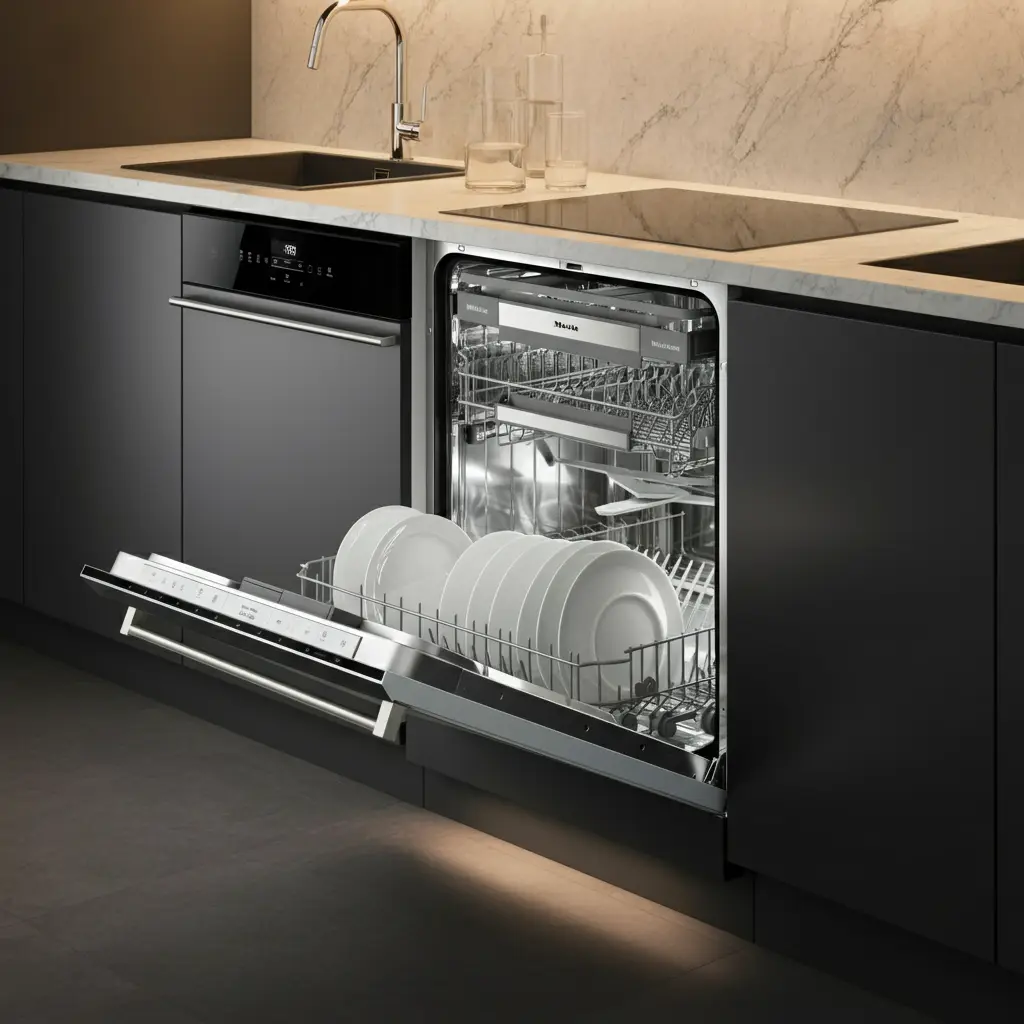
Heated drying can contribute to microbial reduction because it provides additional heat exposure and removes moisture.
Public-health guidance for certain household items recommends using a dishwasher with hot water and a heated drying cycle, or a sanitizing setting, because these options can help kill more germs.
However, drying should not be described as a sterilization process.
Its main benefits are additional heat exposure and drying of the cleaned surfaces.
Is Heated Dry Better for Killing Bacteria?
If microbial reduction is the goal, a heated drying option can provide additional heat exposure compared with an unheated drying method.
This is particularly relevant for items such as infant feeding equipment when the item manufacturer permits dishwasher cleaning.
The drying stage should still be considered part of the overall dishwasher process rather than a stand-alone disinfection method.
Is Air Drying Less Hygienic?
Not necessarily.
Clean items can be allowed to air dry after washing and sanitizing.
In fact, public-health guidance recommends allowing sanitized items to air dry thoroughly rather than drying them with a potentially contaminated towel.
The key is that the items should be clean and protected from contamination while they dry.
Does a Dishwasher Kill Bacteria Better Than Hand Washing?
A properly operated dishwasher can provide a very effective combination of mechanical cleaning, detergent, rinsing, and heat.
Hand washing can also clean dishes effectively when performed correctly using hot water, detergent, adequate scrubbing, thorough rinsing, and appropriate sanitation where necessary.
The outcome depends heavily on technique.
For household dishes, a dishwasher offers the advantage of controlled mechanical washing and, on suitable cycles, higher-temperature exposure that may be difficult to reproduce consistently by hand.
Why Dishwasher Temperature Alone Is Not Enough
Temperature is only one component of sanitation.
Imagine a dish covered with dried food.
Even if the surrounding water becomes very hot, the food residue can shield microorganisms from direct heat exposure.
Cleaning first removes that protective material.
This is why food-safety principles emphasize cleaning before sanitizing.
Public-health guidance specifically notes that impurities and dirt can make sanitizing or disinfecting less effective.
Does Dishwasher Loading Affect Bacteria Removal?
Yes.
Dishwasher loading has a direct impact on whether water reaches all surfaces.
If plates are packed tightly together, water may not reach the surfaces between them.
If bowls are positioned incorrectly, water may pool inside them.
If glasses block spray patterns, the interior may not be cleaned adequately.
A dishwasher’s sanitation capability assumes that the items are loaded in a manner consistent with the manufacturer’s instructions.
A certified dishwasher cannot compensate for surfaces that water and detergent cannot reach.

Can Overloading Prevent Sanitization?
Overloading can reduce effective cleaning and may interfere with water and detergent reaching all surfaces.
If surfaces are shielded from spray, they may not receive the intended washing and rinsing action.
This is especially important for complex items with cavities, narrow openings, deep bowls, or multiple overlapping surfaces.
Good loading is therefore part of effective sanitation.
Can a Dirty Dishwasher Still Kill Bacteria?
It may still reduce bacteria, but its performance can be compromised.
Food residue, grease, mineral deposits, clogged filters, blocked spray arms, and standing water can interfere with cleaning.
A dishwasher should therefore be maintained regularly.
A dirty appliance is not an ideal environment for achieving consistent cleaning and sanitation performance.
Does a Dirty Filter Affect Dishwasher Sanitation?
It can.
The filter captures food particles and debris.
If the filter becomes heavily contaminated, it can contribute to poor cleaning performance and potentially allow more food particles to remain in circulation.
Food residue provides a substrate that can protect microorganisms from environmental stresses.
Maintaining the filter is therefore important for both cleaning performance and overall dishwasher hygiene.
Does Standing Water Affect Dishwasher Hygiene?
Standing water can contribute to odor and microbial growth if it remains contaminated with food residues.
A small amount of water in certain areas of some dishwasher designs can be normal.
However, significant wastewater remaining after a cycle can indicate a drainage problem.
A dishwasher that does not drain correctly should be investigated before assuming that a high-temperature cycle will compensate for the problem.
Can a Dishwasher Spread Bacteria Instead of Killing Them?
A poorly maintained or incorrectly loaded dishwasher can potentially contribute to redistribution of contamination.
For example, food debris remaining in the wash system may be moved around during subsequent cycles.
A malfunctioning dishwasher may also fail to clean adequately.
This does not mean dishwashers normally spread bacteria. Proper detergent use, loading, filtration, drainage, and maintenance are designed to remove contamination effectively.
Why Some Dishes May Still Have Bacteria After a Dishwasher Cycle
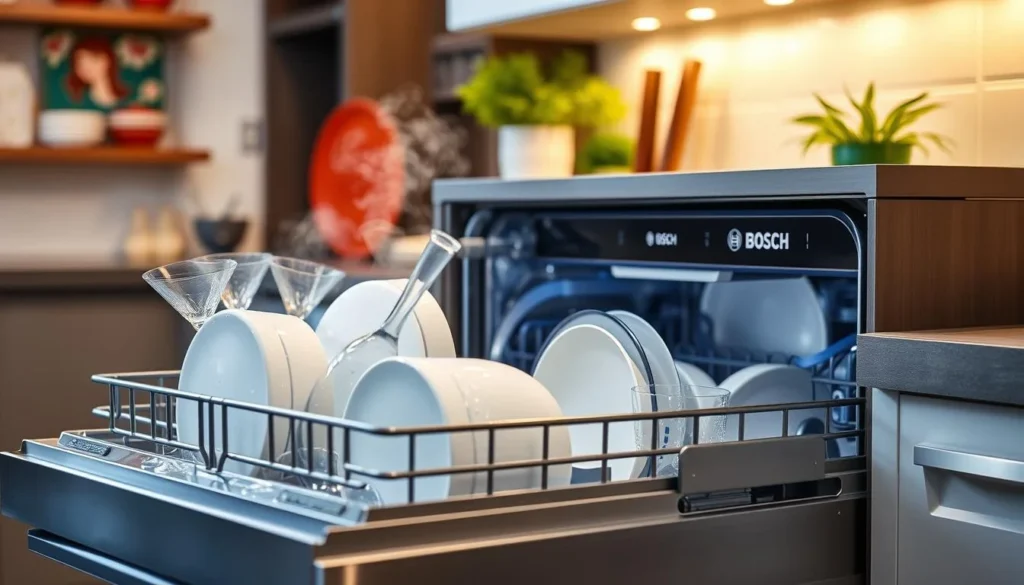
There are several possibilities.
Inadequate cleaning
Food residue may remain on the surface.
Poor spray coverage
Water may not have reached the surface.
Incorrect loading
Items may have blocked one another.
Insufficient temperature
The selected cycle may not have provided the intended heat exposure.
Dishwasher malfunction
Heating, circulation, filling, or drainage may be impaired.
Contamination after washing
Clean dishes can become contaminated again if handled with dirty hands or stored in contaminated locations.
Item limitations
Some materials or shapes may not be suitable for dishwasher sanitation.
Can a Dishwasher Sanitize Baby Bottles?
Many baby bottles and feeding accessories can be washed in a dishwasher if their manufacturers identify them as dishwasher-safe.
For infant feeding items, additional sanitation may be recommended depending on the child’s age, health circumstances, and local guidance.
Public-health guidance recommends using a dishwasher with hot water and a heated drying cycle or sanitizing setting when possible because this can help kill more germs.
Always disassemble feeding items as required and position them so that water can reach all surfaces.
Can a Dishwasher Sanitize Pacifiers?
Some dishwasher-safe pacifiers can be cleaned in a dishwasher, but the product manufacturer’s instructions should be followed.
Small components must be positioned securely so they do not fall into areas where they could become damaged or interfere with the dishwasher.
Do not assume that every pacifier or infant product is dishwasher-safe.
Can a Dishwasher Sanitize Cutting Boards?
Some dishwasher-safe cutting boards can be cleaned effectively in a dishwasher.
This can be particularly useful after preparing raw meat or poultry.
However, the cutting board must be suitable for dishwasher temperatures and the manufacturer’s instructions must permit machine washing.
A dishwasher can provide a combination of detergent, mechanical action, and heat that helps reduce contamination.
Can a Dishwasher Sanitize Utensils Used for Raw Meat?
Yes, dishwasher-safe utensils that have contacted raw meat, poultry, seafood, or their juices can be washed in a dishwasher.
Canadian public-health guidance specifically recommends washing dishes and utensils that have contacted raw foods before reusing them for ready-to-eat foods.
For additional microbial reduction, a suitable high-temperature or sanitizing cycle can be used when the dishwasher and utensils permit it.
Does a Dishwasher Kill Bacteria From Raw Chicken?
A properly functioning dishwasher can substantially reduce bacteria transferred from raw chicken to dishwasher-safe dishes and utensils.
Raw poultry can carry pathogens such as Campylobacter and Salmonella.
The important step is to ensure that contaminated dishes are thoroughly cleaned and that clean dishes are not subsequently recontaminated.
Use the dishwasher rather than simply rinsing contaminated items with water.
Does a Dishwasher Kill Bacteria From Raw Eggs?
A dishwasher can reduce bacteria on dishwasher-safe utensils and dishes that have contacted raw eggs.
The combination of detergent, mechanical action, rinsing, and heat can remove and inactivate microorganisms.
The same principle applies: do not rely on a quick rinse.
Does a Dishwasher Kill Bacteria From Raw Meat?
Yes, a dishwasher can substantially reduce bacterial contamination from raw meat on suitable items.
The items should be properly loaded, detergent should be used as directed, and an appropriate cycle should be selected.
If additional sanitation is desired, use the dishwasher’s sanitizing cycle where available and appropriate.
Does a Dishwasher Kill Bacteria Better on Glass or Metal?
The material itself is only one factor.
Glass and stainless steel are generally smooth surfaces that can be effectively washed when dishwasher-safe.
The greater concern is often the shape of the item.
A narrow glass, deep container, or utensil with hidden surfaces may be more difficult for water to reach than a flat plate.
Therefore, spray coverage and loading are important regardless of material.
Does a Dishwasher Kill Bacteria on Plastic?
Dishwasher-safe plastic can be cleaned and subjected to the temperatures permitted by its manufacturer.
However, plastic items vary considerably in heat resistance.
Some plastics can warp or degrade at high temperatures.
Always verify that the specific item is dishwasher-safe and follow its placement instructions.
If the item cannot safely withstand a sanitizing cycle, do not assume that the dishwasher’s hottest setting should be used.
Does a Dishwasher Kill Bacteria on Wooden Items?
Wooden utensils, cutting boards, and other wooden products require special consideration.
Some wooden items can be damaged by prolonged exposure to water and heat.
Cracking, warping, and deterioration can create surfaces that are harder to clean.
The item’s manufacturer should determine whether it is dishwasher-safe.
What About Silicone?
Many food-grade silicone products are dishwasher-safe and can tolerate relatively high temperatures.
However, the manufacturer’s instructions should still be followed.
Silicone items with complex folds, narrow cavities, or trapped moisture should be positioned so that water can reach their surfaces.
Does a Dishwasher Kill Bacteria in a Cup?
Yes, when the cup is dishwasher-safe and properly positioned.
A cup should generally be placed so water can reach its interior.
If the cup is upside down in a position where water cannot enter, the interior may not receive the intended cleaning action.
Can a Dishwasher Sanitize a Bottle With a Narrow Neck?
A narrow-neck bottle can be more difficult to clean than an open plate because water and detergent may not reach all interior surfaces.
Use an appropriate dishwasher rack or accessory when available.
If the manufacturer does not specifically approve dishwasher cleaning, use the recommended alternative method.
Does a Dishwasher Kill Bacteria in Food Containers?
Dishwasher-safe food containers can generally be effectively cleaned.
However, containers with deep corners, grooves, seals, valves, or narrow openings may require disassembly.
Food residue trapped in seals can shield microorganisms from cleaning.
The container should therefore be disassembled as instructed before machine washing.
Does a Dishwasher Kill Bacteria Better on a Sanitize Cycle?
Generally, a validated sanitizing cycle is designed to provide greater microbial reduction than an ordinary wash cycle.
Certified residential machines operating on their sanitizing cycle are tested against defined bacterial-reduction criteria.
If sanitation is a specific goal, this is preferable to assuming that a normal cycle provides the same performance.
Should You Use the Sanitize Cycle Every Time?
Not necessarily.
For ordinary household dishwashing, a standard cycle may be sufficient.
The sanitize cycle can be particularly useful when:
- Someone in the household is ill
- Dishes have contacted raw animal foods
- Infant feeding items are being washed
- A higher level of sanitation is desired
- Dishwasher-safe items require additional microbial reduction
Using the most intensive cycle for every load may increase energy, water, or cycle time depending on the dishwasher.
Can a Dishwasher Kill Bacteria Without Detergent?
Hot water alone can inactivate some bacteria, but detergent and mechanical cleaning are important parts of effective dishwasher operation.
Without detergent, greasy and protein-rich soils may remain on surfaces.
Those soils can shield microorganisms and reduce cleaning effectiveness.
Therefore, a dishwasher should be operated with the correct detergent according to the manufacturer’s instructions.
Can You Put Bleach in a Dishwasher to Kill Bacteria?
You should not add bleach to a dishwasher unless the manufacturer specifically states that it is safe and provides instructions for doing so.
Bleach can damage certain dishwasher materials and can create hazardous chemical interactions.
A dishwasher’s normal detergent and sanitation system should be used instead.
Never mix bleach with other cleaning chemicals.
Can Vinegar Kill Bacteria in a Dishwasher?
Vinegar is acidic and can have antimicrobial effects under certain conditions, but it should not be considered a replacement for a dishwasher’s validated sanitation cycle.
Its primary household dishwasher use is generally associated with cleaning mineral deposits or odors rather than controlled disinfection.
Do not add cleaning chemicals indiscriminately to a dishwasher.
Can Baking Soda Kill Bacteria in a Dishwasher?
Baking soda is useful for some cleaning purposes but should not be treated as a reliable dishwasher disinfectant.
It does not replace detergent or a validated sanitizing cycle.
Does the Dishwasher Need to Be Empty to Sanitize?
No.
A dishwasher’s sanitizing cycle is designed to operate with a load.
However, dishes should be loaded correctly so that water can reach all surfaces.
Running an empty dishwasher can be useful for certain maintenance procedures, but it is not necessary simply to sanitize ordinary dishes.
Can a Dishwasher Sanitize Sponges?
This depends on the sponge’s material and manufacturer’s instructions.
Some sponges may be dishwasher-safe, but others can deteriorate.
Even if a sponge survives a dishwasher cycle, it should not automatically be assumed to be sterile.
Kitchen sponges can harbor microorganisms because they remain wet and contain food particles.
Can a Dishwasher Kill Bacteria on Dish Towels?
Dishwashers are not designed to wash fabric.
Dish towels should be cleaned using an appropriate washing-machine cycle according to their care instructions.
Do not put fabric items into the dishwasher unless the manufacturer explicitly says they are dishwasher-safe.
What Makes a Dishwasher Good at Killing Bacteria?
Several factors contribute to effective microbial reduction.
Adequate Temperature
Heat helps inactivate microorganisms.
Adequate Exposure Time
Temperature must be maintained for sufficient time.
Effective Detergent
Detergent removes food and organic material.
Strong Mechanical Action
Spray pressure helps physically remove contamination.
Good Water Coverage
Every relevant surface must receive water.
Proper Rinsing
Rinsing removes loosened contaminants.
Effective Drying
Drying reduces residual moisture and may provide additional heat exposure.
Correct Loading
Items must not block one another.
Clean Filters
The filtration system must function properly.
Proper Maintenance
A dishwasher must heat, circulate, fill, and drain correctly.
Signs Your Dishwasher May Not Be Sanitizing Properly
Possible warning signs include:
- Dishes repeatedly remain visibly dirty
- Food residue remains after completed cycles
- Water is not heating normally
- The sanitize option is unavailable or fails
- The dishwasher stops before completing the cycle
- Error codes indicate heating or water-circulation problems
- Spray arms are blocked
- The filter is heavily clogged
- Water remains in the bottom
- Dishes are being recontaminated by food debris
- The dishwasher has unusual odors
- The machine does not complete its normal cycle
None of these signs alone proves that bacteria remain on dishes, but they indicate that dishwasher performance should be investigated.
Can a Broken Heating Element Prevent Bacteria Reduction?
Yes.
Heat is an important part of many dishwasher cycles.
If a heating element, heater assembly, temperature sensor, control system, or other heating component fails, the dishwasher may not reach its intended temperature.
A dishwasher may continue washing dishes even though the water is not becoming hot enough for the selected cycle.
If you notice consistently cold water, poor drying, or changes in cycle behavior, the heating system should be investigated.
Can Hard Water Affect Dishwasher Sanitation?
Hard water can affect cleaning performance by creating mineral deposits and interfering with detergent performance.
Heavy scale can also accumulate on heating components.
Because effective sanitation depends on the dishwasher reaching and maintaining its intended operating conditions, severe scale or other water-quality problems can indirectly affect performance.
Hard-water households should therefore maintain the dishwasher and water-softening system appropriately.
Can a Dirty Filter Affect Bacteria Removal?
Yes, indirectly.
A filter contaminated with food debris can interfere with effective cleaning and allow organic material to remain in the wash system.
Since microorganisms can be associated with food residue, poor soil removal can undermine overall hygiene.
Regular filter maintenance is therefore part of maintaining good dishwasher performance.
Dishwasher Sanitation and Food Safety in the USA
In the United States, residential dishwasher sanitation and commercial warewashing should not be confused.
Residential dishwashers can be certified to a sanitation standard that specifies bacterial reduction and final-rinse performance for the sanitizing cycle.
Commercial food-service machines are subject to different equipment and food-safety requirements. Current food-safety requirements specify detailed temperature conditions depending on the type of commercial warewasher.
The current national food-safety model code was updated in 2026, so commercial operators should follow the requirements adopted by their applicable jurisdiction rather than relying on older temperature charts.
For household use, homeowners should follow their dishwasher’s specific instructions rather than attempting to reproduce commercial warewashing temperatures.
Dishwasher Sanitation in Canada
Canadian public-health guidance recognizes dishwashers as an appropriate way to clean dishes and utensils.
In situations involving waterborne contamination concerns, high-temperature dishwashers or dishwashers with a sanitizing cycle can provide disinfection of dishes under appropriate conditions. One Canadian public-health guideline identifies a final rinse temperature of at least 65°C for hot-water dishwashers in a specific boil-water-advisory context.
This illustrates an important point: the appropriate temperature depends on the specific sanitation objective, cycle design, exposure time, and circumstances.
For normal household use, Canadian households should follow the dishwasher manufacturer’s instructions and applicable public-health guidance.
Dishwasher Sanitation in the UK
UK food-safety practice recognizes the importance of effective heat disinfection for equipment and utensils.
Commercial settings may use dishwasher systems designed to achieve specific final-rinse temperatures, with some documented operations using temperatures around 82°C.
However, commercial food-service requirements should not be automatically applied to residential machines.
For homes, the manufacturer’s cycle instructions and the item’s dishwasher-safety instructions should be followed.
Dishwasher Sanitation During a Boil-Water Advisory
This is an important situation because ordinary dishwasher operation should not automatically be assumed to make every contaminated water supply safe.
Public-health guidance varies depending on the reason for the advisory and the dishwasher’s capabilities.
In certain Canadian guidance, a dishwasher using hot water with a final rinse of at least 65°C or a sanitizing cycle is identified as an alternative method for disinfecting dishes during a specific waterborne outbreak context.
If a boil-water advisory is active in your area, follow the instructions issued by the relevant public-health authority.
Do not assume that every dishwasher, every cycle, or every appliance configuration provides the same level of protection.
Does Dishwasher Sanitation Make Dishes Sterile?
No.
This is one of the most important misconceptions to avoid.
A dishwasher can clean and sanitize dishes, but ordinary household dishwasher sanitation does not mean the items are sterile.
Sterilization requires a substantially more rigorous process.
A residential dishwasher sanitation standard focuses on bacterial reduction rather than complete destruction of all microbial life.
Does a Dishwasher Kill 100% of Bacteria?
You should not describe a dishwasher as killing 100% of bacteria.
Even a certified sanitizing dishwasher is evaluated according to a specified reduction target.
A 5-log reduction corresponds to 99.999% reduction under standardized test conditions, not an absolute claim that every microorganism on every dish will be eliminated.
Real-world performance can vary.
Is a Dishwasher Hygienic Enough for Everyday Dishes?
For normal household dishwashing, a properly functioning dishwasher is an effective way to clean dishes and reduce microbial contamination.
Canadian public-health guidance recommends washing dishes and utensils that have contacted raw foods before reuse, including washing them in a dishwasher or with warm soapy water.
A dishwasher provides the additional benefit of controlled mechanical cleaning and, on suitable cycles, elevated-temperature exposure.
Best Dishwasher Practices for Maximum Bacterial Reduction
If your goal is to maximize hygiene, use the following practices.
1. Scrape Large Food Debris
Remove large food particles before loading.
2. Do Not Overload
Leave enough space for water to reach surfaces.
3. Load Items Correctly
Follow the dishwasher’s rack and spray-arm instructions.
4. Use the Correct Detergent
Use automatic dishwasher detergent rather than hand dish soap.
5. Select the Appropriate Cycle
Use a normal cycle for everyday cleaning and a sanitizing cycle when additional sanitation is appropriate and the items can tolerate it.
6. Maintain the Filter
A clean filtration system helps maintain effective wash-water management.
7. Keep Spray Arms Clear
Blocked spray openings can reduce water coverage.
8. Maintain the Dishwasher
Address heating, circulation, filling, and drainage problems.
9. Use Heated Dry When Appropriate
Heated drying can provide additional heat exposure and help dry items thoroughly.
10. Handle Clean Dishes With Clean Hands
Do not contaminate dishes immediately after washing.
11. Allow Items to Dry Thoroughly
If air drying, place items where they are protected from contamination.
Does the Dishwasher Kill Bacteria Better Than Boiling?
These processes are different.
Boiling can be an effective method for reducing many microorganisms, but dishwasher sanitation involves detergent, mechanical action, rinsing, heat, and potentially drying.
A dishwasher’s advantage is that it combines multiple cleaning mechanisms rather than relying only on temperature.
Neither method should be assumed to sterilize every item under every condition.
Can You Use a Dishwasher to Sanitize After Someone Is Sick?
A dishwasher can be useful for cleaning dishwasher-safe dishes and utensils used by someone who is ill.
If additional sanitation is desired, use an appropriate sanitizing cycle if the machine has one.
Public-health guidance notes that disinfection at home is generally most relevant when someone is sick or has recently been sick, while routine cleaning is sufficient in many ordinary circumstances.
Does a Dishwasher Kill Bacteria on Plates Used by a Sick Person?
A properly functioning dishwasher can substantially reduce bacterial contamination on dishwasher-safe plates.
The appropriate response depends on the illness involved.
For ordinary household illness, thorough cleaning with detergent is generally effective for reducing contamination.
For specific infectious diseases or unusual contamination events, follow the relevant public-health recommendations rather than relying exclusively on a dishwasher.
What Temperature Should You Choose for Maximum Hygiene?
Do not choose a temperature based solely on a generic number.
Instead, select the dishwasher’s Sanitize or equivalent cycle when additional microbial reduction is required and the dishes are approved for that cycle.
If your machine does not have a sanitation cycle, use the highest appropriate cycle recommended by the manufacturer for the items being washed.
Avoid manually modifying the household water heater to extreme temperatures simply to increase dishwasher sanitation.
Can Very Hot Water Damage Dishes?
Yes.
Different materials tolerate different temperatures.
Some plastics can warp.
Certain decorated glassware can deteriorate.
Some adhesives or composite materials can be damaged.
Wood can crack or warp.
Certain insulated containers can be damaged.
Therefore, sanitation should never mean ignoring the item’s care instructions.
What About Delicate Glassware?
Delicate glassware may not be suitable for the hottest dishwasher cycle.
High temperatures, detergent chemistry, repeated washing, and water conditions can contribute to glass damage or etching.
If the manufacturer states that an item should be hand washed, follow that instruction rather than choosing a high-temperature dishwasher cycle.
Can Dishwasher Sanitizing Damage Plastic?
Some dishwasher-safe plastics are designed for high-temperature washing, but not all plastics have the same heat resistance.
The item’s dishwasher-safety rating and placement instructions should be followed.
If a plastic item is not rated for a high-temperature or sanitizing cycle, do not use that cycle.
What Is the Difference Between a Sanitize Cycle and a High-Temperature Cycle?
A high-temperature cycle simply indicates that the dishwasher uses elevated temperatures.
A sanitize cycle is intended to provide a defined sanitation performance under specified conditions.
A machine may therefore have a high-temperature option without having a certified sanitation claim.
If sanitation performance is important, look for the appropriate certification and verify which cycle must be selected to achieve it.
Why a Dishwasher Cannot Guarantee Zero Bacteria
Microbial contamination is affected by many variables.
A dish may have a crevice that water cannot reach.
A food particle may shield bacteria.
The dishwasher may not reach its intended temperature.
The filter may be heavily contaminated.
The item may be recontaminated after washing.
The dishwasher may be overloaded.
The machine may malfunction.
Because of these variables, responsible sanitation claims are based on measured reductions under defined test conditions rather than promises of zero microorganisms.
Frequently Asked Questions
1. Does a dishwasher kill bacteria?
Yes. Dishwasher cleaning, detergent, mechanical action, rinsing, and heat can substantially reduce bacteria. A validated sanitizing cycle can provide a much greater standardized bacterial reduction.
2. Does every dishwasher sanitize dishes?
No. Some dishwashers have validated sanitizing cycles, while others are designed primarily for cleaning.
3. Does a normal dishwasher cycle kill bacteria?
A normal cycle can reduce many bacteria, but it should not automatically be considered a validated sanitizing cycle.
4. What is the best dishwasher cycle for killing bacteria?
If your dishwasher has a validated sanitize cycle and the items are suitable for it, that cycle is designed for greater microbial reduction.
5. Does dishwasher detergent kill bacteria?
Detergent primarily removes food and contamination. It contributes to microbial reduction but should not automatically be considered a disinfectant.
6. Does hot water kill bacteria in a dishwasher?
Hot water can inactivate bacteria, but temperature, exposure time, cleaning, and the specific microorganism all matter.
7. Does 120°F kill bacteria?
It can reduce some microorganisms under appropriate conditions, but 120°F should not automatically be considered a dishwasher sanitizing temperature.
8. Does 140°F kill bacteria?
It can provide substantial bacterial inactivation under appropriate exposure conditions, but temperature alone does not establish sanitization.
9. Does 150°F kill bacteria?
150°F can provide significant bacterial reduction, and it is associated with the final-rinse requirement for certified residential sanitizing cycles.
10. Does 160°F kill bacteria?
Yes, 160°F provides strong heat exposure against many bacteria when adequate contact time is achieved.
11. Does 165°F kill bacteria?
165°F is a significant commercial warewashing temperature and can provide strong bacterial reduction when correctly applied.
12. Does 180°F kill bacteria?
180°F provides very high heat exposure and is used in certain commercial sanitizing systems.
13. Does a dishwasher kill Salmonella?
A properly operating dishwasher can substantially reduce Salmonella on dishwasher-safe dishes and utensils.
14. Does a dishwasher kill E. coli?
Yes, dishwasher cleaning and appropriate heat can substantially reduce E. coli.
15. Does a dishwasher kill Listeria?
A dishwasher can substantially reduce Listeria on suitable dishes and utensils.
16. Does a dishwasher kill Campylobacter?
Yes. Proper dishwasher cleaning and heat can substantially reduce Campylobacter contamination.
17. Does a dishwasher kill bacterial spores?
You should not rely on a household dishwasher to sterilize items or guarantee destruction of bacterial spores.
18. Does a dishwasher sterilize dishes?
No. Sanitization and sterilization are different processes.
19. Can a dishwasher kill viruses?
Dishwasher cleaning and heat can reduce many viruses, but effectiveness varies by virus and conditions.
20. Does dishwasher drying kill bacteria?
Heated drying can provide additional heat exposure and help reduce microorganisms, but it is not a sterilization process.
21. Is heated drying more hygienic?
It can provide additional heat exposure and thorough drying, which may be beneficial when microbial reduction is important.
22. Does air drying kill bacteria?
Air drying is not a disinfection method, but allowing clean dishes to dry thoroughly can reduce residual moisture. Properly sanitized dishes should be protected from recontamination while drying.
23. Can a dishwasher sanitize baby bottles?
Many dishwasher-safe baby bottles can be cleaned in a dishwasher. A hot-water, heated-drying, or sanitizing cycle can provide additional microbial reduction when permitted by the product manufacturer.
24. Can a dishwasher sanitize pacifiers?
Some dishwasher-safe pacifiers can be cleaned in a dishwasher. Always follow the manufacturer’s instructions.
25. Can a dishwasher sanitize cutting boards?
Dishwasher-safe cutting boards can be effectively cleaned in a dishwasher, including boards used for raw-food preparation.
26. Can a dishwasher kill bacteria from raw chicken?
Yes. A properly operating dishwasher can substantially reduce bacteria transferred from raw chicken to dishwasher-safe dishes and utensils.
27. Can a dishwasher kill bacteria from raw meat?
Yes. Detergent, mechanical cleaning, rinsing, and heat can substantially reduce contamination.
28. Can a dishwasher kill bacteria from raw eggs?
Yes. Dishwasher cleaning can substantially reduce bacterial contamination from raw eggs.
29. Can a dirty dishwasher kill bacteria?
It may still reduce bacteria, but poor maintenance can compromise cleaning effectiveness and microbial reduction.
30. Can a clogged dishwasher filter affect sanitation?
Yes, indirectly. A heavily contaminated filter can interfere with cleaning and allow food debris to remain in circulation.
31. Can standing water cause bacteria in a dishwasher?
Standing contaminated water can support microbial growth and unpleasant odors. Significant standing water may also indicate a drainage problem.
32. Should I use the sanitize cycle after raw chicken?
It can provide additional microbial reduction when the dishwasher and dishes are suitable for that cycle.
33. Should I use sanitize every time?
Not necessarily. A normal cycle is generally suitable for ordinary household dishwashing. Sanitize can be reserved for situations where additional microbial reduction is desired.
34. Can I add bleach to sanitize dishes?
Do not add bleach to a dishwasher unless the manufacturer specifically permits it. The normal dishwasher detergent and sanitation system should be used instead.
35. Can vinegar sanitize a dishwasher?
Vinegar should not be treated as a replacement for a validated dishwasher sanitizing cycle.
36. Can baking soda sanitize dishes?
No. Baking soda is primarily a cleaning aid and should not replace dishwasher detergent or an appropriate sanitizing cycle.
37. Does a dishwasher kill 100% of bacteria?
You should not assume that it does. Certified residential sanitation performance is expressed as a minimum 99.999% or 5-log bacterial reduction under specified test conditions.
38. What does 5-log reduction mean?
It means a 99.999% reduction. It is a reduction target, not a promise that absolutely no microorganisms remain.
39. Can a dishwasher kill bacteria on plastic?
Yes, if the plastic is dishwasher-safe and the selected cycle is appropriate for it.
40. Can a dishwasher kill bacteria on glass?
Yes. Dishwasher-safe glass can be effectively cleaned and subjected to heat during the cycle.
41. Does overloading affect bacterial removal?
Yes. Overloading can prevent water and detergent from reaching all surfaces.
42. Does dishwasher loading affect sanitation?
Yes. Proper loading is necessary so spray and rinse water can reach the surfaces being cleaned.
43. Can a blocked spray arm affect sanitation?
Yes. If water cannot reach dishes effectively, cleaning and microbial reduction may be compromised.
44. Can a broken heating element affect sanitation?
Yes. If the dishwasher cannot reach its intended temperature, heat-based microbial reduction can be reduced.
45. Does hard water affect sanitation?
Hard water can create mineral deposits and reduce cleaning effectiveness. Severe scaling can indirectly interfere with dishwasher performance.
46. Can a dishwasher spread bacteria?
A poorly maintained or incorrectly operated dishwasher can potentially redistribute contamination, particularly if food debris remains in the wash system.
47. Is a dishwasher safer than hand washing?
Both can be effective. A dishwasher has the advantage of automated mechanical cleaning and controlled heat exposure, while hand washing depends heavily on technique.
48. Can I put contaminated dishes directly into the dishwasher?
Dishwasher-safe contaminated dishes can generally be placed directly into the dishwasher. Remove large food debris and load them correctly.
49. Should I rinse dishes before putting them in the dishwasher?
Large food particles should generally be scraped away. Extensive pre-rinsing is not always necessary for modern dishwashers.
50. Can dishwasher sanitation replace cleaning?
No. Cleaning is essential. Sanitization works more effectively after soil and contamination have been removed.
51. Can a dishwasher sanitize during a short cycle?
It depends on the dishwasher. A cycle must provide the temperature and exposure conditions required for its sanitation claim.
52. Is a high-temperature cycle the same as a sanitize cycle?
Not necessarily. A high-temperature cycle may simply use hotter water, while a certified sanitizing cycle has defined performance requirements.
53. Does the dishwasher need hot water from the home’s water heater?
Many dishwashers heat incoming water internally, while others also rely on the household hot-water supply. Follow the installation instructions for the specific model.
54. Can cold-water supply prevent sanitation?
It depends on the dishwasher. Some machines are designed to heat incoming water, but an inadequate supply temperature can increase cycle time or affect performance depending on the model.
55. Can a dishwasher sanitize during an energy-saving cycle?
Not necessarily. Eco cycles often use different temperatures and longer cycle strategies. If sanitation is important, select the designated sanitizing cycle when available.
56. Does drying matter for hygiene?
Yes. Thorough drying reduces residual moisture and can help prevent conditions that support microbial persistence or growth.
57. Can a dishwasher sanitize utensils after someone has been sick?
Yes, dishwasher-safe utensils can be thoroughly cleaned, and a sanitizing cycle can provide additional microbial reduction when appropriate.
58. Can a dishwasher sanitize dishes during a boil-water advisory?
It may, depending on the dishwasher’s design and the specific public-health instructions. Follow the local advisory rather than assuming every dishwasher is sufficient.
59. Does a dishwasher kill mold?
Dishwasher cleaning and heat can substantially reduce mold contamination on suitable items, but heavily contaminated or porous items may require different treatment.
60. What is the best way to kill bacteria on dishes?
Use a properly functioning dishwasher with the correct detergent, load it correctly, select an appropriate cycle, maintain the filter and spray arms, and use a validated sanitizing cycle when additional sanitation is required.
Final Thoughts
So, does a dishwasher kill bacteria? Yes—but the correct answer requires some qualification.
A dishwasher is an effective cleaning appliance that can substantially reduce bacteria through a combination of detergent, mechanical water action, rinsing, heat, and drying. When a residential dishwasher is certified for sanitation and operated on its designated sanitizing cycle, it can achieve a minimum 99.999% or 5-log reduction of bacteria under standardized test conditions.
A normal dishwasher cycle should not automatically be described as sterilization. Cleaning and sanitizing are different from sterilizing, and no household dishwasher should be assumed to eliminate every microorganism or bacterial spore.
For everyday household dishes, proper dishwasher operation provides an effective method of cleaning and reducing microbial contamination. For situations where additional hygiene is important—such as washing items exposed to raw meat or poultry, cleaning infant feeding equipment, or dealing with illness—a suitable high-temperature or sanitizing cycle can provide additional protection when the dishwasher and items are designed for it.
The most important factors are not simply “how hot does the dishwasher get?” Effective bacterial reduction depends on temperature, time, detergent, mechanical cleaning, water coverage, rinsing, loading, filtration, drainage, and machine maintenance.
For homeowners in the USA, UK, and Canada, the safest practical approach is straightforward: use the dishwasher according to its manufacturer’s instructions, choose the appropriate cycle, keep the filter and spray arms clean, avoid overloading, and use the sanitize function when you specifically need the additional level of microbial reduction it is designed to provide.
A dishwasher is therefore much more than a machine that makes dishes look clean. When correctly operated, it combines several cleaning and microbial-control mechanisms to produce dishes that are not only visibly clean but also substantially lower in microbial contamination.