
Consumer Reports has built its dishwasher ratings around the idea that a good dishwasher must do more than just wash dishes once or twice in a showroom test. Its scoring combines cleaning, drying, noise, energy use, cycle time, ease of use, and predicted reliability, which gives buyers a broader picture of long-term ownership.
That approach matters because dishwashers are long-term appliances, and a model that looks flashy on paper may still be disappointing in actual use. CR’s method is designed to catch that gap by combining controlled lab testing with survey data from real owners.
Why CR Ratings Matter
Dishwashers are not all judged equally by ordinary shoppers. Some buyers focus on brand reputation, some on price, and some on quietness or drying. Consumer Reports tries to bring those priorities together into a system that can help compare models objectively.
CR’s dishwasher database is large, with more than 130 models currently rated and survey input from about 75,114 members. That scale makes the ratings useful for spotting patterns across brands rather than relying on a handful of anecdotal reviews.
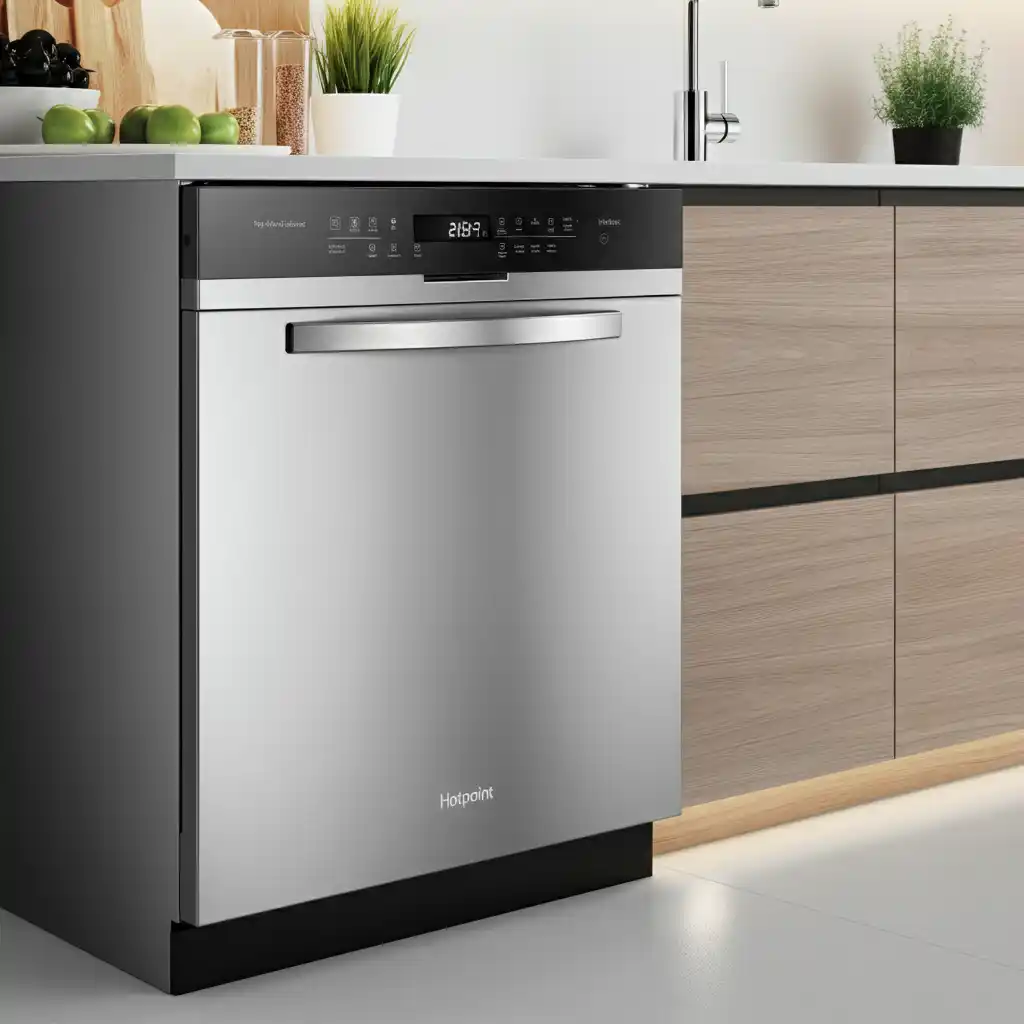
This is especially valuable for shoppers in the UK, USA, and Canada because dishwasher performance can vary by model, series, and market configuration even when the brand name is the same. A strong CR rating helps cut through that confusion.
How CR Tests Dishwashers
Consumer Reports says each dishwasher goes through around 30 hours of tough trials in its labs. The testing is designed to measure actual performance under controlled conditions rather than relying on marketing claims or brand reputation.
For cleaning, CR applies a set amount of starchy residue to white plates, bakes it on, loads the plates without pre-rinsing, and runs the dishwasher’s default cycle. Afterward, imaging software compares the before-and-after results to measure how much residue remains.
CR also tests drying performance, with particular attention paid to plastic items because dishwashers often struggle to dry them well. That emphasis is important because a dishwasher can clean well but still fail users if their containers come out wet every time.
Noise testing is equally structured. CR says a panel listens for annoying sounds throughout the cycle and factors in spikes such as detergent door thumps or drain-pump rumble, so a machine only gets top marks if it stays quiet in real use.
What CR Measures
The CR rating system goes beyond one simple score. It weighs several dimensions that matter in daily life: washing, drying, noise, energy efficiency, cycle time, and ease of use.
Washing performance looks at how well the machine removes baked-on residue and how well it performs with less expensive or more eco-friendly detergents. CR also considers performance in hard water, which can make detergent less effective.
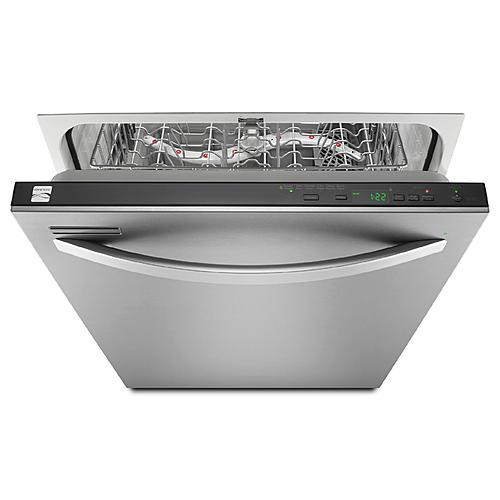
Ease of use is a newer addition to the ratings. CR looks at features such as third racks, adjustable racks, adjustable tines, flatware slots, hidden controls, lighted interiors, delay start, and status indicators, because these affect the daily ownership experience.
Energy efficiency is included because dishwashers use both electricity and water every time they run. CR says actual usage may be slightly higher than advertised, but the cost difference usually amounts to only a few dollars per year.
Cycle time is still measured, though CR now weights it less heavily than before. That reflects the fact that more households run dishwashers overnight and care more about results and noise than speed alone.
Reliability Scores
One of the most valuable parts of Consumer Reports’ dishwasher ratings is its predicted reliability data. CR says it uses annual member surveys to estimate which brands are most dependable over time, based on how many owners report problems and how likely they are to recommend the brand.
The reliability data is based on a very large pool of ownership experience. CR says the current ratings draw from about 77,000 dishwashers across 27 brands, with survey responses from members who bought the machines between 2015 and 2025.
That reliability score matters because dishwasher ownership is about long-term service, not just initial output. A machine that cleans well for six months but needs repeated repairs is not truly a strong buy, and CR’s model is meant to reveal that.
Best And Worst
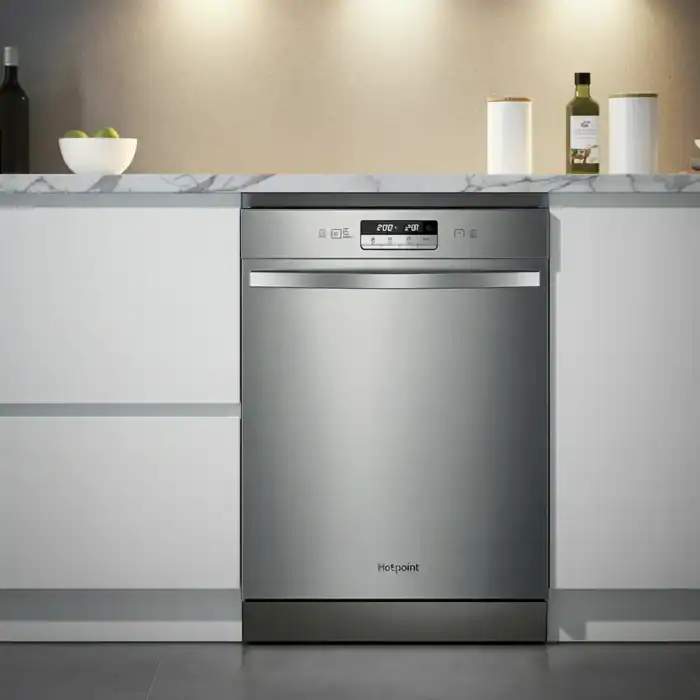
Consumer Reports publishes both best and worst dishwasher lists because avoiding weak performers can be just as important as finding strong ones. CR says some of the worst-performing dishwashers are surprisingly expensive, which proves that price alone does not guarantee quality.
Its best dishwasher list highlights models from brands such as Bosch, LG, and Miele, while its worst list serves as a warning that high-end styling can hide mediocre results.
This is one of CR’s most useful lessons for buyers in the UK, USA, and Canada: do not assume that a high price, premium finish, or big feature list means better cleaning or reliability.
Brands That Stand Out
CR’s brand-level ratings show that some manufacturers consistently outperform others. Consumer Reports says Bosch is the best dishwasher brand in its 2026 rankings, and Bosch itself highlights that CR gave it the top brand position.
CR also notes that several high-end brands perform very well, but that some expensive brands land in the middle or near the bottom of the reliability rankings. That is a critical reminder that luxury pricing does not automatically equal superior dependability.
This brand-level view is particularly helpful if you are not interested in comparing dozens of specific models. If a brand repeatedly ranks highly in both testing and reliability, it becomes a safer starting point.
Cleaning Performance
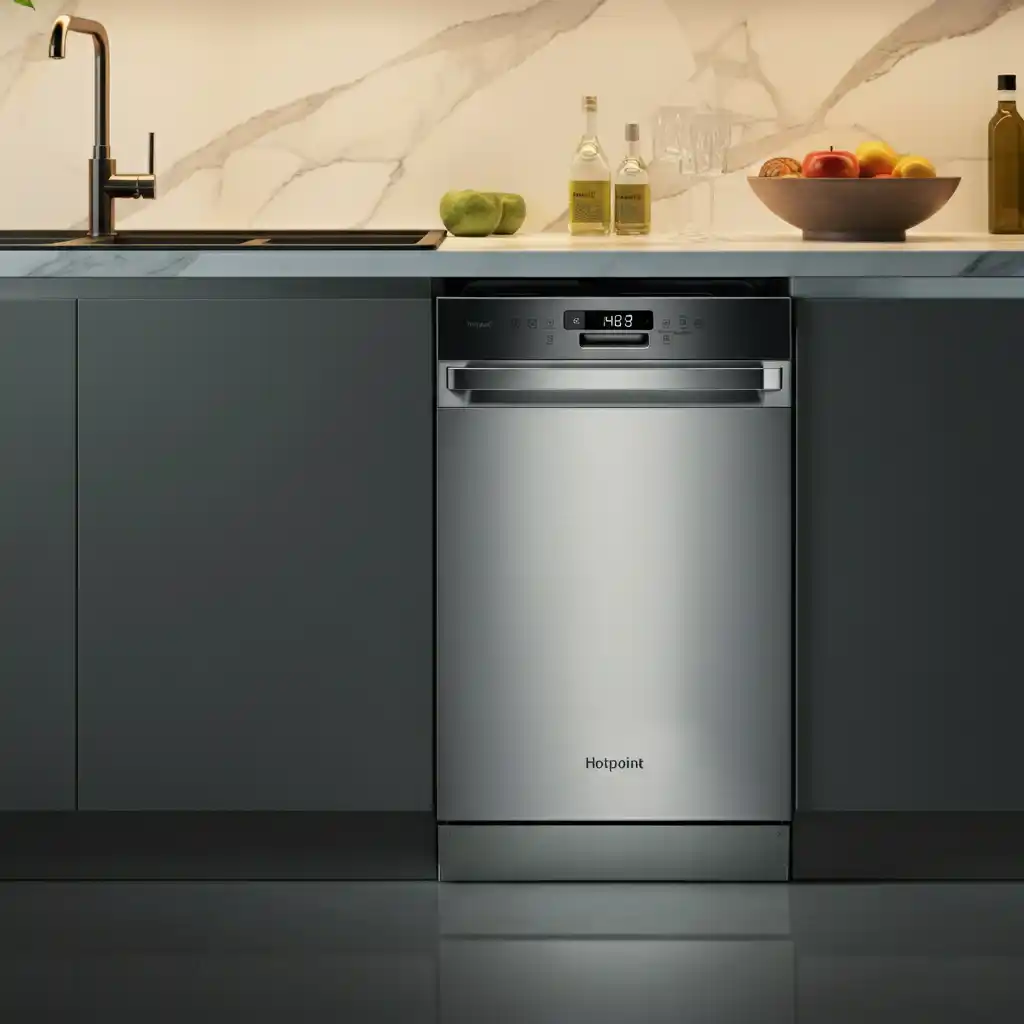
Cleaning performance is the core of any dishwasher rating, and CR gives it substantial weight. Its tests are designed to simulate hard, realistic messes rather than easy-to-clean dishes.
CR says its best performers can remove crusted residue even when using lower-cost detergents or in hard water. That matters because many households do not use specialty detergent and do not have perfectly soft water.
The testing also shows that extra spray arms and specialty wash zones do not always translate into better cleaning. This is useful for buyers who are tempted by feature-heavy marketing but need actual performance.
Drying Performance
Drying is often where dishwasher ownership frustration begins. Consumer Reports says some machines handle drying much better than others, especially with plastic items, which are difficult to dry because they do not retain heat as well as glass or ceramic.
CR notes that heated-dry cycles often perform better than models that rely on residual heat alone, although the best result is not guaranteed. It also highlights dishwashers that automatically open their doors at the end of the cycle as strong dryers because they release steam efficiently.
That insight is useful in all three target markets because buyers often assume every dishwasher drys equally well. CR’s ratings show that drying technology can make a major difference in daily use.
Noise Ratings
Noise is another area where Consumer Reports stands out. Its ratings do not just measure average sound level; they also account for random spikes and irritating noises that make a dishwasher feel louder than its spec sheet suggests.
This matters because many dishwashers are quiet in theory but annoying in practice. A loud detergent flap, drain pump, or sudden thump can be more disruptive than a steady low hum.
For open-plan homes, noise is one of the most important rating categories. CR’s approach helps identify machines that are genuinely quiet in lived-in kitchens, not just on paper.
Energy And Water Use
CR includes energy efficiency in its ratings because the operating cost of a dishwasher is part of the ownership experience. It calculates annual cost based on measured usage rather than leaving buyers to guess.
The organization says dishwashers often use a little more water and energy than advertised, but the difference is usually modest. That means operating costs matter, but they are rarely the dominant factor compared with cleaning performance or reliability.
For UK, USA, and Canadian buyers, this means energy-efficient models are worth prioritizing, but not at the expense of wash quality or reliability.

Price And Value
CR’s dishwasher data shows that price and quality do not always move together. Dishwashers in its ratings range from about $300 to more than $2,000, but the expensive end is not always the best-performing end.
CR says many dishwashers in the $500 to $1,000 range earn top marks for cleaning and predicted reliability. That suggests the sweet spot for value often sits in the middle of the market rather than the top.
At the low end, CR notes that dishwashers under $500 still exist, but they are usually noisier and more likely to have plastic tubs. At the high end, models may look stylish and come with many features, but not all of them justify the extra cost.
Repair Or Replace
Consumer Reports includes an interactive repair-or-replace tool for broken dishwashers because buying new is not always the best answer. That tool uses product cost, depreciation, and survey data to help consumers decide whether to fix an old machine or replace it.
This is important for buyers in every market because repair costs can sometimes approach replacement cost, especially for older models or machines with serious electronic failures. CR’s broader rating system helps users avoid overpaying for repairs on weak products.
A high CR rating often makes a repair more worthwhile if the machine is otherwise reliable. A low CR rating may push the balance toward replacement sooner.
What Buyers Should Watch
One of the biggest lessons from Consumer Reports is that features should not be confused with quality. A dishwasher may have extra wash arms, a fancy rack setup, or premium styling, but those additions do not automatically produce better results.
Another lesson is that expensive brands are not automatically the most reliable. CR’s survey data repeatedly shows that reliability and price are not perfectly linked, and in some cases higher-priced products perform only middlingly.
A third lesson is that models with strong scores often succeed because they are balanced. The best dishwashers clean well, dry well, stay quiet, and hold up over time rather than excelling in just one area.
UK, USA, And Canada Notes
Consumer Reports is a U.S.-based publication, but its dishwasher ratings are still highly relevant in the UK and Canada because the underlying buying questions are the same: which models clean best, last longest, and operate most quietly?
The main difference by region is product availability and model naming. A Bosch, LG, or Miele dishwasher sold in one market may have a different model code or feature set in another, so buyers should compare the specific model, not just the brand.
Energy labels, water efficiency rules, and retailer warranty practices can also vary by country. Even so, CR’s rating logic remains useful because it focuses on the performance factors that matter almost everywhere.
Best Way To Use CR Ratings
The smartest way to use Consumer Reports dishwasher ratings is to start with the top-ranked models in your budget, then narrow by noise, drying, and rack layout. That approach prevents you from getting distracted by marketing language or irrelevant extras.
If you have an open kitchen, noise should weigh heavily. If you wash a lot of plastics, drying technology should matter more. If you are mostly interested in long-term dependability, the predicted reliability rankings become especially important.
CR’s model makes it easier to buy according to your actual household needs rather than buying the most expensive machine or the one with the longest spec sheet.
Final Verdict
Consumer Reports dishwasher ratings are valuable because they combine real lab testing with real owner data. CR’s system rewards dishwashers that clean well, dry well, stay quiet, use energy efficiently, and remain reliable over time.
For buyers in the UK, USA, and Canada, the most important takeaway is that a strong CR score is usually a better predictor of satisfaction than brand hype alone. The best dishwashers are not just the most expensive ones; they are the ones that consistently perform well in the categories that matter day after day.