
The Miele Futura Classic dishwasher is a built-in dishwasher series designed for households that want effective everyday cleaning, practical wash programmes, flexible loading, and a durable appliance. Although the Futura Classic range is no longer a current mainstream product line, these dishwashers remain relevant to buyers considering a used appliance, evaluating an existing machine, or deciding whether an older premium dishwasher is worth repairing.
Unlike many modern dishwashers that emphasise touchscreen controls, Wi-Fi connectivity, app-based operation, and automated door-opening systems, Futura Classic models focus on conventional dishwasher functions. Depending on the model, they offer programmes such as Pots & Pans, Normal, Economy, SaniWash, Express, and Rinse & Hold. Certain versions also include Turbo and Delay Start options.
One important point is that Miele Futura Classic refers to a family of dishwasher models rather than one single appliance. Models in this family include the G 4225, G 4228, G 4281, and G 4286, among others. Features, dimensions, noise levels, controls, and capacity can vary between versions. Consequently, a review of the Futura Classic range must distinguish general characteristics from specifications that apply only to particular models.
This review examines the dishwasher’s design, cleaning performance, wash programmes, drying system, noise, loading capacity, water and energy considerations, reliability, maintenance, common problems, repair decisions, and suitability for households in the United States, Canada, and the United Kingdom.
The central question is whether the Miele Futura Classic remains a worthwhile dishwasher today, particularly when compared with newer machines offering more advanced convenience features.
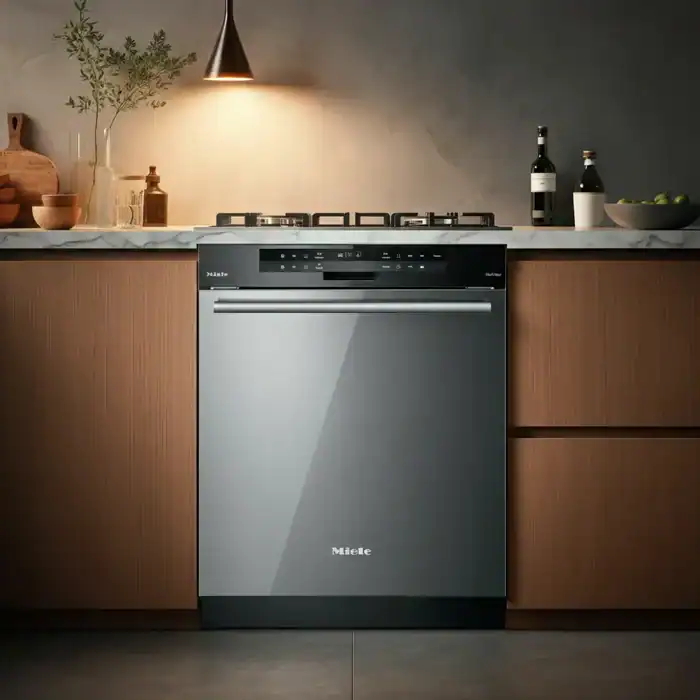
1. Miele Futura Classic Dishwasher Overview
The Futura Classic series belongs to an older generation of Miele residential dishwashers. Its design prioritises practical washing functions, conventional controls, and a structured selection of wash programmes.
Rather than relying on a large touchscreen or an elaborate digital interface, many models use straightforward programme-selection buttons, indicator lights, and a compact display or status indicators. This arrangement can appeal to people who prefer operating an appliance without navigating numerous menus.
The range includes models with different configurations, so buyers should not assume that every Futura Classic dishwasher has identical controls, capacity, or installation dimensions.
Important characteristics
The main characteristics associated with the Futura Classic range include:
- Built-in dishwasher designs intended for residential kitchens.
- A nominal 24-inch width on North American models.
- Multiple wash programmes for different soil levels and dish types.
- AutoSensor technology on the relevant models.
- Conventional heated, circulation-based drying.
- Practical rack arrangements for plates, bowls, glasses, and cutlery.
- Programme status indicators and straightforward controls.
- Options such as Turbo and Delay Start on selected models.
- A design that does not depend on modern Wi-Fi or smartphone connectivity.
Some models offer a cutlery tray or other rack arrangements that affect the number of place settings they can accommodate. Certain versions also have different height configurations to suit particular cabinetry installations.
The absence of contemporary smart features does not automatically make an older dishwasher ineffective. What matters is whether the machine cleans properly, drains correctly, heats water as intended, dries dishes adequately, and operates safely.
However, the age of the Futura Classic range is an important consideration. A used machine may have accumulated years of wear, and its condition can matter more than its original specification.
2. Design and Build Quality
Miele has traditionally positioned its dishwashers toward the premium end of the market. The Futura Classic reflects that approach through its practical construction, integrated design, and emphasis on routine household use.
Exterior design
Futura Classic dishwashers were produced in configurations intended to fit into conventional kitchen cabinetry. Depending on the model, buyers may encounter prefinished exterior designs or versions intended for particular installation arrangements.
The control panel is relatively straightforward compared with the large displays found on some newer appliances. Programme labels and indicator lights make it easier to identify the selected wash cycle and monitor the dishwasher’s progress.
For homeowners who prefer an appliance that blends into the kitchen without demanding attention, this conventional approach can be appealing.
The design may look dated beside modern dishwashers with fully concealed controls, large stainless steel handles, or smart displays. Nevertheless, appearance is subjective, and a well-maintained machine can remain perfectly functional in an older or traditional kitchen.
Interior construction
The dishwasher’s interior is designed to accommodate ordinary household dishes, cookware, glasses, and cutlery.
As with any dishwasher, the practical quality of the interior depends on the condition of the racks, coating, rails, hinges, spray arms, seals, and moving components.
When inspecting a used Futura Classic, check carefully for:
- Rust on rack tines or exposed metal.
- Damaged or peeling rack coatings.
- Upper-rack rails that do not move smoothly.
- Broken clips or plastic rack components.
- Loose spray arms.
- Cracked or hardened door seals.
- Corrosion around the door and lower interior.
- Signs of water leakage beneath the appliance.
These checks are particularly important because an older premium dishwasher may still have an excellent basic design while requiring repairs to worn components.
Is the build quality still impressive?
A Futura Classic in good condition can offer a solid, conventional dishwasher experience. However, buyers should avoid assuming that its original premium positioning guarantees excellent condition today.
The appliance’s maintenance history, installation, previous repairs, and frequency of use all affect its current value.
For a used machine, inspect the actual appliance rather than relying exclusively on its brand reputation.
3. Cleaning Performance: Does the Miele Futura Classic Clean Well?
Cleaning performance is the primary reason to buy a dishwasher. The Futura Classic range offers conventional wash programmes and, on relevant models, AutoSensor technology to help adapt washing conditions to the load.
A properly functioning machine should be capable of cleaning everyday items such as dinner plates, bowls, cups, glasses, and cutlery, provided they are loaded correctly and the appropriate programme is selected.
AutoSensor technology
AutoSensor is designed to help the dishwasher respond to the conditions detected during washing. Rather than treating every load in precisely the same way, the programme can adjust aspects of the wash according to the detected soil conditions.
This is useful when one load contains relatively clean plates and glasses while another includes sauce-covered dishes and cooking residue.
However, sensor technology cannot compensate for every problem. If the spray arms are blocked, the filter is clogged, the water supply is inadequate, or the circulation pump is not working properly, the dishwasher may deliver disappointing results regardless of the selected programme.
Similarly, a sensor cannot make a poorly loaded dishwasher clean effectively when dishes block water from reaching other items.
Everyday dishwashing
For normal household loads, the Futura Classic’s conventional wash programmes provide a practical approach.
Dinner plates, cereal bowls, drinking glasses, coffee cups, and cutlery can generally be cleaned using an appropriate normal programme, provided the machine is functioning correctly.
The most important factors include water temperature, detergent quality, spray coverage, the condition of the filtration system, and the arrangement of the load.
If dishes repeatedly come out dirty, investigate these factors before assuming the appliance has reached the end of its useful life.
Heavily soiled cookware
The Pots & Pans programme is intended for dishes and cookware with more substantial food residue.
It can be useful for roasting dishes, saucepans, casserole dishes, and other suitable items that require more intensive washing than a lightly soiled load.
Nevertheless, heavily baked-on food may still need to be soaked or scraped before loading. A dishwasher should not be expected to remove every type of burnt or carbonised residue in one cycle.
Load cookware so that the spray can reach the surfaces requiring cleaning. Avoid positioning large pans in a way that blocks water from reaching the upper rack.
Grease removal
Dishwasher detergent works together with heated water and mechanical spray action to remove grease and food residue.
The Futura Classic can provide effective grease removal when the heating system, circulation pump, spray arms, and detergent are all functioning properly.
If greasy dishes repeatedly come out dirty, possible causes include:
- An unsuitable wash programme.
- Incorrect detergent dosage.
- Blocked spray-arm openings.
- A dirty filter.
- Poor water circulation.
- A heating problem.
- A malfunctioning sensor or control component.
A detergent change may help in some situations, but persistent cleaning problems can indicate a mechanical or water-heating issue.
Glassware and delicate dishes
Glassware should be loaded securely so that pieces do not strike each other during washing.
Choose an appropriate programme for delicate items and check the manufacturer’s instructions for any glassware that may be unsuitable for dishwasher cleaning.
Older dishwashers may not provide the same range of specialised glass-care options available on some contemporary premium models. Nevertheless, an appropriate wash programme and detergent can help protect suitable glassware from avoidable damage.
Cleaning performance verdict
The Miele Futura Classic remains a potentially capable everyday dishwasher when it is in good working order.
Its conventional programme selection is sufficient for many household requirements. However, its performance should be judged by the specific machine’s condition, not by the Miele name alone.
A neglected Futura Classic with worn components may clean less effectively than a well-maintained, less expensive modern dishwasher.
4. Wash Programmes Explained
The Futura Classic range includes several conventional wash programmes. Exact availability varies by model, so the labels on the control panel and the relevant operating instructions should be checked before using the appliance.
Pots & Pans
Pots & Pans is intended for more heavily soiled dishes and cookware.
This programme is useful for saucepans, roasting dishes, and other robust kitchen items that have accumulated grease or food residue.
It may use more intensive washing conditions than a lighter programme. Consequently, it is generally best reserved for loads that genuinely require stronger cleaning.
Normal
The Normal programme is intended for ordinary household dishwashing.
It can be appropriate for mixed loads containing plates, bowls, glasses, and cutlery with typical food residue.
For many households, a normal programme is the most practical everyday option because it balances cleaning requirements with routine convenience.
Economy
The Economy programme is designed to reduce resource consumption under its intended operating conditions.
Economy programmes may take longer than more intensive cycles because they can rely on longer washing periods and lower-energy operating strategies.
This does not mean an Economy programme is suitable for every load. Heavily soiled cookware may require a more intensive cycle.
For buyers concerned about electricity and water consumption, the Economy option is worth understanding, but the exact consumption figures should be obtained for the individual model.
SaniWash
SaniWash is intended for sanitising-oriented washing conditions on models that include this programme.
It may be useful when a household has particular hygiene requirements for suitable dishwasher-safe items.
However, the presence of a SaniWash button should not be interpreted as a guarantee that every load will meet every medical, commercial, or food-service sanitisation standard. The actual temperature profile, programme performance, and applicable certification matter.
For ordinary household dishwashing, the Normal or another appropriate everyday programme may be sufficient.
Express
Some Futura Classic models include an Express programme intended for shorter washing requirements.
A shorter programme can be convenient when dishes need to be cleaned quickly, but it may be less appropriate for heavily soiled cookware or food residue that has dried onto dishes.
The precise purpose and performance of Express depend on the model.
Rinse & Hold
Rinse & Hold is intended to rinse dishes without performing a complete wash programme.
This can be helpful when you want to collect dishes over a period of time before running a full load.
It is not a replacement for a complete cleaning cycle. The dishes should still receive an appropriate wash programme before they are used again.
Turbo
Turbo is available on certain versions of the Futura Classic range.
It is intended to provide a faster washing option under the conditions specified for the relevant model.
Before relying on Turbo for a particular load, check the appliance’s instructions because the effect on programme duration, temperature, and cleaning performance may vary.
Delay Start
Delay Start allows a programme to begin later rather than immediately after loading the machine.
This can be useful for planning dishwashing around work schedules or household routines.
For example, a user may load the dishwasher after dinner and set a delayed start for a later time. However, the delay should be chosen sensibly when the dishes contain food residue that could develop unpleasant odours if left for an extended period.
Which programme should you use?
| Type of load | Programme to consider |
|---|---|
| Everyday plates and cutlery | Normal |
| Heavily soiled cookware | Pots & Pans |
| Loads suited to reduced-resource washing | Economy |
| Suitable loads requiring sanitising-oriented washing | SaniWash |
| Lightly soiled dishes requiring a shorter cycle | Express, if available |
| Dishes awaiting a complete wash | Rinse & Hold |
| A load requiring a faster programme option | Turbo, if available |
Always follow the programme descriptions for the exact model. The names of programmes alone do not establish their precise temperatures, durations, or consumption.
5. Drying Performance
Drying is another important consideration when evaluating an older dishwasher.
The Futura Classic range uses a conventional circulation-based turbothermic drying system on the relevant models. This differs from some modern machines that use automatic door opening or newer specialised drying arrangements.
How the drying system works
After washing and rinsing, the dishwasher must remove moisture from the dishes and interior.
Heat retained by the load and the machine’s drying process helps moisture evaporate from surfaces. The dishwasher’s circulation and ventilation arrangements contribute to the removal of moisture according to the design of the particular model.
The results depend on the programme, the load materials, the amount of rinse aid used, and the way dishes are positioned.
Ceramic plates and metal cutlery often retain heat differently from plastic containers. Consequently, plastic items may remain damp even when the rest of the load appears dry.
Does the Futura Classic dry dishes completely?
A properly functioning Futura Classic can provide useful drying performance for ordinary household dishes.
However, buyers should not expect every item to emerge completely dry under every condition.
Water can remain on the underside of cups, the bases of bowls, and recessed areas where moisture collects. Plastic containers can also retain droplets because of their material properties.
If the dishwasher consistently leaves excessive water on dishes, check the rinse-aid supply, loading arrangement, programme selection, and heating performance.
Improving drying results
To improve drying performance:
- Use rinse aid if recommended for the model and local water conditions.
- Avoid nesting bowls and cups.
- Position items so water can drain from recessed surfaces.
- Do not overload the racks.
- Check that the selected programme includes the intended drying phase.
- Investigate persistent poor drying if the machine no longer heats as expected.
Rinse aid helps water drain more evenly from many dish surfaces, reducing the likelihood of droplets and spotting.
Drying performance verdict
The Futura Classic offers a conventional drying approach rather than the latest automatic door-opening or smart drying features.
For users who mainly wash ceramic dishes, glasses, and cutlery, its drying performance may be perfectly adequate.
However, buyers who prioritise advanced drying for plastic containers or want modern automatic ventilation features may prefer a newer dishwasher.
6. Noise Levels and Operating Comfort
Noise can make a significant difference when a dishwasher is installed near a living room, dining area, or bedroom.
The Futura Classic range includes models with different noise ratings. Some models are listed around 46 dBA, while others are rated around 48 dBA. These figures should not be applied to every model in the range.
For an older appliance, the present operating condition is also important. A machine that was originally quiet may become noticeably louder if its pump, bearings, mounting, or other components wear out.
Is the Miele Futura Classic quiet?
The Futura Classic can provide acceptable noise performance for a conventional dishwasher, but its older design may not compete with the quietest modern premium models.
A rating in the mid-to-upper 40 dBA range may be suitable for many kitchens, although the perceived noise depends on the installation and surrounding room.
If you are purchasing a used machine, listen to it through a complete operating cycle where possible. Pay attention to unusual grinding, rattling, buzzing, or excessive vibration.
What affects dishwasher noise?
Several factors influence operating noise:
- Circulation pump condition.
- Drain pump operation.
- Spray-arm movement and water impact.
- Loose dishes or cutlery.
- Incorrect levelling.
- Cabinet vibration.
- Plumbing that touches the appliance.
- Worn mounting components.
Not every sound indicates a fault. Water spraying, filling, and draining are normal parts of dishwasher operation.
However, a sudden change in noise or a persistent grinding sound should be investigated.
Is it suitable for an open-plan kitchen?
It may be suitable, depending on the exact model, its condition, and your sensitivity to noise.
If you require especially quiet operation for a combined kitchen and living area, compare the Futura Classic’s exact rating with newer alternatives before purchasing.
A used dishwasher that offers a low purchase price may still be a poor fit if its noise level interferes with your daily routine.
7. Loading Capacity and Rack Design
Loading flexibility affects how convenient a dishwasher is to use. A machine that accommodates a variety of plates, cups, pans, and utensils can reduce the number of loads needed each week.
The Futura Classic range includes different configurations, and the precise capacity depends on the model and rack arrangement.
Upper rack
The upper rack is intended for suitable cups, glasses, smaller bowls, and other items that fit safely within its available space.
Arrange glasses so they remain stable during washing and avoid placing items too close together.
If the upper rack does not slide smoothly, inspect the rails and rollers for damage or obstruction.
Lower rack
The lower rack typically accommodates dinner plates, serving dishes, and suitable cookware.
Large items should be arranged so they do not block the spray arms or prevent water from reaching the upper rack.
Check the permitted dimensions of dishes before loading unusually large plates or deep serving bowls.
Cutlery arrangement
Depending on the model, the Futura Classic may have a cutlery basket or a configuration incorporating a cutlery tray.
A cutlery tray can provide additional flexibility and may allow smaller utensils to be arranged separately from larger items. A basket may be more familiar and convenient for users who prefer to load cutlery quickly.
The effect on total capacity depends on the particular design.
Is the capacity suitable for families?
The Futura Classic range includes models designed for substantial household loads. However, the exact place-setting capacity varies by version and configuration.
For a family, it is important to check the number of people in the household, the frequency of cooking, and the quantity of dishes generated each day.
A machine that technically accommodates a high number of place settings may still be inconvenient if your dinner plates, cookware, or tall glasses do not fit well.
Loading tips
- Place plates so they face the main spray area.
- Avoid nesting bowls.
- Keep cutlery from sticking together.
- Position large pans where they will not block spray coverage.
- Ensure the spray arms can rotate freely.
- Avoid placing delicate items where they can collide.
- Follow the loading instructions for the specific rack configuration.
Rack design verdict
The Futura Classic provides conventional, practical loading arrangements. Its usefulness depends on the exact model and the types of dishes you own.
Before purchasing a used unit, inspect the racks carefully. Replacement racks and small plastic fittings can add to the cost of bringing an older dishwasher back into good condition.