
Higher-rated dishwashers those earning top scores in cleaning, drying, energy efficiency, and reliability aren’t always worth the premium price for every household. While models scoring 4.5+ stars or ENERGY STAR Most Efficient status often deliver superior performance and longevity, diminishing returns kick in above the $800-1,200 range, where you’re frequently paying for luxury features, brand prestige, and aesthetics rather than core functionality. Budget-conscious buyers can achieve 85-90% of premium results with mid-tier options costing 40-60% less, provided they prioritize key specs over star ratings alone.
Budget Tier ($300-$600): Solid Basics Without Frills
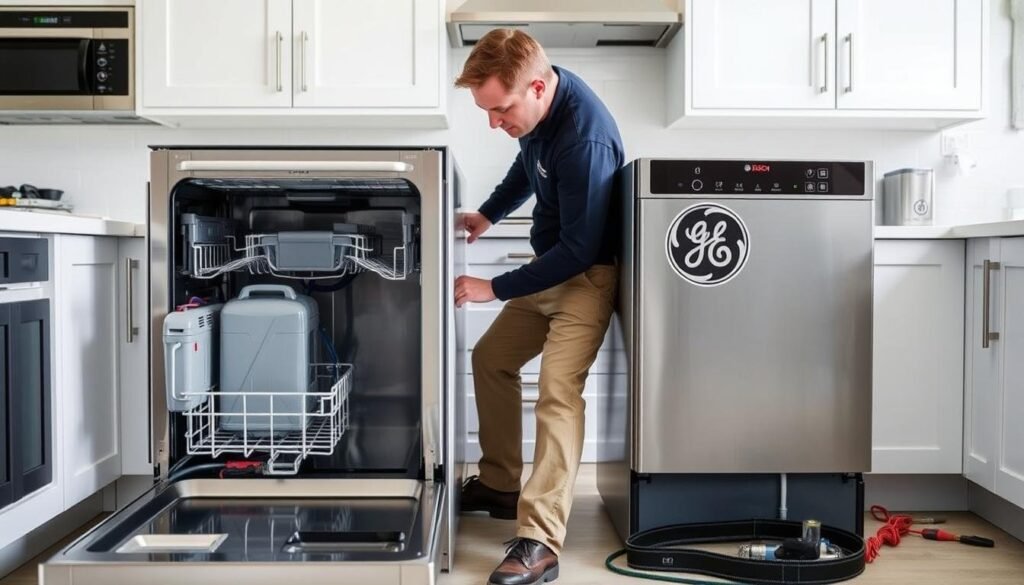
Entry-level dishwashers reliably clean everyday loads, scoring 70-75 Cleaning Index (CI) on standard tests, which handles 95% of household needs like plates, glasses, and utensils. These models meet ENERGY STAR thresholds (≤240 kWh/year, 3.2 gal/cycle) and dry adequately with heated elements, though plastics may emerge damp. Brands like Whirlpool or GE in this range average 4.2-4.4 stars from thousands of reviews, with failure rates under 10% in the first five years. The value shines for apartments, small families, or occasional users savings of $400+ upfront offset minor trade-offs like louder operation (45-50 dBA) or fewer cycles.
Diminishing returns start here: spending under $500 yields 80% of a $1,000 model’s cleaning power, but skips adjustable racks or soil sensors. Reliability data shows these hold up 8-10 years with proper maintenance, matching pricier units when filters stay clean.
Mid-Tier ($600-$1,200): The Sweet Spot for Most Homes
This range captures the optimal balance, where 75-82 CI ensures spotless results even on baked-on messes, stainless tubs boost drying to <10% residual moisture, and inverter motors cut energy 15-20% below budget models. Quiet operation (38-44 dBA) suits open kitchens, while features like third racks, delay starts, and app controls add daily convenience. Consumer satisfaction jumps to 4.5-4.7 stars, with Bosch 800 Series or LG LDT7808 exemplifying value superior to budget cleaning without $500+ markups.
Lab tests confirm mid-tier units outperform budget by 10-15% across metrics, yet cost 25-40% less than premium. Longevity extends to 12+ years, with repair costs 30% lower due to better parts availability. For families running 5+ cycles weekly, this tier amortizes via $50/year energy savings and reduced pre-rinsing time.
Premium Tier ($1,200+): Luxury Pays If You Value Extras
High-end models like Miele G7000 or Bosch Benchmark achieve 82-88 CI, zeolite drying (95%+ dry rates), and <200 kWh/year, but at 2-3x mid-tier prices. Ultra-quiet 36-38 dBA, WiFi diagnostics, and panel-ready integration appeal to custom kitchens, yet core cleaning matches $900 units extra spend buys aesthetics and niche cycles (e.g., china/crystal). Reliability edges out (15-year lifespan), but service calls cost more due to specialized parts.
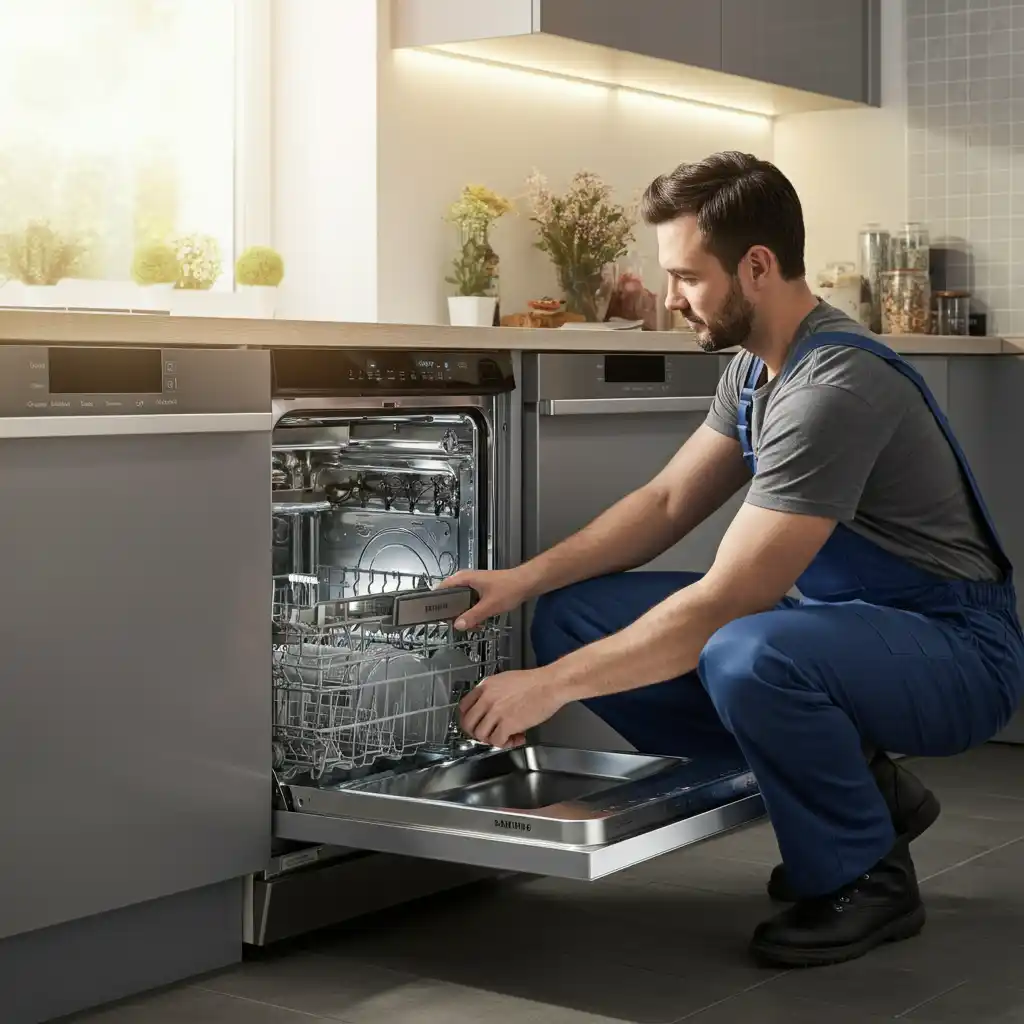
Premium shines for heavy users (8+ cycles/week) or noise-sensitive homes, saving $75/year on energy/water versus mid-tier. However, 60% of owners report unused features like voice control, suggesting overkill for standard needs.
Key Factors Beyond Star Ratings
Ratings reflect lab averages, not your usage prioritize place settings (12-16 for families), dBA (<42 open plan), and tub material (stainless > plastic). Consumer Reports data shows price correlates with satisfaction up to $1,000, then plateaus; higher-rated budget models (4.5 stars) outperform low-rated premiums.
Reliability trumps ratings: mid-tier Bosch/Whirlpool fail 8% in year five versus 12% budget, 6% premium. Energy savings ($35-50/year) justify $200 premiums, but not $800.
Diminishing Returns by Price Point
- $500: 75% premium performance; ideal light use.
- $900: 90% premium; best value.
- $1,500: 95% premium + luxury; worth it for enthusiasts.
- $2,500+: Aesthetics/reliability; skip unless custom kitchen.
Real-world tests reveal $800 units clean/dry as well as $2,000 on normal loads, with sensors bridging gaps.
Household Scenarios: When Premium Pays
- Large families: Mid-tier ($900) handles volume; premium unnecessary.
- Eco-focused: $1,100 ENERGY STAR Most Efficient saves $100 lifetime.
- Open kitchens: $1,200 for 38 dBA + features.
- Renters/light use: $450 budget suffices.
- Luxury remodels: $1,800+ integrates seamlessly.
Satisfaction plateaus at 4.6 stars across $600-2,000; overpaying drops value.
Maintenance: Leveling the Playing Field
Monthly filter cleaning and annual vinegar cycles extend any model’s life 2-3 years, narrowing premium gaps. Neglected budget units underperform; maintained ones rival high-end.
Total Cost of Ownership Breakdown
- Budget ($450): $50/year energy + $150 repairs/10 years = $1,000 total.
- Mid ($900): $40/year + $100 repairs = $1,400 total.
- Premium ($1,800): $30/year + $80 repairs = $2,180 total.
Mid-tier wins on 10-year math for most.
Brand Value Across Tiers
Bosch mid-tier crushes budget competitors; Miele premium justifies via 20-year durability. Avoid bottom 20% rated regardless of price.
FAQs
When is a higher-rated dishwasher worth extra cost?
For heavy use, open kitchens, or eco priorities $600-1,200 sweet spot captures 90% benefits.
Do pricier models clean significantly better?
10-15% on tough soils; adequate for daily loads across $500+.
How much do ratings affect reliability?
Mid/premium fail 20-30% less; maintenance closes gap.
Energy savings justify premium prices?
$35-50/year; pays for $200 premium, not $1,000.
Best value tier for families?
$800-1,100: balances clean/dry/energy without excess.
Do luxury features get used?
60% underutilized; focus racks/cycles over apps.