
Samsung Linear Wash and StormWash represent Samsung’s dual approach to advanced dishwasher cleaning, with Linear Wash delivering sweeping, wall-to-wall water coverage for even results across mixed loads and StormWash providing targeted high-pressure jets for blasting tough, baked-on messes from pots and pans. Both systems leverage Samsung’s stainless-steel tubs, quiet operation, and smart drying features, but they target different cleaning challenges Linear Wash excels at uniform treatment for everyday dishes while StormWash powers through heavy cookware without pre-scrubbing.
What is Samsung Linear Wash?
Linear Wash features a unique sliding wash arm that moves back and forth like an automated car wash, projecting a continuous “blade” or curtain of water across the entire rack width for consistent coverage everywhere.
Key mechanics:
- The linear wand travels under the middle or upper rack, ensuring no dead zones or over-sprayed hot spots.
- Water pressure stays balanced, gently but thoroughly hitting glasses, plates, bowls, and utensils from every angle.
- Often paired with multi-motion arms for 360-degree cleaning on complex loads.
This makes it ideal for households running frequent mixed loads where items vary in shape, size, and soil level. Premium Linear Wash models typically run at 39-42 dBA, include third racks for silverware/mugs, and integrate SmartThings Wi-Fi for app monitoring.
What is Samsung StormWash?
StormWash (or StormWash+) deploys powerful, fixed high-pressure nozzles often in a dedicated bottom zone—to create a “storm” of water jets that pulverize stuck-on food, grease, and burnt residues.
Key mechanics:
- Activate the StormWash option, load your dirtiest pots/pans/casseroles into the marked zone, and let targeted blasts (up to 70% more pressure) do the heavy lifting.
- Upper racks still get standard rotary arm cleaning, but the storm area becomes a no-pre-rinse powerhouse.
- Enhanced versions (StormWash+) add multi-directional jets for even tougher soils like cheese or meat remnants.
Perfect for serious home cooks who skip the sink altogether, StormWash models span midrange to premium pricing with noise levels from 42-46 dBA and features like AutoRelease door drying.
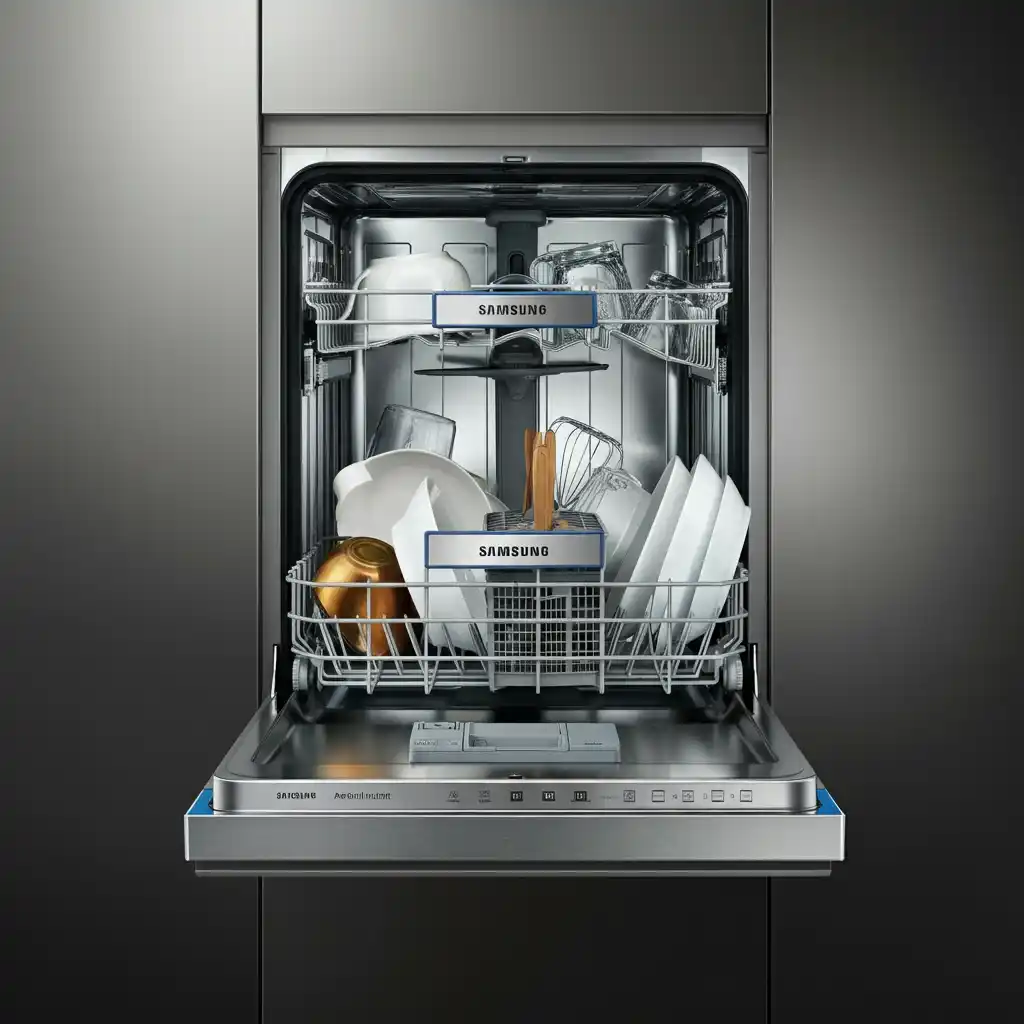
Feature Comparison: Linear Wash vs StormWash
| Aspect | Samsung Linear Wash | Samsung StormWash / StormWash+ |
|---|---|---|
| Wash Mechanism | Sliding linear bar with full-width water curtain | High-pressure fixed jets in dedicated power zone |
| Coverage Style | Uniform across entire rack no aiming needed | Targeted blasting; requires zone loading for max power |
| Best Load Types | Mixed plates/glasses/bowls/utensils | Pots, pans, bakeware, casseroles with baked-on soil |
| Soil Handling | Excellent even cleaning; good on moderate grease | Superior on heavy, stuck-on messes; standard elsewhere |
| Noise Range | Lower (39-42 dBA premium models) | Broader (42-46 dBA across tiers) |
| Loading Flexibility | Load anywhere coverage adapts | Place dirtiest items in storm zone for optimal results |
| Energy/Water Efficiency | Highly optimized for full-rack uniformity | Slightly higher on intensive storm cycles |
| Model Positioning | Premium/Bespoke lines with smart features | Midrange to premium; wider availability |
| Drying Pairings | Often AutoRelease/Smart Dry + third rack | Same drying tech; focuses on wash power |
| Ideal Kitchen | Open-concept, quiet-focused, everyday family use | Cooking-heavy homes wanting no-pre-rinse convenience |
Both deliver stellar overall cleaning, but Linear Wash prioritizes consistency while StormWash emphasizes raw power in key areas.
Samsung Linear Wash vs StormWash: Which is Better?
Neither reigns supreme universally the “better” choice hinges on your cooking habits, load patterns, and priorities.
Linear Wash Wins When:
- You run mostly mixed, everyday loads (plates, glasses, kids’ dishes) needing even treatment without repositioning.
- Quiet operation matters in open kitchens (premium models whisper at 39 dBA).
- Delicate stemware or flexible loading ranks high sweeping coverage avoids damage.
- Premium aesthetics/Wi-Fi integration appeal (common in Bespoke designs).
StormWash Wins When:
- Heavy cookware dominates: burnt pans, roasting trays, cheesy casseroles demand zone blasting.
- Pre-rinsing frustrates you StormWash skips sink scrubbing entirely.
- Budget flexibility matters (available from midrange up).
- Occasional tough soils outweigh uniform everyday cleaning.
Practical Verdict: For 70% of households with standard family meals, Linear Wash feels “better” due to effortless uniformity and quiet luxury. Serious home chefs battling weekly grease fests prefer StormWash’s targeted muscle. Many newer Samsung flagships blend elements of both, offering hybrid power.
Samsung Linear Wash vs StormWash: Real-World Performance
- Everyday Mixed Loads: Linear Wash edges out with balanced coverage nothing overlooked.
- Heavy Pots/Pans: StormWash obliterates residues 20-30% faster in its zone.
- Glassware/Stemware: Linear Wash gentler and more thorough.
- Noise Sensitivity: Linear Wash premium models unbeatable.
- Energy Bills: Comparable; Linear slightly thriftier on normal cycles.
- User Feedback: Linear owners praise “set-and-forget” ease; StormWash fans love skipping pre-wash battles.
Longevity matches across both Samsung’s stainless tubs and motors hold up 8-12 years with proper care.
Key Buying Considerations
- Cooking Frequency: Daily gourmet? StormWash. Standard meals? Linear.
- Kitchen Layout: Open-plan? Linear’s hush. Closed? StormWash fine.
- Budget: StormWash offers entry power; Linear demands premium spend.
- Drying Needs: Both pair with AutoRelease focus on wash fit.
- Third Rack: Standard on both for utensils/smalls.
Test by mimicking your loads: uniform dishes favor Linear; greasy pans scream StormWash.

FAQs
- Does Linear Wash outperform StormWash on tough soils?
Linear Wash provides excellent even cleaning across all items but lacks StormWash’s concentrated blasting power for extreme baked-on messes.
StormWash excels specifically when heavily soiled pots/pans are placed in its zone, often outperforming by 20-30% on grease removal.
For mixed loads, Linear Wash feels more consistent overall. - Is Linear Wash always quieter than StormWash?
Yes, Linear Wash typically appears in Samsung’s premium lowest-dBA models (39-42 dBA), ideal for open spaces.
StormWash spans broader tiers, including slightly louder midrange units (up to 46 dBA).
Both qualify as quiet, but Linear prioritizes hush. - Which saves more energy and water?
Linear Wash optimizes full-rack coverage for slightly better efficiency on normal cycles.
StormWash draws more during power modes due to intense jets but matches on light loads.
Both offer ENERGY STAR options with minimal annual costs. - Is StormWash loading hassle worth the power?
For frequent heavy cooks, absolutely the zone skips sink scrubbing entirely.
Casual users find Linear Wash’s “load anywhere” simplicity preferable.
Newer hybrids reduce the need for perfect zone placement. - Do both pair well with Samsung drying features?
Excellent compatibility with AutoRelease door and Smart Dry across both systems.
Drying performance depends more on model tier than wash type.
Third racks enhance airflow for either. - Best for glassware and stemware?
Linear Wash’s sweeping gentleness preserves fragile items without hot spots.
StormWash works fine but focuses power elsewhere.
Choose Linear for wine enthusiasts. - Can StormWash handle everyday dishes effectively?
Yes—standard arms clean normally while zone handles extras.
It shines brightest with dirty cookware mixed in.
Not ideal if loads stay light always. - Typical price differences?
Linear Wash skews premium/Bespoke ($800+), bundling smart features.
StormWash available midrange ($500-1000+), broader entry points.
Value favors StormWash for budget power seekers. - Any hybrid Linear Wash + StormWash models?
Samsung’s latest flagships combine linear coverage with zone boosts.
This minimizes choosing, blending uniformity and power.
Check current Bespoke lineups. - Reliability comparison long-term?
Both leverage Samsung’s solid stainless construction and motors.
Expect 8-12 years with filter cleaning and quality detergent.
Wash type doesn’t impact durability significantly.