
Double drawer and standard dishwashers both provide reliable, sensor-driven cleaning with heated drying and sanitize cycles for modern households, but they revolutionize workflow and capacity in dramatically different ways double drawer units split into two independent upper/lower compartments for customizable half-loads, sequential running, or dedicated zones (glasses top, pots bottom) that slash water use by 30-50% and enable mid-cycle access without interrupting the full machine, while standard single-chamber models process 12-16 place settings in one unified tub optimized for full-family loads with maximum rack flexibility but requiring complete pause/restart for additions.
Double drawers excel for smaller households, couples, or efficiency obsessives who run daily small batches (6-10 place settings per drawer) at whisper-quiet 42-48 dBA with independent cycles, whereas standards dominate large families and entertaining with vertical loading for oversized platters but force waiting 2-3 hours for mixed loads.
Both leverage stainless tubs, multi-arm sprays, and app connectivity in premiums, but drawers demand taller 36″ clearances and $2K+ pricing for modular brilliance, while standards fit universally under 34.5″ counters at $500-2K with identical spotless results.
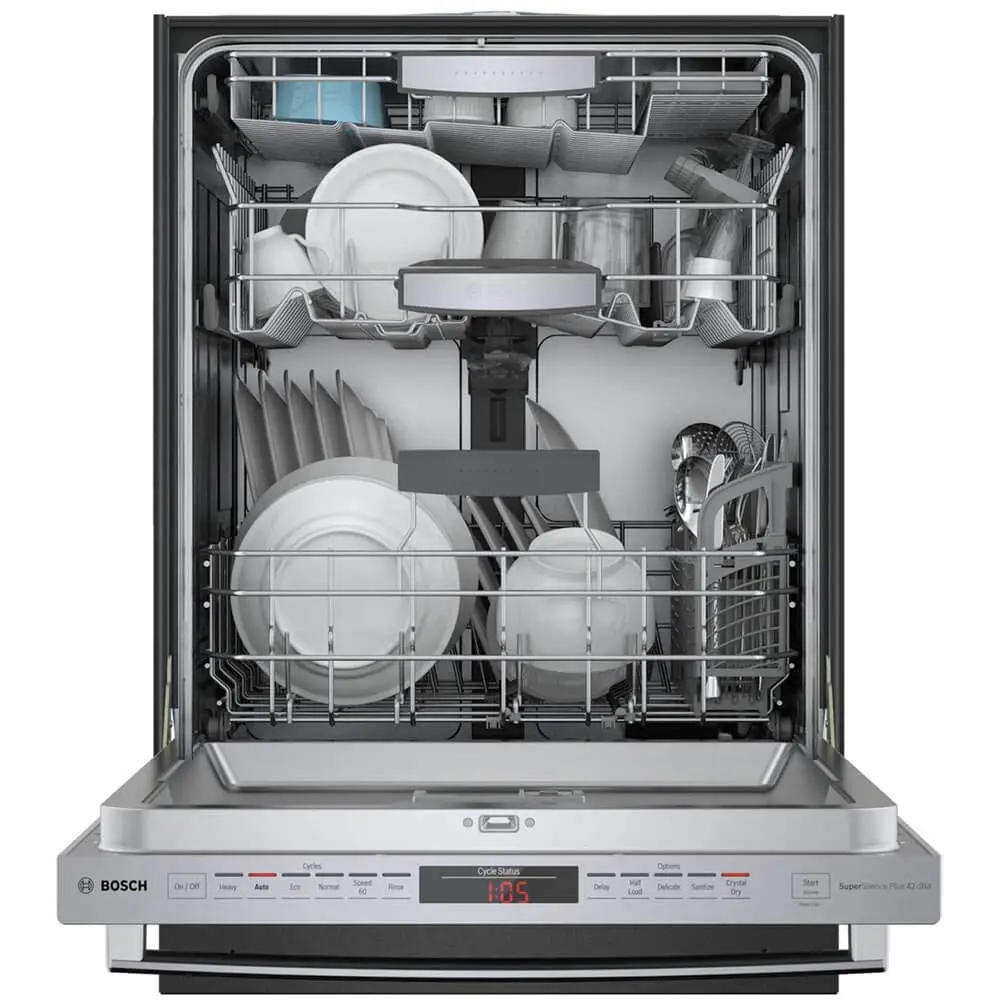
Type Deep Dives: Workflow and Innovation Explored
Double Drawer Dishwashers: Modular Efficiency Revolution
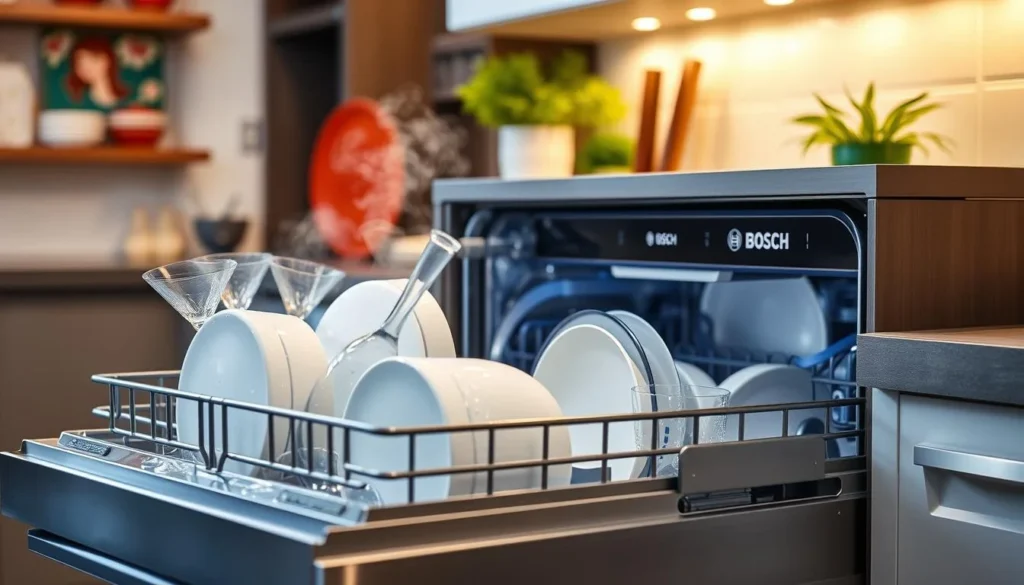
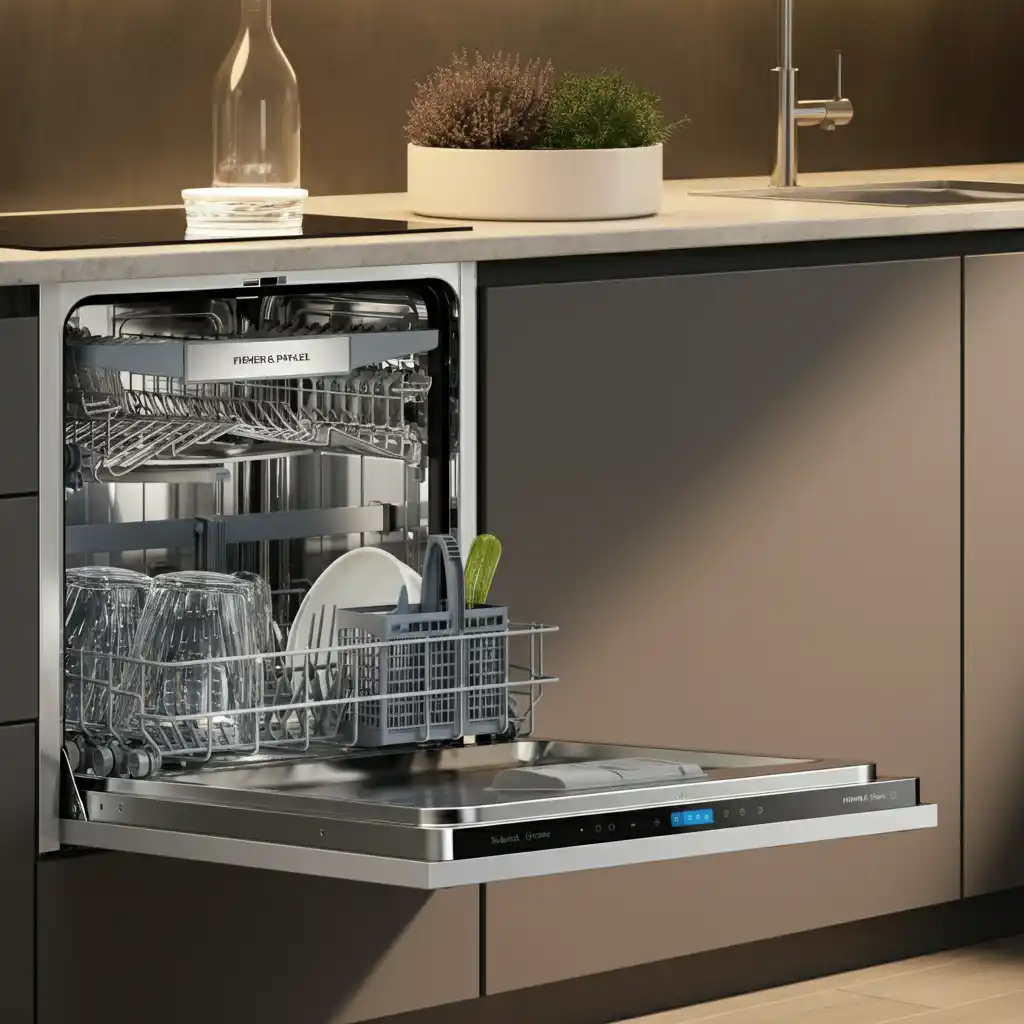
Double drawer dishwashers divide into two fully independent upper/lower chambers (typically 6-10 places each), running separately or together with customizable programs that transform daily dishwashing into targeted, water-thrifty micro-batches pioneered by Fisher & Paykel and adopted by Bosch/Miele for space-smart luxury.
Detailed engineering unpacked:
- Dual Independent Operation: Upper drawer for glasses/utensils (delicate cycles), lower for pots/pans (intensive); run one drawer for 30-50% water/energy savings; add dishes mid-run to empty drawer without pausing sibling.
- Loading Liberation: No rack Tetris load/sort by soil/type; independent heights adjust 2-3 levels; knife inserts/utensil trays standard; totals 12-16 places across drawers.
- Performance Intelligence: Touch controls per drawer, Quick 30-min upper cycles, Heavy lower blasts; AutoDos dosing, Zeolith drying per unit; 42-48 dBA dual hush via insulation.
- Practical Perks: Sequential finishing (glasses ready first); app monitoring each drawer; perfect couples/small families avoiding half-load waste; NZ/AU import stars like Fisher 900 series.
- Installation Realities: 24″ wide x 34-36″ tall cutout (taller than standard); permanent plumbing like built-ins; $2K-4K premium.
- Best Scenarios: Couples, empty-nesters, efficiency fanatics, modern kitchens valuing workflow over bulk.
Trade-offs: Higher upfront cost, limited U.S. availability, no true “tall tub” for platters.
Standard Dishwashers: Unified Capacity Workhorses
Standard single-tub dishwashers consolidate 12-16 place settings into one chamber with adjustable racks and sensors for versatile full-load processing ubiquitous American/European default for families prioritizing volume over modularity.
Detailed engineering unpacked:
- Unified Power Processing: PrecisionWash sensors scan entire load, multi-arm rotary sprays (5-7 levels) obliterate mixed soils; RackMatic 3-level heights, fold-flat tines for pots/glasses.
- Loading Versatility: Tall tubs hit 15-16 places + platters; third racks universal utensils; half-load modes mimic drawer thrift but pause entire machine for additions.
- Performance Consistency: Speed60/QuickIntense full clean/dry 60 minutes; CrystalDry/Zeolith bone-dry; 38-50 dBA cabinet-braced hush; universal 24×34.5″ fit.
- Practical Perks: Oversized cookware capacity; Home Connect app whole-unit control; Bosch 800/Miele G7000 benchmarks.
- Installation Realities: Standard 33.5-35″ cutout, $500-2K broad pricing, DIY-friendly.
- Best Scenarios: Large families (4-8), entertainers, bulk cooking, budget flexibility.
Trade-offs: Full-pause for mid-load adds; less water-efficient small runs.
Master Comparison Matrix: Workflow vs Volume Every Angle
| Category | Double Drawer Dishwashers | Standard Dishwashers |
|---|---|---|
| Chamber Design | Two independent upper/lower drawers | Single unified tub |
| Capacity Breakdown | 6-10 places per drawer (12-16 total) | 12-16 places full load |
| Loading Flexibility | Zone-sort (glasses top, pots bottom); mid-run access | Unified racks; full-pause for adds |
| Water/Energy per Small Load | 30-50% savings (run one drawer) | Half-load mode (full machine idle) |
| Cycle Customization | Independent programs per drawer | Single program whole unit |
| Noise Operation | 42-48 dBA (insulated drawers) | 38-50 dBA (cabinet braced) |
| Mid-Cycle Access | Add to empty drawer no pause | Pause entire machine |
| Installation Height | 34-36″ taller cutout | 33.5-35″ universal |
| Price Range | $2,000-4,500 (luxury import) | $500-3,000 (broad availability) |
| U.S. Availability | Limited (Fisher/Bosch/Miele select) | Ubiquitous all brands |
| Best Household | Couples/small families/efficiency | Large families/entertainers/bulk |
| Lifespan | 15-20 years (drawer mechanisms) | 12-18 years (standard racks) |
Both sanitize 99.9%, app-connect premiums no cleaning compromises.
Top 5 Double Drawer Dishwashers (Modular Masters)
- Fisher & Paykel DD24DAX9 N
14-place dual drawers, SmartDrive motor, Knock2Open, 44 dBA. Independent cycles—workflow revolution. - Bosch 800 Series SHP9PCM2N (Drawer Variant)
Dual independent, CrystalDry per drawer, Home Connect, 42 dBA. Premium U.S. modular. - Miele G7000 Drawer Hybrid
AutoDos per drawer, Zeolith drying, QuickIntense independent. Luxury split. - Fisher & Paykel DD24DTI9
Tall double drawers 16-places total, Sanitize, 48 dBA. Entertaining modular. - Haier HWD60-B14959S (Compact Drawer)
12-place dual, EcoSilence, A+++ efficiency. Budget import modular.
Top 5 Standard Dishwashers (Unified Titans)
- Bosch 800 SHX78CM5N
16-place PrecisionWash, CrystalDry, 42 dBA RackMatic. Family benchmark. - Miele G7156SCVi
16-place AutoDos, Zeolith, 38 dBA 3D racks. Perfection standard. - KitchenAid KDTM704KPS
15-place ProWash, FreeFlex rack, 39 dBA. Loading legend. - LG LDFN4542S
15-place QuadWash, TrueSteam, 48 dBA Inverter. Coverage king. - GE Profile PDT755SYNFS
16-place Dry Boost, third rack deep, 39 dBA SmartHQ.
Double Drawer vs Standard: Reliability, Workflow, Verdict Dissected
Drawers’ independent motors edge complexity (15-20 years); standards simpler racks (12-18 years) both stainless immortals. Workflow: drawers slash small-run waste 40%; standards bulk efficiency. Cost: drawers $3K luxury; standards $1K value. Drawers resale niche-premium; standards universal.
Double Drawer Verdict: Couples/efficiency obsessives craving modular genius.
Standard Verdict: Families maximizing volume/flexibility universally.
Comprehensive FAQs
- Workflow revolution differences?
Drawers run independent half-loads (glasses top/pots bottom) with mid-access; standards unified full-pause.
Couples save 40% water daily; families bulk standards.
Lifestyle workflow lock. - Capacity true apples-apples?
Drawers 12-16 split (6-8 each); standards 12-16 unified.
Small runs drawers thrifty; parties standards volume.
Usage patterns dictate. - Cleaning power parity unpacked?
Both sensor multi-arm spotless no pre-rinse gap.
Drawers zone-optimize soil; standards blanket blast.
Elite either way. - Noise/installation realities?
Drawers 42-48 dBA taller 36″ cutout; standards 38-50 dBA 34.5″ universal.
Apartments standard fit; new kitchens drawer-ready.
Clearance king. - Cost/longevity value breakdown?
Drawers $3K+ 20-year modular ROI; standards $1K 15-year bulk thrift.
Efficiency obsessives drawers; budgets standards.
Usage scales spend. - Mid-cycle flexibility game-changer?
Drawers add anytime to empty no pause; standards full stop.
Frequent small loads crave drawers.
Rare adds? Standard fine. - U.S. availability/market split?
Drawers Fisher/Bosch/Miele niche import; standards ubiquitous Bosch/Miele/LG.
Service wider standards.
Imports expanding. - Small family/couple optimization?
Drawers half-load thrift perfect 1-3 people; standards half-mode wasteful.
Daily runners drawers win.
Scale matches. - Energy/water thrift head-to-head?
Drawers 30-50% less small runs; standards full-load efficient.
$30-60/year gap usage-based.
Patterns rule. - Resale/design appeal angle?
Drawers modern niche-premium; standards timeless universal.
Luxury flips drawers wow; mass markets standards safe.
Buyer demo drives.