
🧼 Dishwasher Brand Ratings
Compare 200+ global dishwasher brands by rating, price, wash settings, and rack configuration. Filter and sort easily.
| Brand | Rating | Price | Settings | Racks | Highlights |
|---|---|---|---|---|---|
| Miele | 9.7 | $$$$ | 8–10 | 3 | ✓ PremiumExcellent build, long life. $1,500–$2,800 |
| Bosch | 9.6 | $$$ | 6–8 | 3 | ★ Top PickQuiet, reliable, strong cleaning. $800–$1,800 |
| Gaggenau | 9.2 | $$$$ | 6–8 | 3 | Luxury, panel-ready designs. $1,800–$3,200 |
| Siemens | 9.1 | $$$ | 6–8 | 3 | Strong built-in line, good drying. $900–$1,900 |
| Neff | 9.0 | $$$ | 5–7 | 3 | Integrated kitchen focus. $850–$1,700 |
| Thermador | 8.8 | $$$ | 6–8 | 3 | Panel-ready, higher-end. $1,100–$2,100 |
| Asko | 8.7 | $$$ | 5–7 | 3 | Robust tubs, quiet operation. $1,000–$2,000 |
| KitchenAid | 8.6 | $$$ | 5–7 | 3 | Quiet, strong wash performance. $850–$1,700 |
| Fisher & Paykel | 8.6 | $$$ | 5–7 | 2 | ✦ DrawerDishDrawer formats. $950–$1,950 |
| Liebherr | 8.6 | $$$ | 6–8 | 3 | German engineering, premium. $1,200–$2,200 |
| Whirlpool | 8.5 | $$–$$$ | 4–6 | 2–3 | Good value and service network. $600–$1,200 |
| Electrolux | 8.4 | $$ | 5–7 | 3 | Modern design, efficient. $550–$1,150 |
| Smeg | 8.4 | $$$ | 5–7 | 3 | Italian design, stylish aesthetics. $1,000–$1,800 |
| Maytag | 8.3 | $$ | 4–6 | 3 | Powerful wash, durable. $700–$1,300 |
| Kenmore | 8.3 | $$ | 5–7 | 3 | Reliable, good availability. $650–$1,250 |
| Samsung | 8.2 | $$ | 5–7 | 3 | Smart features, contemporary styling. $600–$1,300 |
| Bertazzoni | 8.2 | $$$ | 5–7 | 3 | Italian premium, quality construction. $1,100–$2,000 |
| Ilve | 8.2 | $$$ | 6–8 | 3 | Italian luxury, high-end. $1,300–$2,400 |
| GE Appliances | 8.1 | $$ | 4–6 | 3 | Reliable, good value option. $500–$1,000 |
| LG | 8.1 | $$ | 4–6 | 3 | Tech-forward, innovative drying. $550–$1,200 |
| Blomberg | 8.1 | $$ | 5–7 | 3 | Swedish design, quality value. $600–$1,150 |
| Café Appliances | 8.1 | $$$ | 5–7 | 3 | Premium finishes, connected home. $900–$1,600 |
| Monogram | 8.1 | $$$ | 6–8 | 3 | Premium customization, GE line. $1,000–$1,800 |
| AEG | 8.0 | $$$ | 6–8 | 3 | German quality, innovative. $900–$1,700 |
| Frigidaire | 8.0 | $$ | 4–6 | 3 | Affordable, good performance. $500–$1,000 |
| Beko | 8.0 | $ | 4–6 | 3 | Budget-friendly, decent features. $400–$800 |
| Zanussi | 8.0 | $$ | 5–7 | 3 | European reliability, value. $550–$1,100 |
| ZLINE | 8.0 | $$$ | 5–7 | 3 | Premium, panel-ready options. $900–$1,600 |
| Ariston | 7.9 | $$ | 5–7 | 3 | Italian brand, reliable. $550–$1,050 |
| Indesit | 7.9 | $ | 4–6 | 3 | Budget-conscious, dependable. $450–$850 |
| Haier | 7.8 | $ | 4–6 | 2 | Budget-friendly, compact models. $300–$600 |
| Midea | 7.8 | $ | 4–6 | 2–3 | Affordable Asian brand. $350–$700 |
| Grundig | 7.8 | $$ | 5–7 | 3 | German heritage, good value. $600–$1,100 |
| Candy | 7.8 | $ | 4–6 | 3 | European brand, colorful options. $450–$900 |
| Hoover | 7.7 | $ | 4–6 | 2–3 | Budget option, basic features. $400–$750 |
| Fagor | 7.7 | $$ | 5–7 | 3 | Spanish brand, good value. $550–$1,050 |
| Teka | 7.7 | $$ | 5–7 | 3 | Spanish quality, reliable. $600–$1,100 |
| JennAir | 7.7 | $$$ | 5–7 | 3 | Premium brand, luxury focus. $1,000–$1,700 |
| Dacor | 7.7 | $$$ | 6–8 | 3 | Premium, innovative design. $1,100–$2,000 |
| Amana | 7.6 | $$ | 4–6 | 3 | Accessible pricing, solid build. $500–$950 |
| Hotpoint | 7.6 | $ | 4–5 | 2–3 | Budget brand, entry-level. $350–$700 |
| Sharp | 7.6 | $$ | 5–7 | 3 | Plasmacluster tech, efficient. $600–$1,150 |
| SPT (Sunpentown) | 7.5 | $ | 4–6 | 2 | Compact, portable options. $300–$600 |
| Danby | 7.5 | $ | 4–5 | 2 | Compact, space-saving designs. $250–$500 |
| Comfee | 7.5 | $ | 4–6 | 2 | Budget Asian, portable. $300–$600 |
| Hisense | 7.5 | $ | 4–6 | 3 | Chinese brand, value option. $450–$900 |
| Equator | 7.4 | $ | 4–5 | 2 | Compact, portable models. $300–$600 |
| Avanti | 7.4 | $ | 3–5 | 2 | Compact, affordable. $250–$500 |
| Insignia | 7.4 | $ | 4–6 | 2–3 | Budget retailer brand. $400–$800 |
| Baumatic | 7.4 | $ | 4–6 | 3 | UK budget brand. $400–$800 |
| Brandt | 7.4 | $ | 5–7 | 3 | French brand, design-focused. $550–$1,000 |
| Faber | 7.4 | $ | 5–7 | 3 | Italian brand, design quality. $600–$1,100 |
| Kelvinator | 7.3 | $ | 4–6 | 3 | Australian heritage, reliable. $500–$950 |
| Elba | 7.3 | $ | 4–6 | 3 | Italian budget option. $400–$800 |
| Vestel | 7.3 | $ | 4–6 | 3 | Turkish brand, budget-friendly. $400–$800 |
| Bompani | 7.3 | $ | 5–6 | 3 | Italian brand, quality value. $550–$1,000 |
| Caple | 7.3 | $ | 5–7 | 3 | British quality brand. $700–$1,200 |
| CDA | 7.3 | $ | 5–7 | 3 | UK premium compact line. $600–$1,100 |
| Rangemaster | 7.2 | $ | 5–7 | 3 | British heritage brand. $600–$1,200 |
| Fulgor Milano | 7.2 | $$ | 6–8 | 3 | Italian luxury appliances. $1,200–$2,000 |
| Lofra | 7.2 | $ | 5–7 | 3 | Italian ranges, matching line. $650–$1,150 |
| Artusi | 7.2 | $ | 5–6 | 3 | Italian appliances. $600–$1,100 |
| La Germania | 7.2 | $ | 5–6 | 3 | Italian brand, value. $550–$1,000 |
| Falcon | 7.1 | $ | 5–7 | 3 | British Aga product line. $700–$1,300 |
| Bellini | 7.1 | $ | 5–6 | 3 | Italian appliances. $600–$1,100 |
| Magic Chef | 7.1 | $ | 3–5 | 2 | Budget brand, basic models. $250–$500 |
| RCA | 7.0 | $ | 3–5 | 2 | Retro brand, entry-level. $300–$600 |
| Black+Decker | 7.0 | $ | 3–5 | 2 | Tool brand, portable option. $250–$500 |
| Panasonic | 7.8 | $ | 5–7 | 3 | Japanese tech, quality build. $600–$1,200 |
| Hitachi | 7.7 | $ | 5–7 | 3 | Japanese reliability. $650–$1,250 |
| Toshiba | 7.6 | $ | 5–7 | 3 | Japanese appliances. $600–$1,150 |
| Galanz | 7.0 | $ | 3–5 | 2 | Chinese budget brand. $250–$500 |
| Supor | 7.0 | $ | 3–5 | 2 | Chinese brand, compact. $250–$500 |
| Summit Appliance | 7.6 | $ | 4–6 | 2–3 | Compact specialist brand. $500–$1,000 |
| Viking | 8.0 | $$ | 6–8 | 3 | Premium brand, built-in focus. $1,000–$1,800 |
| Wolf | 8.0 | $$ | 6–8 | 3 | Premium, luxury brand. $1,100–$2,000 |
| DeLonghi | 7.4 | $ | 5–7 | 3 | Italian specialty brand. $600–$1,100 |
| Daewoo | 7.2 | $ | 4–6 | 2–3 | Korean budget option. $400–$800 |
| Forno | 7.7 | $$ | 5–7 | 3 | Italian premium brand. $900–$1,600 |
| Hava | 7.5 | $ | 5–7 | 3 | Modern design focus. $700–$1,300 |
| Robam | 7.3 | $ | 5–7 | 3 | Chinese premium brand. $600–$1,100 |
| Meiling | 7.2 | $ | 4–6 | 2–3 | Chinese budget brand. $350–$700 |
| Joyoung | 7.1 | $ | 4–5 | 2 | Chinese compact models. $300–$600 |
| Konka | 6.9 | $ | 3–5 | 2 | Chinese budget option. $250–$500 |
| Skyworth | 6.9 | $ | 3–5 | 2 | Chinese entry-level. $250–$500 |
| Changhong | 6.8 | $ | 3–5 | 2 | Chinese budget brand. $250–$450 |
| Thomson | 7.0 | $ | 4–5 | 2 | Budget brand, limited line. $300–$600 |
| Bush | 6.9 | $ | 3–5 | 2–3 | UK budget retailer brand. $300–$600 |
| Essentials | 6.8 | $ | 3–4 | 2 | Budget retailer brand. $250–$500 |
| Statesman | 6.8 | $ | 3–5 | 2 | UK budget brand. $300–$600 |
| Montpellier | 6.9 | $ | 3–5 | 2–3 | UK compact specialist. $350–$700 |
| Euromaid | 7.0 | $ | 4–6 | 3 | Australian brand. $500–$1,000 |
| Omega Appliances | 6.9 | $ | 3–5 | 2 | Budget specialist brand. $300–$600 |
| Philco | 6.7 | $ | 3–5 | 2 | Retro brand, basic. $250–$500 |
| Westinghouse | 6.8 | $ | 3–5 | 2 | Heritage brand, limited line. $300–$600 |
| White Knight | 6.7 | $ | 3–4 | 2 | UK brand, compact models. $250–$500 |
| Logik | 6.7 | $ | 3–5 | 2–3 | Budget retailer brand. $300–$600 |
| Cookworks | 6.6 | $ | 3–4 | 2 | UK budget entry-level. $250–$450 |
| Proline | 6.7 | $ | 3–4 | 2 | Budget compact brand. $250–$500 |
| Novete | 7.3 | $ | 4–6 | 2 | Portable, compact focus. $400–$800 |
| Duura Elite | 7.4 | $ | 5–7 | 3 | Premium compact line. $650–$1,200 |
| Fotile | 7.5 | $ | 5–7 | 3 | Chinese premium brand. $700–$1,300 |
| Sharp Aquos | 7.6 | $ | 5–7 | 3 | Japanese premium line. $700–$1,400 |
| Panasonic National | 7.7 | $ | 5–7 | 3 | Japanese heritage brand. $650–$1,250 |
| Cookworks | 6.6 | $ | 3–4 | 2 | Budget entry option. $250–$450 |

Dishwasher ratings serve as a critical benchmark for performance, efficiency, and reliability, helping buyers avoid costly mistakes. Checking ratings before purchase ensures you select a model that aligns with your needs for cleaning power, energy savings, and long-term durability.
Why Ratings Matter
Ratings evaluate key factors like energy and water efficiency, often using scales such as A-G (Europe/Australia) or Energy Star certifications (US), where higher marks indicate lower utility costs and environmental impact. A top-rated dishwasher can save hundreds annually on bills while reducing waste dishwashers often outperform hand-washing in resource use. They also highlight cleaning effectiveness on tough stains and overall build quality, preventing frequent repairs or replacements.

Reasons to Check Ratings First
Prioritizing ratings reveals hidden costs beyond the sticker price, such as running expenses that vary by usage frequency. High ratings correlate with quieter operation (under 40 dBA), superior drying, and features like adjustable racks for better convenience. Brands with strong ratings, like Bosch or Miele, consistently excel in independent tests for reliability and performance.
Key Rating Categories
- Cleaning Performance: Measures removal of baked-on food without pre-rinsing; top models handle oatmeal or grease effortlessly.
- Efficiency: Energy Star models use 12% less energy and 30% less water than standards, ideal for heavy users.
- Reliability: Predicted lifespan and service data from owner surveys minimize downtime.
- Noise and Features: Lower dBA ratings ensure quiet runs; extras like third racks boost usability.
Dishwasher Buying Guide
Dishwasher shopping is easiest when you understand the handful of decisions that actually matter: size and type, cleaning and drying performance, noise, running costs, and reliability. Once those are clear, choosing a brand and model becomes much simpler.
1. Types, sizes, and capacity
Main types
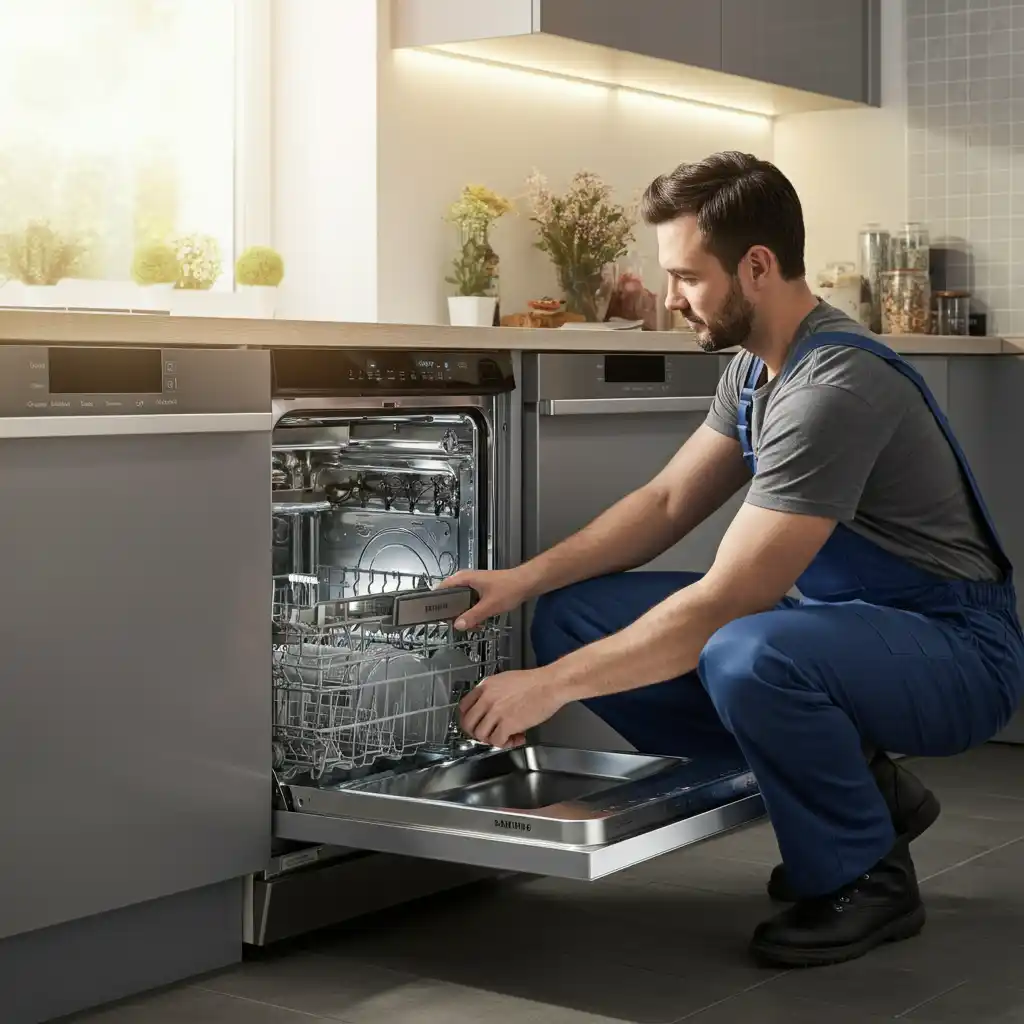
- Built-in (standard 24″): The most common choice. It slides under the counter and connects permanently to water and drain. Ideal for families and anyone who cooks regularly.
- Slimline/18″ (about 45 cm): Narrower machines for small kitchens. Capacity is usually 8–10 place settings, good for 1–3 people.
- Portable and countertop: Roll-around or counter units that often connect to a faucet. These are best for renters, dorms, RVs, and very small homes.

Capacity and place settings
- A place setting is roughly one full set of dishes per person (plate, bowl, cup, glass, cutlery).
- Full-size: about 12–16 place settings, suitable for families or frequent cooking.
- Slimline: around 8–10 place settings.
- Countertop: 4–8 place settings.
What to do:
Measure your available space (width, height, depth) and door swing, then decide what capacity realistically matches how many meals you run through the dishwasher each day.
2. Energy, water use, and running costs
Dishwashers have two cost components: the purchase price and the cost to run them over 10–15 years.
Energy and water
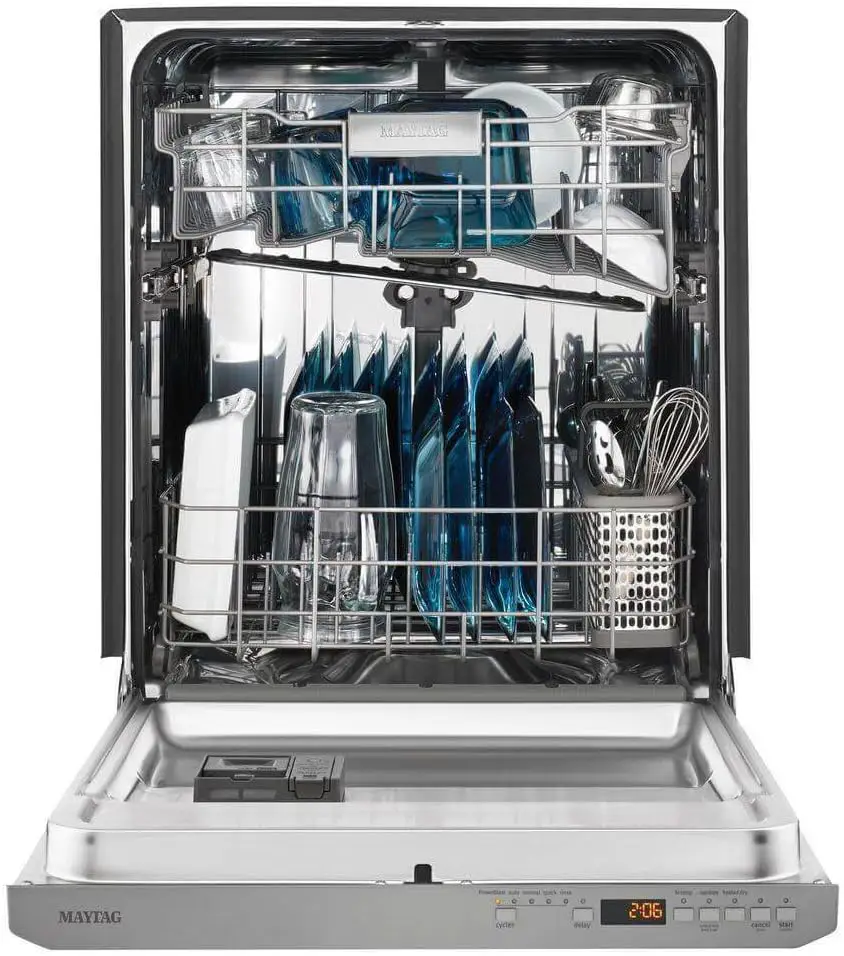
- Modern efficient dishwashers use significantly less water and energy than older models and far less than typical hand-washing with running taps.
- The energy label (or spec sheet) tells you estimated annual electricity use (kWh) and water use (liters or gallons per cycle and per year).
- Two similarly priced machines can differ a lot in yearly cost, so check these numbers rather than just price and brand.
What to do:
If you run the dishwasher most days, prioritize efficient models even if they cost a bit more up front the savings add up over time.
3. Cleaning performance and useful cycles
Almost all modern dishwashers can clean well if you use the right cycle and load correctly, but some features make life easier.
Key cycles that matter
- Auto / Sensor / Smart: Detects how dirty the water is and adjusts time, water, and temperature. This is usually the best everyday cycle.
- Normal / Daily: Balanced energy and cleaning for typical loads.
- Eco: Lowest water and energy use, but longest runtime; best for lightly soiled dishes when you’re not in a hurry.
- Intensive / Pots & Pans / Heavy: Extra hot and long, aimed at baked-on food and greasy pans.
- Quick / Express: Shorter cycles for lightly soiled dishes; good when guests are over, but not ideal for really dirty items.
- Sanitize / Hygiene: Raises temperature high enough to kill most bacteria, useful for baby bottles, cutting boards, or illness in the household.
What to do:
Focus on how well the Auto/Normal and Heavy/Intensive cycles perform those are the ones you’ll rely on week after week.
4. Drying systems and plastics
Getting dishes clean is only half the job; how dry they are at the end makes a big difference to how “premium” a machine feels.
Drying types
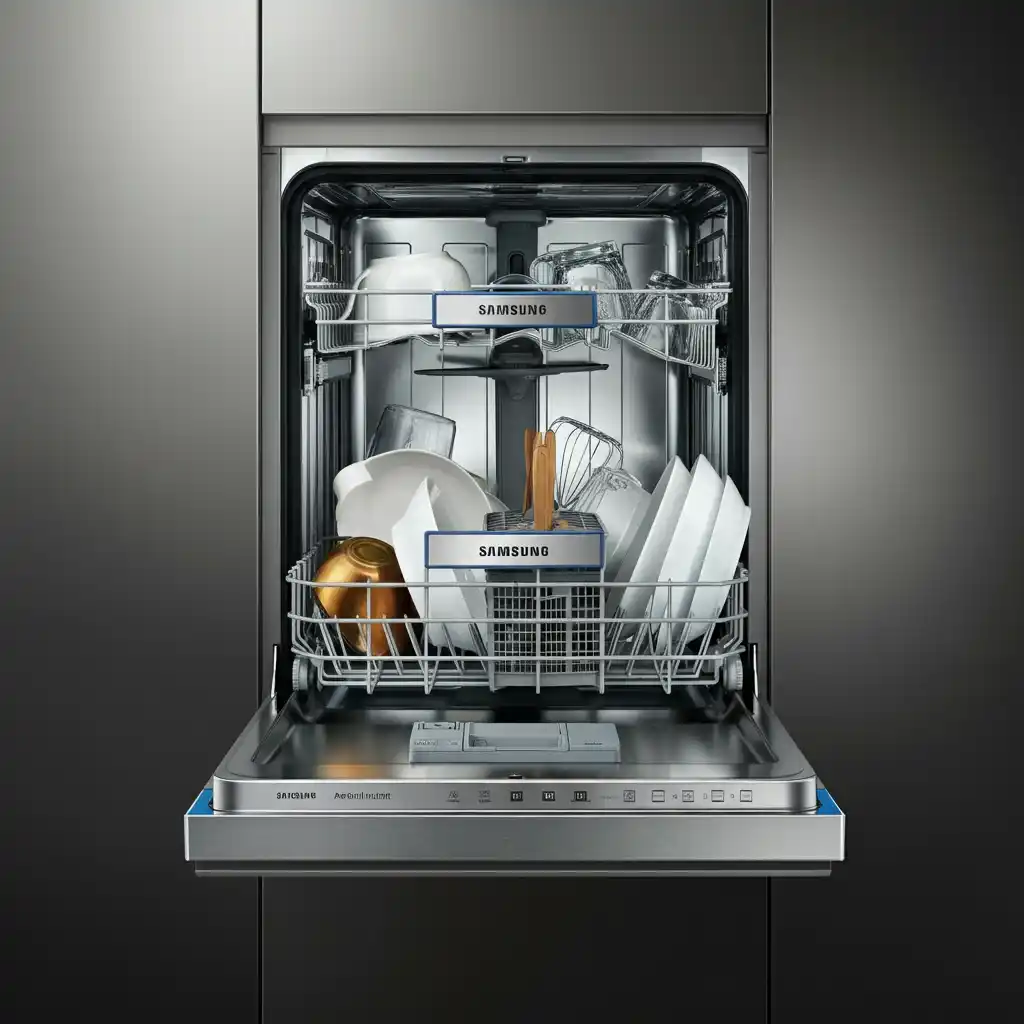
- Condensation drying: Uses a hot final rinse and a cool stainless-steel tub so moisture condenses on the walls. Very common and efficient, but plastics may come out damp.
- Fan-assisted or heated drying: Adds a fan or heating element to move air and speed drying, particularly useful for plastics.
- Mineral or advanced drying systems: Some higher-end brands use special materials or technologies to absorb moisture and release heat, giving excellent plastic drying with low energy use.
- Auto door opening: The door pops open a little at the end of the cycle so steam escapes and room air finishes the job.
What to do:
If you use lots of plastic containers, cups, and baby items, look for fan-assisted or advanced drying plus auto door opening. If your loads are mostly glass, ceramic, and metal, standard condensation drying is usually fine.
5. Noise levels and kitchen layout
In open-plan homes, dishwasher noise can be more important than you think.
Noise guidelines (dBA)
- Around 50 dBA: Audible but tolerable; common in cheaper or older machines.
- 45–48 dBA: Quiet enough that you’ll notice it but can still talk or watch TV nearby.
- 38–44 dBA: Very quiet; ideal if your kitchen opens into your living room or you run cycles overnight.
What to do:
Set a noise target before shopping (for example, 45 dBA or lower if your kitchen is open to your living area) and filter your options by that.
6. Racks, layout, and loading flexibility
People complain more about awkward racks than about almost anything else.
Features worth having
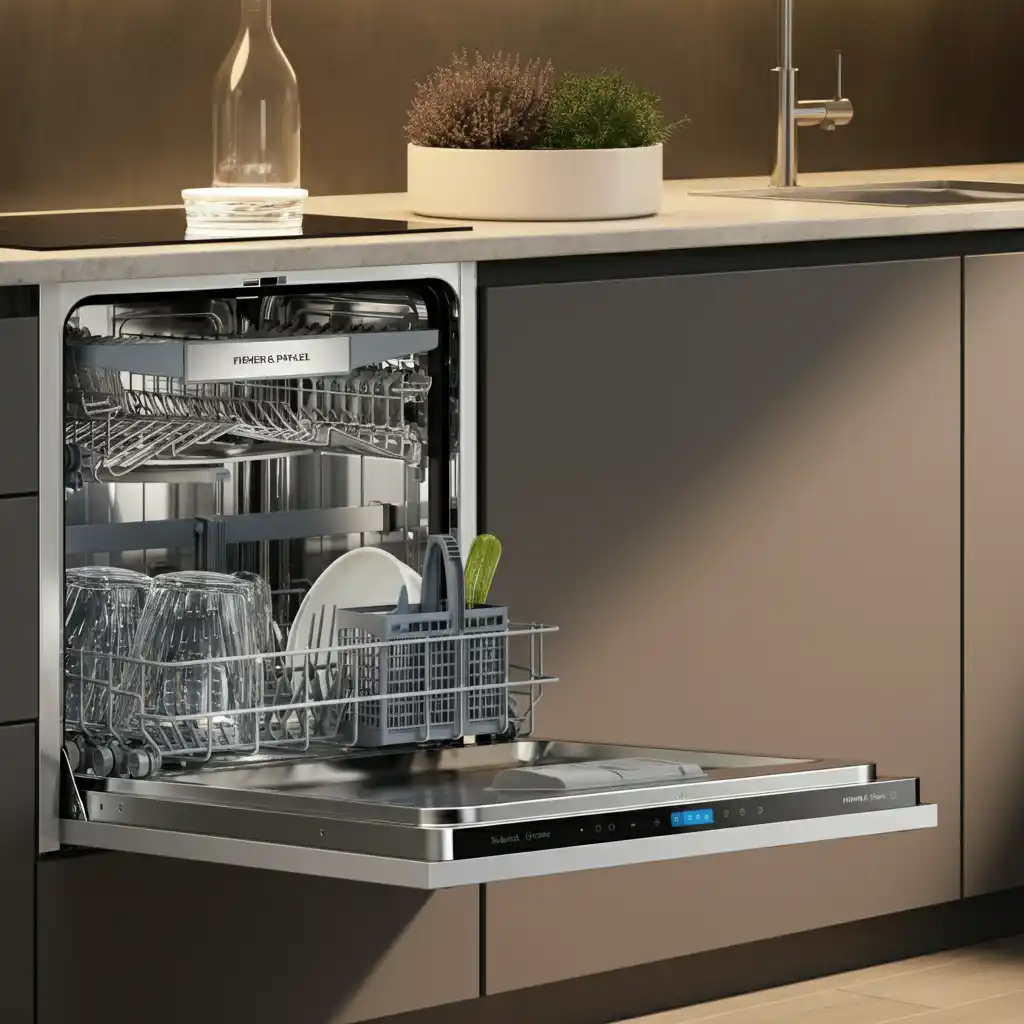
- Adjustable upper rack: Lets you raise or lower the middle rack to fit tall wine glasses or big pots.
- Third rack (cutlery tray): A shallow top tray for cutlery and small utensils. This frees space in the bottom rack and often improves cleaning because items don’t nest together.
- Fold-down tines: Sections of prongs that fold flat so you can load large pans, mixing bowls, and serving dishes.
- Dedicated jets or zones: Special spray jets for bottles, baby items, or heavily soiled pots give better results in those tricky spots.
What to do:
Think about your most awkward items (tall glasses, baking trays, stockpots) and make sure you can see a logical place for them in the rack system of the model you pick.
7. Reliability, lifespan, and price bands
Price vs. quality
- Budget ($400–$600): Plastic tubs, fewer extras, and higher noise. Cleaning can still be fine, but racks are often basic and lifespans shorter.
- Mid-range sweet spot ($500–$1,000): Where many of the best-value, quiet, stainless-tub machines live. You often get a third rack, good drying, and decent reliability without paying luxury prices.
- Premium ($1,000+): You mainly pay for design, brand, special finishes, ultra-quiet operation, and advanced drying not huge jumps in cleaning ability.
Lifespan
- Many mainstream dishwashers are designed for roughly 10 years of average use.
- Some high-end models are engineered and tested for around 20 years of life, which can justify a higher upfront cost if you plan to stay in the same home.
What to do:
Prioritize a solid mid-range machine from a brand with a good reliability reputation over the very cheapest model. A slightly higher purchase price often beats multiple repairs or early replacement.
8. Smart features and connectivity
Smart dishwashers can connect to your phone or smart home system, but these features are optional.
Potential benefits
- Start or schedule cycles remotely.
- Get a notification when a cycle finishes.
- Remote diagnostics can help service technicians identify issues faster.
Potential drawbacks
- Higher purchase price.
- More complexity and software that may not be used after the novelty wears off.
What to do:
If you love smart home tech and already use connected appliances, smart features can be genuinely helpful. If not, don’t let connectivity distract you from core factors like cleaning, noise, and usability.
9. Installation, fit, and service
Even the best dishwasher can be a headache if it’s hard to install or difficult to service in your area.
- Water, drain, and power: Make sure you have the right hookups and enough clearance for hoses and power cables.
- Door swing and plinths: In tight kitchens, check that the door can open fully and that the kickboard/plinth doesn’t block it.
- Service network: Some brands have excellent local service and others don’t. Checking for authorized service centers before buying can save trouble later.
- Warranty: Compare not just years but what’s covered some brands cover parts and labor for a shorter period and give extended coverage on key components like motors or racks.
What to do:
Factor installation and service into your budget. A cheap machine with poor service support can be more expensive in the long run than a slightly pricier model from a brand with strong local support.
10. Quick step-by-step buying checklist
- Measure your space (including door swing and depth).
- Decide capacity based on household size and how often you cook.
- Set a budget range and decide if you want entry-level, mid-range, or premium.
- Choose a noise target that works with your kitchen layout.
- Prioritize features: Auto/Normal, Heavy, Eco, a third rack, adjustable upper rack, and a sanitize option cover most needs.
- Check energy and water use on the label or spec sheet.
- Read reliability information and owner reviews focusing on cleaning, drying, noise, and rack design.
- Confirm installation and service options in your area before you commit.
When you structure your decision this way, you avoid being overwhelmed by marketing claims and focus instead on the handful of factors that decide whether a dishwasher feels like a daily frustration or one of the best upgrades in your kitchen.

Common FAQs
These FAQs cover the most common questions about choosing, buying, using, and maintaining dishwashers, organized by topic for easy reference.
Size and Capacity (1-10)
1. What’s the difference between standard, slimline, and countertop dishwashers?
Standard (24-inch) built-ins hold 12-16 place settings for families. Slimline (18-inch) models fit tight spaces with 8-10 settings. Countertop units handle 4-8 settings and connect to faucets for renters.
2. How many place settings do I need for a family of 4?
Aim for 12-14 place settings. This covers daily use plus extras for guests or pots/pans without running half-empty loads.
3. Can I fit a dishwasher in a small apartment kitchen?
Yes 18-inch slimline or countertop models work well. Measure your space first (width, depth, height, door swing) to confirm fit.
4. What’s a “place setting” exactly?
One place setting equals 10-12 items: dinner plate, salad plate, bowl, cup, saucer, knife, fork, spoon, teaspoon, and often a serving spoon.
5. Do portable dishwashers need permanent plumbing?
No, most connect to your kitchen faucet via a quick-connect hose and roll on wheels for storage.
6. What’s the standard height for under-counter installation?
34-35 inches (adjustable legs). Check your cabinet height and plinth/kickboard clearance.
7. Can I install a dishwasher where there’s no existing plumbing?
Portable or countertop models work without plumbing. For built-ins, you’ll need a plumber to run water supply and drain lines.
8. How much clearance does the door need to open fully?
Typically 24-30 inches in front, depending on model. Side-swing doors need less depth than drop-down fronts.
9. Are there dishwashers for RVs or boats?
Yes compact 18-inch or portable countertop models from brands like Equator or Danby fit RV galley kitchens.
10. What’s better for 1-2 people: slimline or countertop?
Countertop saves space but holds less (4-6 settings). Slimline built-ins (8-10 settings) run more efficiently for daily use.
Energy, Water, and Costs (11-20)
11. Do dishwashers really save water compared to hand-washing?
Yesmodern models use 3-5 gallons per cycle vs. 10-20 gallons for hand-washing with running water.
12. What does Energy Star certification mean?
Certified models use at least 12% less energy and 30% less water than federal minimum standards.
13. How much does it cost to run a dishwasher per year?
$25-50 annually for electricity plus $30-60 for water, depending on usage, local rates, and efficiency.
14. Which cycle uses the least energy and water?
Eco cycles typically use 30-50% less than Normal but take 2-4 hours longer.
15. Should I buy the most energy-efficient model I can afford?
Prioritize efficiency if you run 5+ cycles weekly. For lighter use, rack design and cleaning matter more.
16. How do I read energy labels correctly?
Look for kWh/year (electricity) and liters/cycle (water). Lower numbers = better efficiency.
17. Are heat-dry cycles worth the extra energy?
Only if you wash lots of plastics. Air-dry or auto-open door options save energy with similar results.
18. Do inverter motors save energy?
Yes variable-speed motors adjust power to load size, cutting energy 20-30% vs. standard motors.
19. What’s the most efficient dishwasher size?
Full-size (12+ settings) running full loads beats multiple small loads in compact units.
20. Do smart features save energy?
Some schedule during off-peak rates or optimize cycles via app, potentially saving 10-15% on electricity.
Performance and Cycles (21-30)
21. What’s the best everyday cycle?
Auto/Sensor/Normal adjusts water, time, and heat based on soil levels for optimal cleaning.
22. When should I use Intensive/Pots & Pans?
For baked-on cheese, casserole dishes, or greasy pans that Normal cycles can’t handle.
23. Are Quick cycles effective for dirty dishes?
No best for lightly soiled plates when speed matters more than deep cleaning (pre-rinse first).
24. What does “sanitize” cycle do?
Heats water to 150-160°F to kill 99.9% of bacteria great for baby bottles and cutting boards.
25. How do I get stemware and wine glasses clean?
Use models with dedicated glass holders and fold-down tines to prevent chipping and nesting.
26. Why do some dishes come out cloudy?
Hard water + rinse aid imbalance. Adjust rinse aid dispenser and use a water softener if needed.
27. Can dishwashers clean cast iron?
No hand-wash only to prevent rust. Use Heavy cycle for stainless/enamel bakeware instead.
28. What’s better: top or bottom spray arm?
Dual or triple spray arms (top, bottom, middle) clean better than single-arm designs.
29. Do I need to pre-rinse dishes?
No modern detergents and sensors handle food scraps. Scrape large pieces, don’t rinse.
30. How do soil sensors work?
They measure water turbidity (cloudiness) during the cycle and adjust cleaning power accordingly.
Drying and Plastics (31-35)
31. Why do plastic items stay wet?
Plastics don’t retain heat like glass/ceramic, so condensation drying leaves them damp.
32. What’s zeolite/mineral drying?
Premium tech absorbs moisture and converts it to heat excellent for plastics, energy-efficient.
33. Does auto door opening really help?
Yes releases steam so room air finishes drying, works well on all materials including plastics.
34. Should I leave the door closed after the cycle?
No crack it open 1-2 inches to let steam escape and prevent mold buildup.
35. What’s the best drying for plastic containers?
Fan-assisted + auto door open, or mineral/zeolite systems in premium models.
Noise and Installation (36-40)
36. Is 45 dBA quiet enough for apartments?
Yes similar to a quiet conversation. Under 42 dBA is nearly silent for open-plan homes.
37. How do I measure dishwasher noise accurately?
Check manufacturer dBA ratings (tested identically). User reviews confirm real-world performance.
38. Can I install a dishwasher myself?
Portable/countertop: yes. Built-in: hire a plumber unless you’re experienced with water lines.
39. What if I don’t have a shutoff valve?
Install one (or have a plumber install). Essential for maintenance and emergencies.
40. Do adjustable feet matter?
Yes leveling feet ensure proper door alignment, sealing, and spray arm rotation.
Racks and Features (41-45)
41. Why is a third rack worth it?
Frees bottom rack space for larger items; cutlery lays flat for better cleaning.
42. What’s RackMatic or FlexRack?
Adjustable upper rack systems (3-5 levels) for tall glasses one day, pots the next.
43. Are fold-down tines essential?
Yes lets you customize for plates, pans, or bowls without fighting fixed prongs.
44. Do I need WiFi/smart features?
Only if you want remote start, cycle alerts, or diagnostics. Core cleaning matters more.
45. What’s a half-load option?
Uses less water/energy for small loads saves 25-40% vs. full cycles.
Reliability and Maintenance (46-50)
46. How long should a dishwasher last?
10-15 years average. Premium brands target 20 years with proper maintenance.
47. What’s the most reliable dishwasher brand?
Bosch, Miele, and select LG/GE models consistently rank high in service data.
48. How often should I clean the filter?
Weekly remove food debris to prevent clogs, odors, and poor cleaning.
49. Does salt or rinse aid really matter?
Yes salt softens hard water; rinse aid prevents spots and improves drying.
50. When should I call a repair service?
Won’t drain, leaks constantly, or dishes stay dirty after filter cleaning and cycle testing.
What do A-G ratings mean?
A is most efficient (lowest energy/water use), G least; aim for A-C to balance cost and savings differences can be £50/year per cycle frequency.
Are Energy Star ratings worth the extra cost?
Yes, for frequent use; they cut bills and emissions, often paying off upfront premiums quickly while outperforming basics.
How do ratings affect reliability?
High-rated models from trusted brands last longer with fewer breakdowns, based on service data and owner feedback.
Should I ignore ratings for a cheaper model?
No low ratings mean higher long-term costs and poor cleaning; always cross-check with usage needs like household size.