
Bosch PureDry and AutoAir stand as pivotal drying innovations within Bosch dishwashers, harnessing the superior heat retention of stainless-steel tubs to deliver efficient, plastic-safe drying without the risks of exposed heating elements that plague lesser brands. PureDry forms the foundational system in entry-level 100 and 300 Series models, relying purely on natural condensation and post-wash heat for reliable results on everyday dishware like plates and glassware.
AutoAir advances this baseline exclusively in midrange 500 Series dishwashers by introducing an intelligent automatic door-cracking mechanism, enhancing airflow for up to 40% drier outcomes particularly transformative for plastic-heavy family loads left overnight. Together, they underscore Bosch’s commitment to fanless, energy-smart drying that outperforms traditional condensation systems while setting the stage for premium upgrades like CrystalDry.
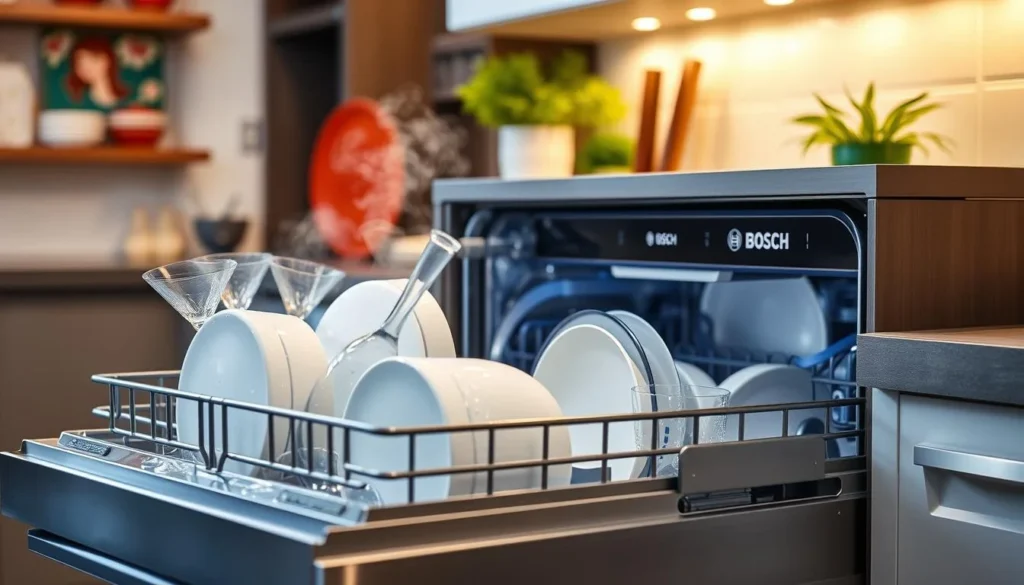
The Critical Role of Drying in Modern Dishwashers
Drying remains the Achilles’ heel for 70% of dishwasher owners, with complaints centering on spotty plastics, damp Tupperware, and energy-guzzling fans that warp delicate items. Bosch sidesteps these pitfalls entirely through tub-based condensation drying, amplified by PureDry and AutoAir.
These technologies eliminate pre-rinsing needs, cut energy bills, and ensure safe handling of kids’ sippy cups or storage containers. PureDry suits budget-conscious users who prioritize simplicity, while AutoAir targets busy households craving “set-it-and-forget-it” convenience.
Both integrate seamlessly with Bosch hallmarks like PrecisionWash sensors, RackMatic adjustable racks, and half-load options, but their differences in dryness, usability, and real-world application guide buyers toward the perfect match for kitchen workflows, water quality, and load habits.
Deep Mechanics: Inside PureDry and AutoAir
PureDry: The Efficient Baseline
As Bosch’s entry-level drying standard across 100 and 300 Series models, PureDry embodies minimalist German engineering:
- Step-by-Step Process: During the final rinse, high-temperature water (up to 162°F) heats the stainless tub and dishes. As the cycle ends, cooler room air condenses steam into water droplets on dish surfaces, which gravity-drains back to the sump. No doors open, no extra power drawn.
- Performance Profile: Glassware and plates emerge 95% dry; silverware shines. Plastics fare decently (70-80% dry) but often retain inward moisture on lids or handles, especially without rinse aid.
- Key Advantages:
- Ultra-low energy (230-260 kWh/year; 3-4 gallons/cycle).
- Completely silent post-wash no mechanisms or fans.
- Fits any cabinetry, including tight European installs.
- Gentle on heirloom china or crystal no thermal shock.
- Real-World Optimization: Pair with Jet-Dry rinse aid (sheeting action cuts spots 25%) and eco modes for apartments or singles. Ideal for users who unload immediately or hand-dry plastics routinely.
- Common Scenarios: Light weekly loads, vacation homes, or first-time dishwasher buyers upgrading from manual washing.
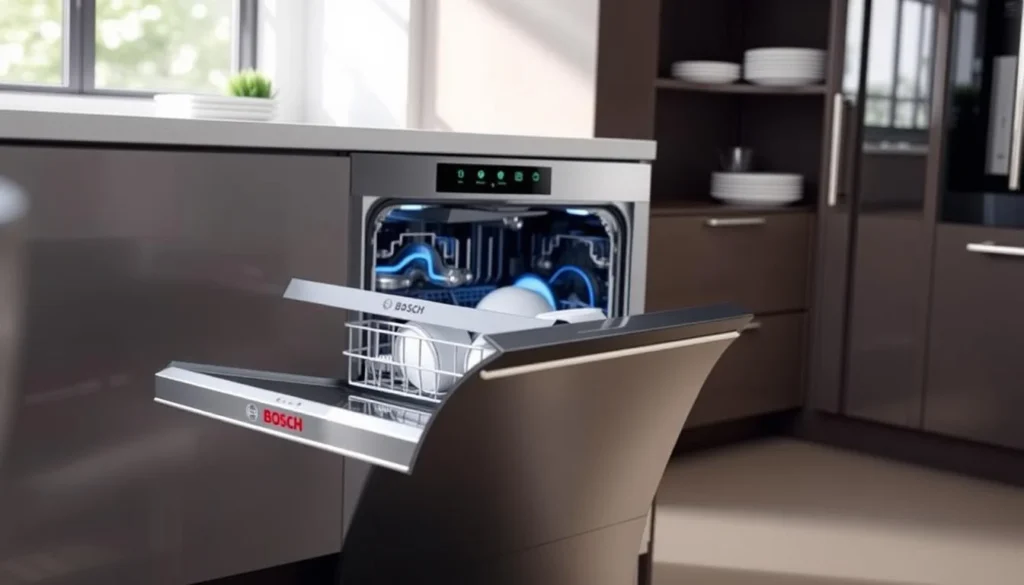
AutoAir: The Smart Airflow Evolution
Exclusively in select 500 Series models, AutoAir builds directly on PureDry with automated ventilation:
- Step-by-Step Process: Identical hot rinse heats everything, but embedded sensors trigger a quiet motorized hinge to crack the door precisely 1 inch for 2-4 hours. Room air circulates naturally, evaporating residual steam far faster than closed systems. Door auto-closes if needed.
- Performance Profile: Boosts overall dryness to 90-95%; plastics leap to 85-90% spot-free. After overnight standing, nearly everything unloads ready minimal towel-off required.
- Key Advantages:
- 40% drier than PureDry per Bosch lab tests (7-hour dwell time).
- Hands-free convenience perfect for bedtime cycles.
- Reduces hard water spots by flushing humid air.
- Maintains ENERGY STAR ratings with negligible extra power (~5% cycle bump).
- Real-World Optimization: Best for overnight runs, half-loads, or humid climates. Minimal steam release (cabinet-safe per design specs).
- Common Scenarios: Families with kids’ gear, entertainers with serving plastics, or open kitchens where manual door-propping annoys.
Comprehensive Head-to-Head Analysis
| Category | PureDry (100/300 Series) Details | AutoAir (500 Series) Details |
|---|---|---|
| Core Mechanism | Closed-tub condensation only | Condensation + timed 1-inch door vent (2-4 hours) |
| Dryness Rating | Glass/plates: 95%; Plastics: 70-80%; Silver: 90% | Glass/plates: 98%; Plastics: 85-95%; Silver: 95% |
| Plastics Spot Test | Common on curved surfaces; rinse aid essential | Rare; rinse aid optional but boosts to perfection |
| Dry Time to Unload | 1-2 hours for best results; overnight risks re-wetting | 4-7 hours fully dry; morning-ready |
| Energy Consumption | 230 kWh/year; 3.2 gal/cycle | 245 kWh/year; 3.5 gal/cycle |
| Noise Profile | Zero post-cycle | Zero (silent actuator) |
| Installation Needs | Zero clearance; fully recessed | 1-2″ front clearance; under-cabinet optimized |
| Load Compatibility | Best light/medium; half-load eco | Excels mixed/heavy; family plastics + pots |
| Hard Water Performance | Spots without aid; salt recommended | 25% fewer spots via air flush |
| Price Premium | $500-$900 (entry-level models) | $800-$1,200 (+$200-300 upgrade) |
| Maintenance | Filter clean monthly | Same + actuator check yearly (rarely needed) |
| Warranty Coverage | 1-yr parts/labor; 10-yr tub | Identical + extended actuator support |
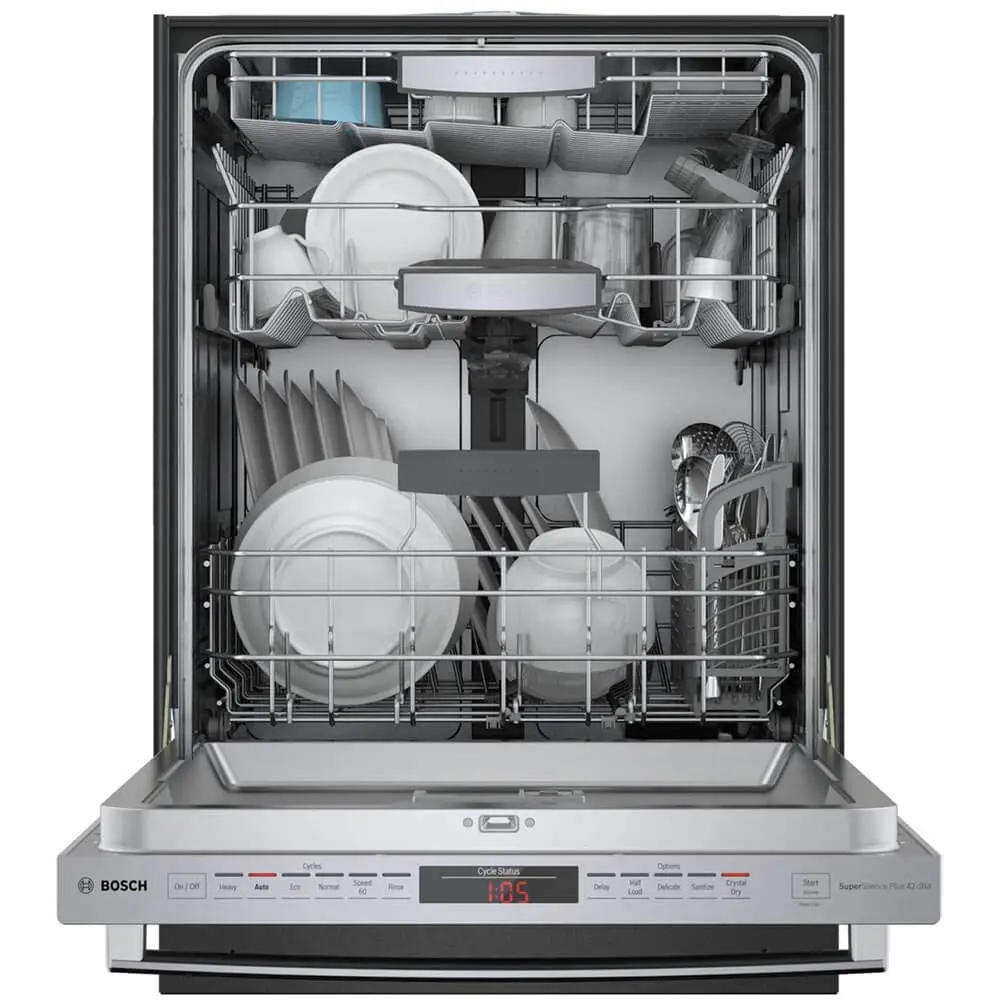
Performance Across Load Types and Conditions
- Glassware and Dinnerware: Both excel spotless and dry. PureDry edges gentleness for heirlooms.
- Plastics and Polymers: AutoAir’s killer app cuts towel-drying time 60%. PureDry demands diligence.
- Pots and Bakeware: Comparable; stainless tub heat aids both equally.
- Hard Water Zones: AutoAir flushes minerals better; both shine with softeners or salt.
- Humid Climates: AutoAir prevents re-condensation overnight.
- Quick Cycles (Speed60): AutoAir finishes drier post-60 minutes.
- Overnight/Weekend Use: AutoAir dominates dishes stay crisp days later.
User anecdotes align: PureDry owners stock rinse aid; AutoAir fans call it “life-changing” for busy mornings.
Integration with Bosch Ecosystem
Both technologies amplify PrecisionWash (40+ sensors for targeted blasting), RackMatic (3-level height tweaks), and flexible third racks (utensils/mugs without main-rack crowding). Pair with half-load for small families or Intensive for grease fests. No heating elements mean safer stacking of plastics atop glass.
Energy Efficiency, Costs, and Eco Impact
Both secure ENERGY STAR with top marks: $30-45 annual electric, under 1,000 gallons water yearly. AutoAir’s minor uptick offsets via fewer re-washes (5-10% savings). Long-term: 10-15 year lifespans, stainless tubs resist cracks/odors. Total ownership: PureDry saves $200 upfront; AutoAir via convenience/time.
Maintenance and Troubleshooting
- Routine: Monthly filter rinse, detergent quality check identical.
- PureDry Issues: Dampness? More rinse aid. Spots? Water softener.
- AutoAir Issues: Door sticks? Lubricate hinge (DIY, 5 mins). Rare actuator fails covered under warranty.
- Pro Tip: Run monthly self-clean with citric acid for peak performance.
Bosch Drying Hierarchy: Where They Fit
- PureDry: Entry baseline reliable starter.
- AutoAir: Midrange hero value upgrade.
- CrystalDry (800 Series): Premium zeolite (60% drier than AutoAir).
- Hybrid Note: Some 500s mix AutoAir + PureDry elements.
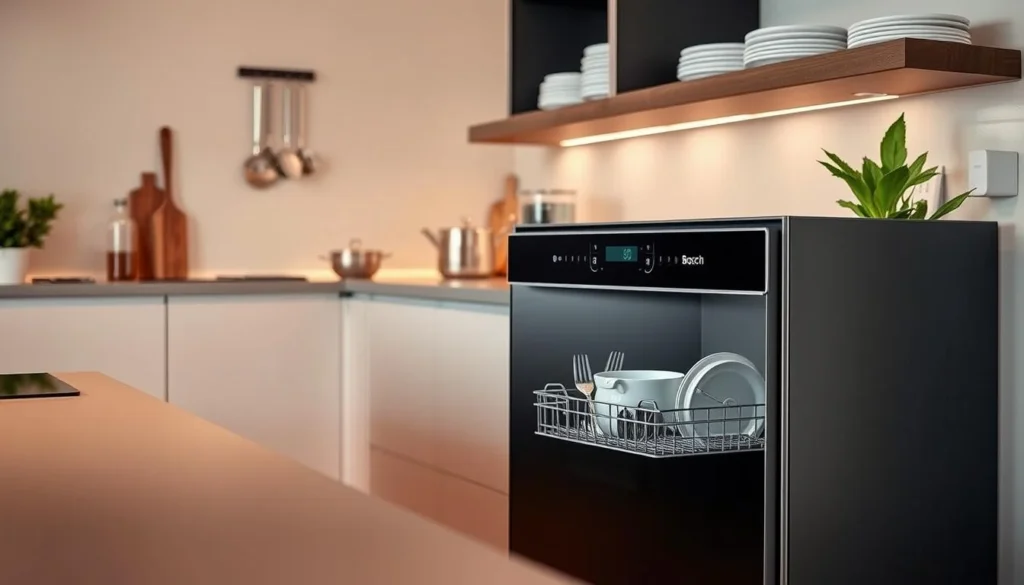
Strategic Buying Guide: Match to Your Life
- PureDry for You If: Budget under $800, small household, immediate unloading, closed cabinets, or plastic-minimal loads.
- AutoAir for You If: Families with kids’ gear, overnight cycles, hard water frustration, open kitchens, or “damp dishes” pet peeve.
- Skip Both?: Only for basic portables Bosch elevates standards.
- Test Drive: Check model specs (e.g., SHP65CM5N for AutoAir).
FAQs
- Core difference between PureDry and AutoAir?
AutoAir auto-vents the door for 40% drier air circulation; PureDry condenses internally only. - Does AutoAir eliminate plastic spots entirely?
90% reduction; rinse aid seals perfection on toughest loads. - Energy penalty for AutoAir?
Negligible (+5-7 kWh/year) pays back in time/convenience. - PureDry viable for large families?
Cleans flawlessly; drying needs management for plastics. - Cabinet damage risk from AutoAir steam?
None precisely engineered release, tested for under-counter safety. - Hard water winner?
AutoAir airflow minimizes mineral buildup 25% better. - Rinse aid mandatory?
Boosts both; non-negotiable for PureDry plastics. - Quietness during drying phase?
Both silent no fans anywhere in Bosch lineup. - Models featuring each?
PureDry: SHXM4, SHPM6 (100/300); AutoAir: SHP65CM5N, SHPM65Z (500). - Upgrade worth $300?
Transformative for plastic users; overkill for glass-focused homes. - Overnight results comparison?
AutoAir: Unload-ready. PureDry: Plates good, plastics iffy. - Third rack airflow impact?
Enhances both; utensils dry faster up top. - Soft water areas?
Both stellar; AutoAir’s edge shrinks slightly. - Reliability stats?
Identical Bosch’s <10% first-year service across techs. - Eco footprint edge?
Tie on paper; AutoAir wins via zero re-runs. - Speed60 drying?
AutoAir faster post-wash; both solid. - Door clearance exact?
1.5 inches minimum for AutoAir swing. - Warranty on mechanisms?
Full coverage; actuators rarely fail. - Detergent pairing?
Pods/gels optimal; avoid powder clogs. - Future-proofing?
Both ready for Bosch app upgrades.