
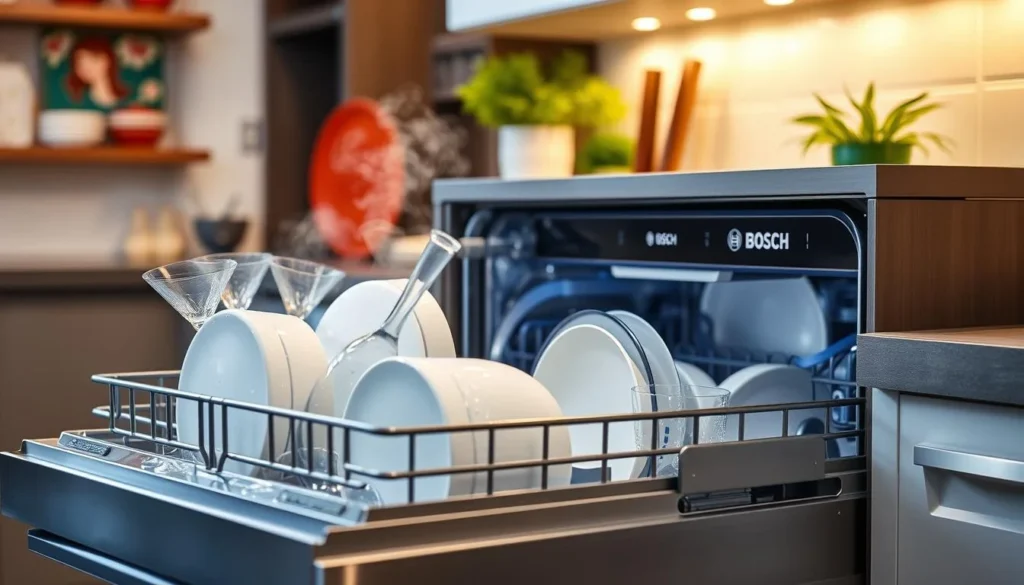
Bosch 500 and 800 Series dishwashers anchor the heart of Bosch’s renowned lineup, both delivering German-engineered excellence through stainless-steel tubs, intelligent PrecisionWash cleaning, and whisper-quiet operation that transforms dish duty into background noise. While they share core DNA like flexible third racks, leak-proof AquaStop protection, and ENERGY STAR efficiency, the 800 Series pulls ahead as the premium upgrade with revolutionary CrystalDry technology for spotless plastics, even quieter performance down to 39 dBA, and customizable luxury touches. The 500 Series shines as the smart value play offering 90% of the performance at a noticeably lower price making it the go-to for families who want Bosch reliability without overpaying for refinements most won’t notice daily.
Why Bosch Series Matter
Bosch categorizes its dishwashers into tiers that build progressively: 100/300 as entry-level basics, 500 as refined midrange workhorses, and 800 as upper-midrange perfectionists. Both 500 and 800 skip bare-bones features for smart sensors that auto-adjust water, temperature, and time per load no more guessing or pre-rinsing. They handle 14-16 place settings with rack designs that accommodate tall pots, stemware, and gadgets, plus quick cycles like Speed60 that finish light loads in under an hour. The real choice boils down to drying frustration, noise sensitivity, and kitchen aesthetics.
Core Similarities: What They Share
Before diving into differences, understand the foundation both series build on:
- Stainless-steel tubs throughout no plastic that warps or holds odors, plus better heat retention for drying.
- PrecisionWash with 40+ sensors and multi-level rotating arms that blast every surface, excelling on baked-on messes.
- Flexible third racks that adjust for heights, perfect for utensils, baby bottles, or coffee mugs without stealing main rack space.
- AquaStop lifetime leak warranty and rackMatic height adjustments for easy loading.
- No exposed heating element safer for plastics, relying on condensation plus smart drying aids.
- Half-load options and eco modes that save water/energy for small families or apartments.
- 10-year rust warranty on the tub, reflecting Bosch’s decade-plus durability edge over competitors.
These shared traits explain why both series dominate “best dishwasher” lists cleaning power matches luxury brands at midrange prices.
Detailed Feature Differences
The gaps emerge in refinement, not fundamentals. Here’s a comprehensive breakdown:
| Category | Bosch 500 Series Details | Bosch 800 Series Details |
|---|---|---|
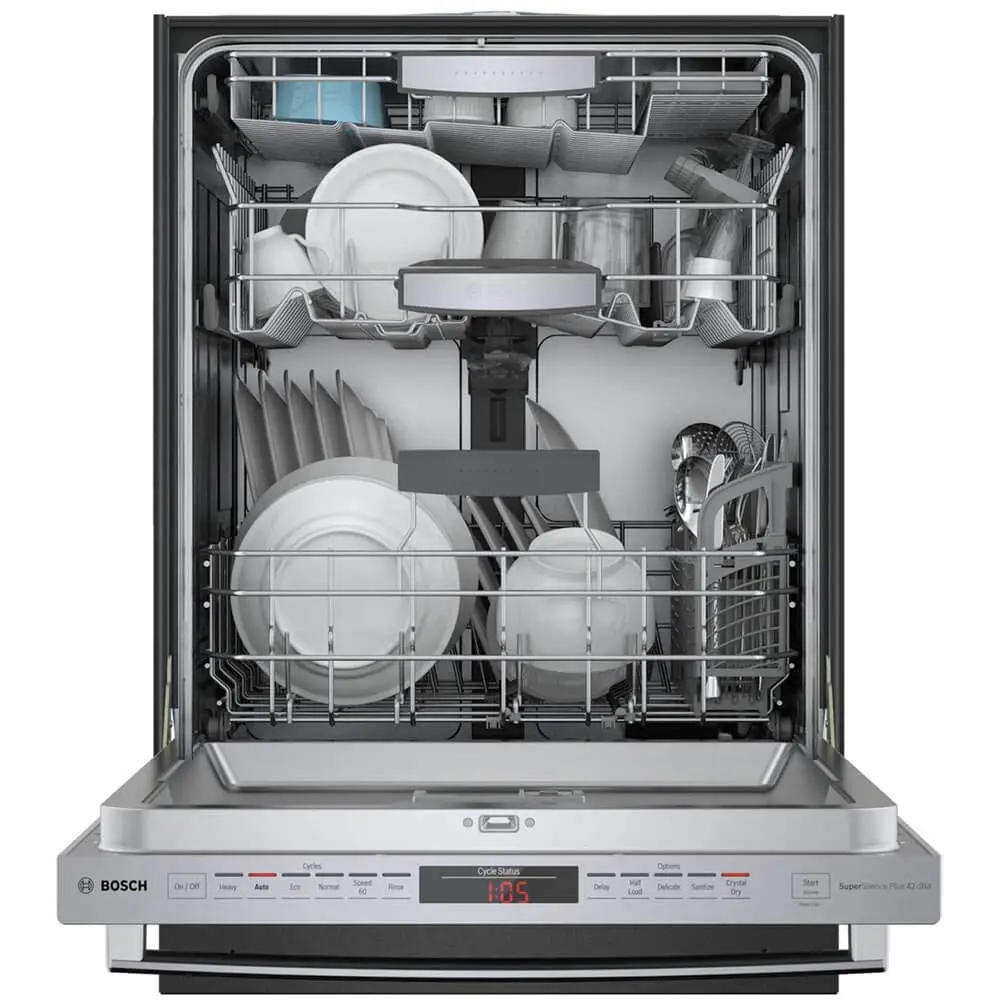
| Drying Technology | AutoAir: Door cracks open 1 inch post-cycle to release steam, improving dryness by ~40% over basic models. Great for glass/plates; plastics may spot in hard water. | CrystalDry: Zeolite minerals in a tray absorb moisture, convert it to heat (up to 162°F), and release bone-dry air. Achieves 60% drier results even plastics emerge touch-dry and spot-free. |
| Noise Level | 44 dBA conversation-friendly, like a soft library hum. Excellent for most homes. | 39-42 dBA near-silent, like a distant whisper. Ideal for open kitchens near dining/living areas. |
| Controls | Sturdy push-button panel with clear icons; intuitive but less sleek. | Sleek touch controls with white LED display; modern, fingerprint-resistant, and customizable. |
| Design/Finishes | Stainless, white, black stainless; pocket or bar handles. Practical and versatile. | Black inox, stainless, panel-ready options; pro-style bar handles or pocket. Matches luxury kitchens. |
| Spray/Wash Power | Zone Wash targets pots/pans with boosted jets; PrecisionWash handles the rest. | PowerControl inner arm adjusts spray intensity per zone via app or button precise for heavy soils. |
| Rack Flexibility | RackMatic 3-level height adjustment; foldable tines; solid third rack. | Enhanced RackMatic with more positions; premium silverware basket; deeper third rack for bowls. |
| Cycles/Options | 5-6 cycles (Normal, Heavy, Express); Delay Start, Sanitize, Half Load. | 6-8 cycles + extras like Extra Dry, Intensive, App Remote Start; Home Connect WiFi standard. |
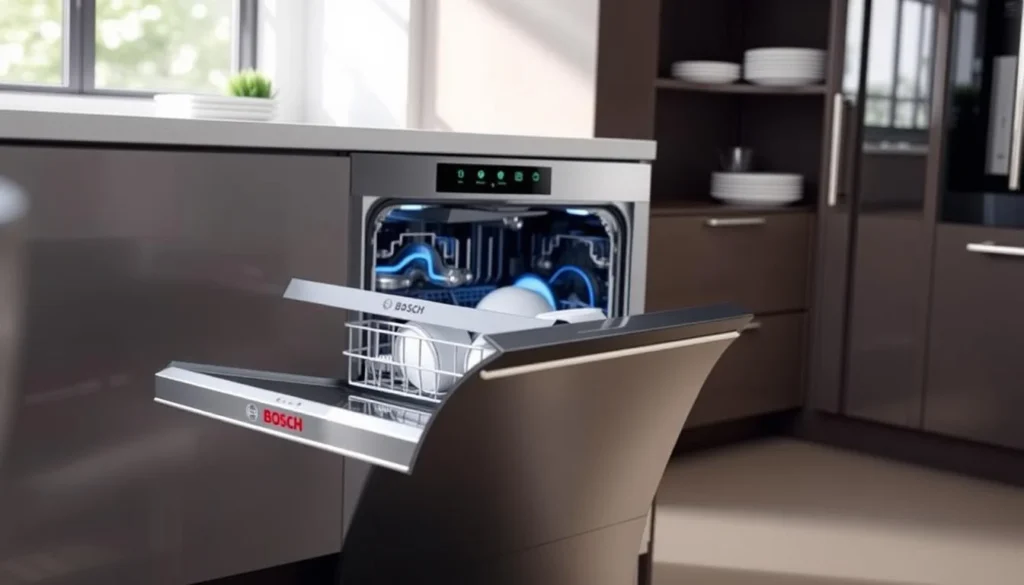
| Interior Lighting | Basic red InfoLight beam on floor during cycle. | Blue PowerBeam with cycle countdown; ambient lighting for easy loading in dim kitchens. |
| Capacity | 14-16 place settings; tall tub option on select models. | Consistent 16 place settings; optimized for max volume without bulk. |
| Price Range | $800-$1,300 sweet spot for value seekers. | $1,100-$1,800 premium but rarely “luxury” priced. |
| Warranty | 1-year parts/labor; 5-year racks/circuits; 10-year tub; lifetime AquaStop. | Same core coverage, plus 2-year Home Connect support on WiFi models. |
Drying Deep Dive: The Biggest Upgrade
Drying separates casual users from perfectionists. Basic Bosch models condense steam inside the tub, often leaving plastics damp. 500’s AutoAir automates door-opening for airflow users report 80-90% dry results, with minor spots fixable by air-drying racks. 800’s CrystalDry revolutionizes this: minerals pull moisture like a sponge, then “bake” it off with self-generated heat. Tests show plastics 40% drier than AutoAir, no rinsing needed even in humid climates or hard water. Drawback? CrystalDry adds ~$200-300 upfront, but saves paper towels and frustration long-term.
Cleaning and Usability Performance
Cleaning matches across tiers both obliterate lipstick, eggs, and cereal bowls via intelligent sensors that tweak every load. 500’s Zone Wash blasts lower rack heavies; 800’s PowerControl lets you dial intensity per arm (e.g., max on pots, gentle on glasses). Racks glide buttery-smooth on both, with flip-tines for awkward shapes. 800 edges usability with app control (preheat remotely) and better lighting, but 500’s simplicity wins for non-techies.
Energy, Water, and Running Costs
Both crush competitors: ~230-270 kWh/year and 3-4 gallons per cycle. CrystalDry uses slightly more energy on heavy loads but offsets with perfect results (no re-runs). Expect $30-50 annual electricity; water savings pay back in months versus inefficient old units.
Top Models Spotlight
500 Series Standouts:
- SHP65CM5N: Versatile top-control bestseller.
- SHPM65Z55N: Zone Wash for families.
- SHX65CM5N: Tall tub capacity king.
800 Series Standouts:
- SHX78CM5N: Drying champ with PowerControl.
- SHP78CM5N: Stylish pocket handle.
- SHX98CM5N: Quietest at 39 dBA.
Reliability and Longevity
Bosch owns the durability crown under 10% service calls in year one versus 20% industry average. 500’s simpler mechanics mean cheaper/easier repairs (~$150-250 common fixes). 800 matches lifespan (10-15 years) but touch panels/CrystalDry trays cost more to service ($300+). Both resist rust/chips; user forums rave about 8+ trouble-free years.
Who Should Buy Which?
- Choose 500 Series if you’re budget-minded, drying plastics isn’t a dealbreaker, and you want proven Bosch excellence for families/apartments.
- Choose 800 Series for open-plan homes, hard water woes, plastic-heavy loads, or custom cabinetry 90% drier + silent operation justifies the splurge.
- Skip both? Only if noise/drying don’t matter then entry 300 Series saves $200.
FAQs
- What’s the single biggest difference between Bosch 500 and 800?
CrystalDry drying technology in the 800 turns spotty plastics into bone-dry perfection versus the 500’s solid-but-not-flawless AutoAir. - Does the 800 Series clean noticeably better?
No PrecisionWash makes both spotless; 800 adds spray customization for extreme cases like burnt pans. - Is the noise gap worth $300 extra?
Yes in open kitchens (44 vs 40 dBA feels worlds apart); irrelevant behind closed doors. - Can I get panel-ready on 500 Series?
Rare 800 dominates custom installs for seamless cabinetry matching. - How do racks compare?
Nearly identical flexibility; 800’s third rack holds 20% more via deeper design. - Does CrystalDry work in hard water areas?
Excels there zeolites neutralize minerals better than condensation alone. - WiFi/smart features on both?
Standard Home Connect on most 800s; optional/upgrade on 500s. - Energy costs higher on 800?
Minimal difference; CrystalDry’s efficiency offsets on plastic-heavy cycles. - Long-term reliability edge?
Tie both inherit Bosch’s top-tier service rates; 500 slightly cheaper to maintain. - Best for renters/small spaces?
500 Series compact power without premium price tag. - Third rack usable for large mugs?
Yes on both; adjusts high/low for optimal fit. - Speed60 cycle realistic for families?
Perfect for breakfast dishes both finish under 60 minutes spotless. - Handle types matter?
Pocket for flush modern; bar for pro kitchens 800 offers more variety. - Lifetime costs lower on which?
500 upfront savings compound with simpler repairs. - Upgrade from older Bosch worth it?
Absolutely new sensors/drying leapfrog 5+ year-old models.